A menu gets handled more than almost any other piece of branded print in a restaurant, bar, hotel lounge, or casino venue. It is read under low light, carried to patios, exposed to spills, and updated when availability changes. This hospitality menu printing guide focuses on the production decisions that help your menus look polished, read clearly, and hold up through demanding service.
For Las Vegas hospitality operators, speed matters as much as appearance. A seasonal cocktail launch, convention-week special, chef change, or sold-out item can require revised menus with very little notice. The best result comes from choosing a menu format and print specification that fit how your staff actually uses it, not simply what looks good on screen.
Start With the Service Environment
Before selecting paper, ask where and how the menu will be used. A fine-dining dinner menu has different requirements than a poolside drinks list. A hotel room-service menu has different needs than a QR code table tent or a quick-service counter board.
Indoor dining menus may prioritize texture, color depth, and a refined feel. For these, heavier uncoated or coated card stocks can create a premium presentation. Outdoor, patio, pool, and bar menus need more protection from moisture, sunscreen, food, and frequent wiping. Lamination or synthetic stock may be worth the added cost because it can reduce replacement frequency.
Also consider who handles the menu. If it is passed from guest to guest all day, durability should lead the decision. If it is placed once in a guest room or included in a meeting packet, a lighter stock may be appropriate and more economical. There is no single best material. The right choice depends on the menu’s expected lifespan, handling volume, and replacement schedule.
Choose a Format Guests Can Use Quickly
Great menu design supports faster decisions. That matters during a packed dinner service, a busy resort brunch, or a convention rush when guests and staff both need clarity.
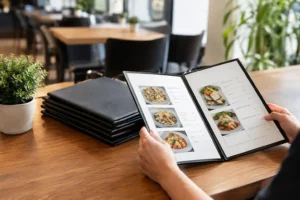
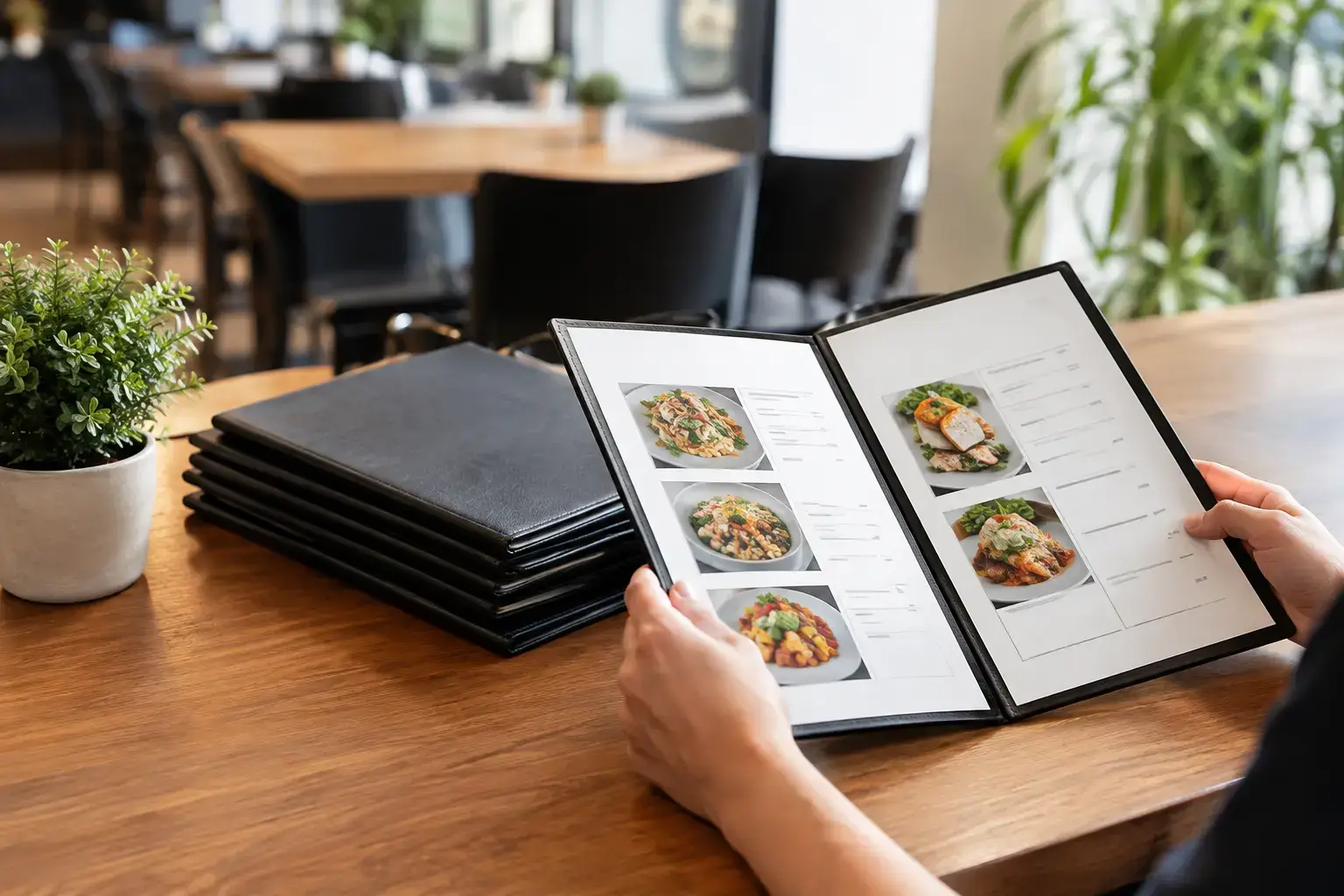
Single-sheet menus are efficient for daily specials, bar lists, breakfast offerings, and limited menus. They are quick to update and cost-effective to reprint. A folded menu creates more space for categories, photos, pairings, and brand storytelling without making the finished piece feel oversized. Multi-page booklets suit larger restaurant menus, room-service programs, wine lists, banquet offerings, or venues with extensive food and beverage selections.
For a tabletop format, tent cards work well for featured cocktails, happy hour, desserts, and limited-time promotions. Inserts are another practical option. Instead of replacing a full menu whenever prices or selections change, operators can produce a clean insert for seasonal items, event packages, or weekend features.
Size affects usability too. A narrow menu can feel upscale but may force type to become too small. An oversized menu gives you space, but can be awkward at a small table or crowded bar. Before committing to a full run, review a printed proof at actual size. What feels readable on a monitor may be difficult to scan in a dim dining room.
Keep Type, Spacing, and Pricing Readable
Menus are sales tools, but they are also operational documents. Guests should be able to locate categories, understand descriptions, and identify prices without asking for help. Avoid squeezing too many items onto a page just to reduce page count. The savings can disappear if a confusing layout slows table turns or makes profitable items harder to find.
Use a readable font size, clear category breaks, and enough white space between sections. Descriptions should be concise and useful, especially for ingredients that affect dietary needs. If menu prices change regularly, build the layout with those updates in mind. A design that requires extensive reformatting for every price adjustment can create unnecessary rush charges and production delays.
Paper, Lamination, and Finishes That Fit the Job
Print materials influence both guest perception and day-to-day maintenance. A heavy matte card stock has a modern, high-end feel and reduces glare under restaurant lighting. Gloss stock can make food photography and saturated colors stand out, but it may show fingerprints more easily. Uncoated stock is easy to write on and can feel warm and tactile, although it is generally less resistant to spills.
For reusable menus, lamination is often the practical choice. It adds protection and makes cleaning easier. Matte lamination keeps reflections low and feels refined, while gloss lamination delivers more shine and visual pop. Soft-touch lamination can elevate a premium cocktail or tasting menu, but it may not be the most practical option for high-volume, high-contact service.
Here are four common menu specifications and where they tend to work best:
- Heavy uncoated card stock works well for chef-driven menus, wine lists, and short-run event menus where texture matters.
- Matte-coated card stock suits everyday restaurant menus that need a clean, professional finish with readable text.
- Laminated card stock is a strong choice for bars, patios, pool areas, and family dining where frequent cleaning is expected.
- Synthetic waterproof stock is best for especially demanding environments, including outdoor service and menus exposed to repeated moisture.
The most durable choice is not always necessary. If you update the menu every two weeks, a premium waterproof substrate may add cost without providing meaningful value. If you plan to use the same menu for months, spending more upfront can be more economical than repeatedly replacing damaged pieces.
Build Files for Accurate Menu Printing
Menu errors are expensive because they are visible. A missing modifier, incorrect price, outdated allergen notice, or wrong happy-hour time can create staff confusion and guest complaints. Final proofing should be treated as an operational checkpoint, not an afterthought.
Review every menu at 100% size before sending it to print. Check names, prices, hours, phone numbers, dietary symbols, legal language, and item availability. Have someone outside the design process read the final proof. Fresh eyes often catch mistakes that the person who built the file has seen too many times.
For print-ready files, use high-resolution images and CMYK color settings when possible. Keep critical text and logos away from the trim edge. If a photo, color block, or background runs to the edge of the page, the file needs bleed so the final piece trims cleanly. Small details matter: a thin border placed too close to the edge can look uneven after trimming, even when production is accurate.
If your menu uses brand colors, provide the correct logo files and identify any colors that need close matching. Screen colors are not a reliable final reference, particularly for deep blacks, bright reds, or subtle neutral tones. A printed proof is especially valuable for premium venues, photo-heavy layouts, and new branding.
Plan for Changes Before You Need Them
The strongest hospitality print programs are designed for change. Restaurants run out of ingredients. Hotels add packages. Event venues adjust banquet pricing. A convention can fill the dining room overnight and make a temporary menu necessary.
Keep an organized folder with approved menu files, editable source files, logos, photography, and current pricing. Label versions clearly by date and location if your business operates multiple outlets. This reduces the risk of reprinting an old menu during a last-minute request.
Consider separating stable content from frequently changing content. A permanent drinks booklet can be paired with a small seasonal insert. A standard room-service menu can use a separate late-night sheet. This approach protects your core brand piece while giving your team flexibility to update offers quickly.
For rush production, send the latest approved file and specify quantity, finished size, stock preference, finishing, and required pickup or delivery time from the start. Clear production details help prevent avoidable back-and-forth when every hour counts.
Use One Print Partner for Menus and Supporting Pieces
Menus rarely stand alone. A new menu rollout may also require table tents, bar signs, window graphics, takeout inserts, event flyers, loyalty cards, and promotional postcards. Coordinating these materials helps keep colors, messaging, and timing consistent across the guest experience.
For hospitality businesses near the Strip, Design One Printing can help produce menu pieces alongside the event and promotional materials that support them, including fast-turnaround orders when a change cannot wait for a standard production cycle. A production partner should ask practical questions about use, deadlines, finishing, and file readiness before recommending a specification.
A menu should make ordering easier, represent the quality of your venue, and survive the environment it is placed in. When the format, stock, finish, and update plan are selected with service in mind, your menu becomes one less thing for your team to worry about during a busy shift.