A prospect is standing at your trade show booth, a sales representative needs leave-behind materials for an afternoon meeting, or an event schedule changes the night before doors open. In each case, the question is not simply what looks good. It is what people can absorb quickly and what your deadline will support. When comparing booklets versus brochures, the right choice comes down to the amount of information you need to share, how long the piece will be used, and where it will be handed out.
A brochure is built for a fast message. A booklet gives your audience room to stay with the details. Both can make a strong impression when the format matches the job.
The Difference Between Booklets and Brochures
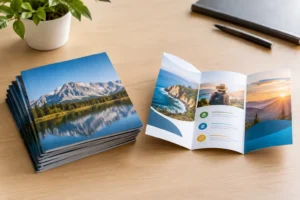
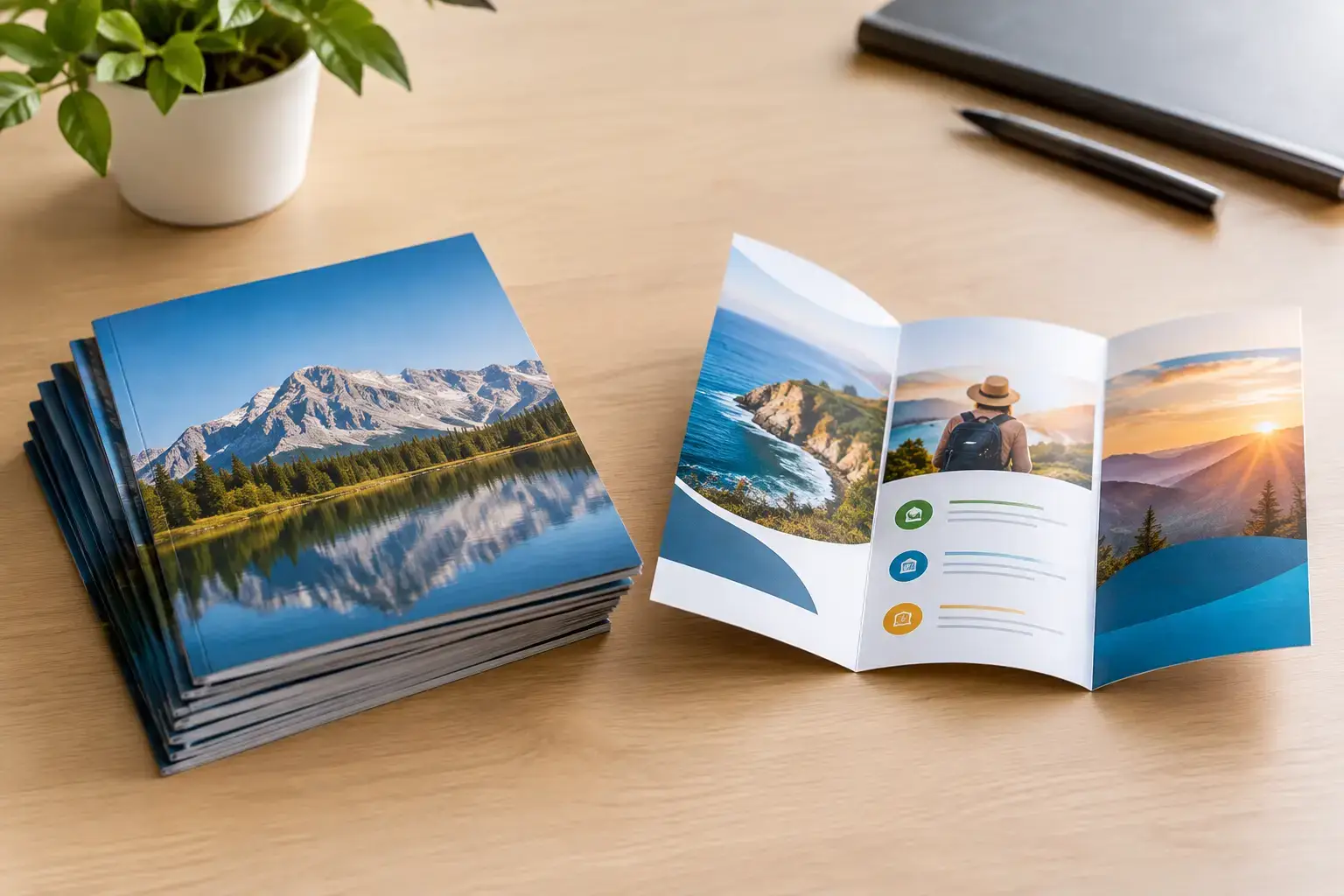
Brochures are usually single printed sheets that are folded into panels. Common options include half-fold, tri-fold, gate-fold, and Z-fold brochures. They are compact, easy to hand out, and designed to guide the reader through a focused message without asking for much time.
Booklets contain multiple pages that are bound together, most often with saddle stitching along the spine. They can hold product descriptions, menus, service packages, event agendas, maps, photos, pricing, policies, and supporting brand information in one organized piece. A booklet is more substantial in the hand and gives the reader a reason to keep it.
The production difference matters, too. A brochure is generally faster to print and finish because it uses one sheet and a fold. A booklet requires page planning, binding, trimming, and enough pages to work with its chosen binding method. That added structure creates more room for content, but it also requires more careful setup.
Booklets Versus Brochures: Start With the Reader’s Goal
Think about what the reader needs to do after picking up your piece. If the goal is to introduce your company, promote a limited-time offer, advertise an open house, or direct people to a single next step, a brochure often does the job better. It puts the key point in front of the reader quickly.
If the reader needs to compare options, review a full program, understand a process, or take information back to their office, a booklet is usually the better fit. For example, a Las Vegas convention exhibitor may use a brochure to draw visitors into the booth, then provide a booklet to qualified prospects who want specifications, case studies, service tiers, or product details.
A useful rule is to match the format to the attention span of the moment. A person walking a busy exhibit floor is unlikely to read twelve pages on the spot. They may, however, take a well-designed booklet to review after the show. A tri-fold brochure can earn the first conversation. A booklet can support the follow-up.
When a Brochure Is the Better Business Tool
Brochures work best when the message is narrow and the distribution is broad. They are a practical choice for restaurants promoting catering, hotels highlighting group services, real estate teams presenting a property, healthcare offices explaining a new patient offer, and local businesses announcing a sale or grand opening.
Because a brochure folds into sections, its layout naturally creates a reading path. The cover needs to earn attention. Inside panels can explain benefits, services, or offers. The final panel should make the next action obvious, whether that is calling, visiting, registering, or requesting a quote.
Brochures also make sense when you need volume on a tight budget. They are efficient for lobby displays, direct handouts, welcome packets, door-to-door campaigns, and event bags. Paper selection still affects the result. A heavier gloss stock can make photos and offers feel more energetic, while an uncoated or matte stock may better suit professional services, healthcare, or brands that need space for notes.
Do not try to force a full catalog into a brochure. Crowded panels, tiny type, and too many competing calls to action make the piece harder to use. If the design needs a microscope to read, it has outgrown the format.
When a Booklet Earns Its Extra Pages
Booklets are built for information that needs order. They are especially useful for product catalogs, training materials, conference programs, hospitality guides, school information packets, nonprofit annual reports, manuals, pitch presentations, and detailed service menus.
For events, a booklet can become a working tool rather than a disposable handout. An agenda, speaker bios, sponsor listings, floor plans, session descriptions, and attendee notes all have a place. For a contractor or B2B service provider, a booklet can show project photos alongside capabilities, process explanations, certifications, and contact information without squeezing everything into a few panels.
Page count requires planning. Saddle-stitched booklets typically work in page counts divisible by four because each printed sheet creates four pages when folded. That means a 10-page concept may need to become 8 or 12 pages. This is a small detail with a major effect on layout, pricing, and production timing.
Booklets also give your brand more room to breathe. Instead of stacking every claim on one spread, you can use larger images, readable type, section dividers, and intentional white space. The result is easier to scan and more credible, especially when the material represents a higher-value purchase or a complex offering.
Design and Print Choices That Change the Result
Format is only part of the decision. The paper, finish, fold, binding, and artwork setup determine whether the finished piece feels polished or rushed.
For brochures, plan around the fold from the beginning. Panels are not always the same width, particularly with a tri-fold, where one panel may need to be slightly narrower to fold cleanly. Keep text and important logos away from fold lines. A full-bleed background should extend beyond the trim edge so no unintended white border appears after cutting.
For booklets, build the file as individual pages unless your print provider requests printer spreads. Keep page numbers, contact details, and calls to action consistent. Consider the cover separately: it carries the first impression, experiences more handling, and may benefit from a heavier stock or a protective finish.
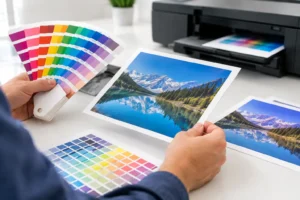
Color matters in both formats. Event graphics, product photography, and brand colors should be prepared for print, not simply copied from a screen. A professional proofing process can catch low-resolution images, unexpected color shifts, missing bleeds, and layout issues before they become expensive reprints.
Turnaround Matters More Than Most People Expect
A brochure may be the smarter choice when time is the deciding factor. It has fewer production steps, and a focused design can often be approved quickly. That is valuable when an event date moves up, a sales team runs out of materials, or an exhibitor discovers a gap in their booth collateral after arriving in Las Vegas.
A booklet can still be produced on a short schedule, but it benefits from earlier decisions. Finalize page count, binding, paper, quantities, and artwork before production begins. Last-minute changes to a booklet can affect multiple pages and create more opportunities for errors than a single folded sheet.
At Design One Printing, the most efficient rush jobs start with a clear purpose and print-ready files. If design support is needed, identify the must-have content first. The faster the message is prioritized, the faster the production team can recommend a format that meets the deadline without compromising the finished piece.
Choose the Format That Supports the Next Conversation
Choose a brochure when you need a concise message, a portable handout, and efficient distribution. Choose a booklet when your audience needs details, reference material, or a presentation that carries more weight after the first interaction. Some campaigns benefit from both: a brochure to create interest and a booklet for the prospects who want to know more.
Before you send a file to print, put one sample message in front of the format you are considering. If the reader can understand the offer and next step in seconds, the brochure is doing its job. If the material needs context, comparisons, and room to build confidence, give it the pages of a booklet.