Introduction: Key Criteria for Selecting High-Impact Convention Backdrops
Choosing the right convention backdrop materials is as much a strategic decision as a design one. Your material affects how color renders under show lights, how fast your team can install, and how the brand photographs on social and press. Start by mapping your environment—Las Vegas halls with mixed lighting, overhead rigging, and strict fire codes—then match the substrate to the job, whether you need premium exhibit booth backdrops or rugged, travel-friendly signage.
Prioritize factors that impact look, logistics, and compliance:
- Venue rules and safety: Many Las Vegas venues require NFPA 701 flame-retardant certifications.
- Lighting and image quality: Glare control for photography/video; color accuracy under LEDs and spots.
- Size and structure: Compatibility with tension fabric displays, SEG frames, banner stands, or pipe-and-drape.
- Durability and reuse: Resistance to creasing, scratching, and frequent packing/shipping.
- Installation speed: Grommets and pole pockets vs. zipper pillowcase or silicone-edge (SEG) systems.
- Conditions: Indoor vs. outdoor, backlit applications, double-sided visibility.
- Sustainability and budget: PVC vs. fabric options, total cost of ownership, and turnaround time.
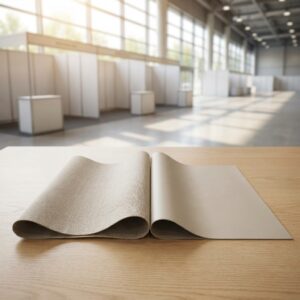
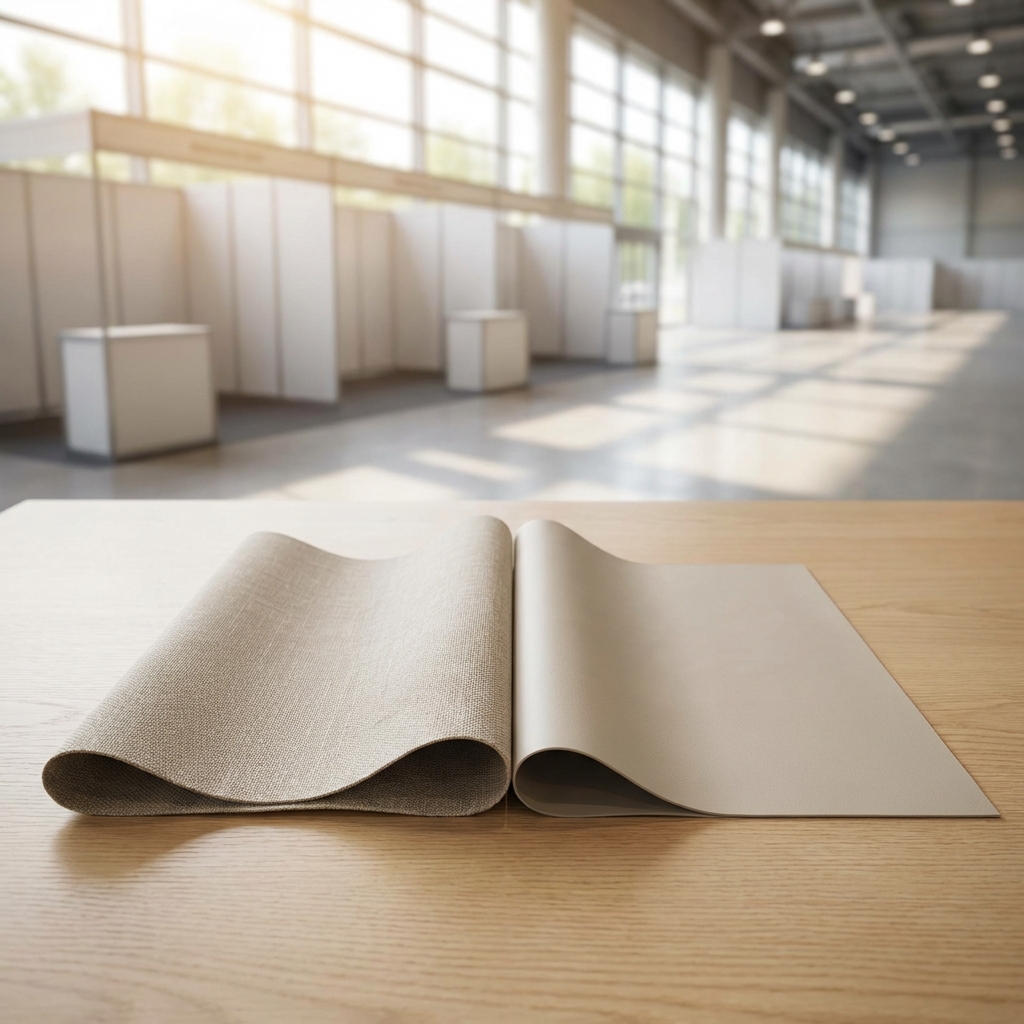
Fabric excels when you need a premium, glare-free finish and tight curves or seamless spans. Stretch polyester in tension fabric displays minimizes wrinkles, softens acoustics, and prints with excellent saturation; SEG edges deliver crisp, frameless visuals and support backlit lightboxes. Fabric is ideal for photo ops, keynote stages, and high-traffic interview backdrops where flash and video lights can cause vinyl glare.
Vinyl banner benefits include high ink density for punchy color, robust tear resistance, and easy wipe-down maintenance—great for food demos, outdoor queues, and freight areas. It’s cost-effective for trade show banner printing, performs well for hanging headers and wayfinding, and handles tough load-in routes. Keep in mind that very large vinyl pieces may require seams, can reflect light, and carry “memory” from folds; plan for rolling or tube shipping when possible.
Match material to use case. A 20-foot seamless SEG wall elevates a product theater, while a rugged 13–18 oz. vinyl with reinforced grommets suits overhead large format event signage. For step-and-repeat press moments, fabric reduces hotspots; for dock-side directional panels or rain-exposed entries, vinyl wins. When brand consistency is critical, request material swatches and a printed color proof under show lighting.
In Las Vegas, timelines are unforgiving. Working with a nearby partner reduces risk, enables same-day swaps, and simplifies installs. Design One Printing—minutes from the Strip—provides fast large-format production, SEG and pillowcase fabric systems, and durable vinyl options, along with on-point color management and file prep for tight deadlines. If you need a last-minute upgrade or reprint, explore their professional convention printing services.
Top Recommendation for Professional Aesthetics: Tension Fabric Backdrops
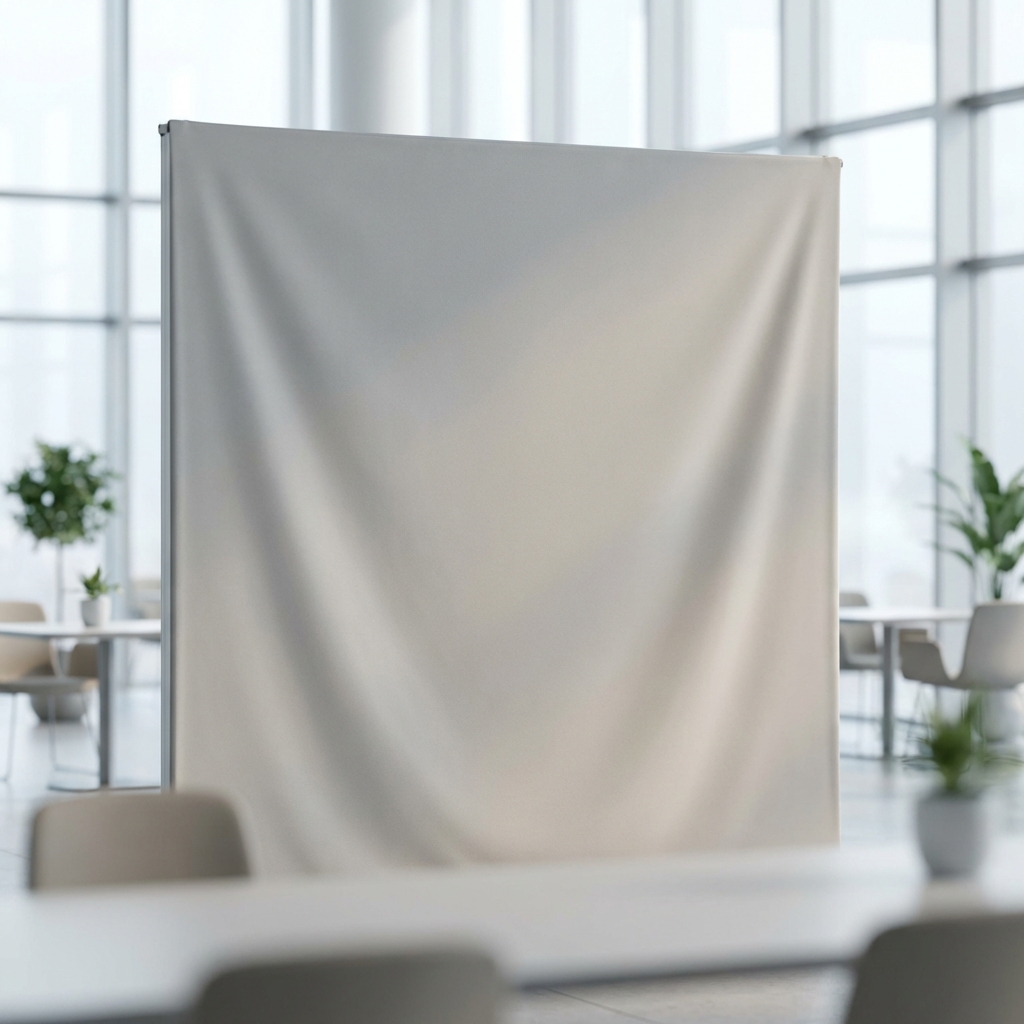
Among convention backdrop materials, tension fabric delivers the most polished, camera-ready look. The seamless surface and soft, matte finish minimize glare under show lighting and look premium in photos and video. For brand-forward exhibit booth backdrops, it communicates quality from across the aisle.
Most tension fabric displays use dye-sublimated graphics on stretch polyester that slips over a lightweight aluminum tube frame like a pillowcase and zips tight. Assembly is tool-free, and the entire unit packs into a compact case for easy travel—ideal for teams flying into Las Vegas. Common sizes like 8′ x 8′ and 10′ x 8′ (straight or curved) are readily available, with double-sided printing when you need visibility from multiple angles.
Key advantages for professional aesthetics:
- Rich, accurate color from dye-sub printing with crisp type for sponsor walls
- Wrinkle-resistant fabric that stretches smooth and is machine-washable for reuse
- Low-reflection surface for photography and livestreams compared to glossy substrates
- Better sound dampening than hard or PVC surfaces, helping reduce booth echo
- Modular frames and add-ons (shelves, headers, LED edge-lighting) to elevate presence
- Fire-rated fabric options (e.g., NFPA 701 compliant materials available from many suppliers)
Use tension fabric when the backdrop is part of your brand story: stage sets for keynotes, step-and-repeat sponsor walls, product reveal areas, and demo zones where people will be filming. Curved frames soften booth lines and guide sightlines, while straight frames create a clean, editorial feel. Double-sided prints are ideal for peninsula or island layouts with traffic from both directions.
Vinyl banner benefits are undeniable—durability, budget-friendliness, and easy wipe-down—making vinyl great for outdoor or high-traffic wayfinding. But for primary exhibit booth backdrops, vinyl can introduce glare and creasing, which undercuts a premium look. Consider mixing materials: tension fabric for the hero wall, supported by vinyl for directional signage or hanging IDs from your trade show banner printing plan.
Design One Printing produces tension fabric backdrops with fast turnarounds in Las Vegas, including rush replacements when graphics arrive damaged. Their team can color-match brand guidelines and coordinate complementary large format event signage so your booth reads cohesive at a glance. For aisle banners and outdoor wayfinding to pair with your fabric wall, see their high-quality custom event banners.
Best Recommendation for Durability and Versatility: Scrim Vinyl Banners
If you need one material that stands up to travel, tight installs, and repeated use, reinforced scrim vinyl is the most practical choice among convention backdrop materials. Built with a polyester mesh embedded in PVC, it resists tearing, handles bumps in transit, and prints with saturated color that reads clearly from the aisle. It’s equally at home indoors or outdoors, making it ideal for large format event signage that has to survive loading docks, forklifts, and variable weather. Key vinyl banner benefits include water resistance and easy cleaning—just wipe and rehang.
For exhibit booth backdrops, scrim vinyl excels in step-and-repeat walls, press areas, sponsor boards, and stage headers that need crisp logos without show-through. Typical sizes like 8’x8′ or 10’x8′ ship rolled and set up quickly on pipe-and-drape, truss, or portable telescoping frames. Finishing options—welded hems, grommets, pole pockets, corner reinforcement, and Velcro—adapt to any rigging plan and speed up trade show banner printing installs. Blockout grades (15–18 oz) prevent shadows from lights and structures behind the graphic.
Consider these specs when selecting scrim vinyl for a show floor:
- Weight/grade: 13 oz for standard indoor use; 15–18 oz blockout for heavy-duty and spotlighted stages.
- Fire rating: Look for NFPA 701–compliant media for convention center requirements.
- Finishing: Welded hems with grommets for tensioning; 3″ pole pockets for clean, wrinkle-minimized stretches.
- Environment: Add wind slits or choose mesh vinyl for outdoor entrances and loading-bay wayfinding.
- Lighting: Specify a matte print surface to reduce glare under LED spots and camera flashes.
- Transport: Roll loosely in tubes to minimize creasing; avoid folding before showtime.
Scrim vinyl is not as lightweight or wrinkle-resistant as tension fabric displays, and glossy surfaces can catch glare in broadcast settings. If your priority is a seamless, soft look with minimal reflections, fabric backdrops on aluminum frames are excellent. But for maximum durability, budget control, and versatility—especially when you may rebrand panels between events—scrim vinyl is the workhorse you can rely on.
Design One Printing produces scrim vinyl backdrops same day in Las Vegas, with welded hems, pole pockets, and hardware ready for the Las Vegas Convention Center and Strip properties. Their team can color-match sponsors, print blockout panels for televised stages, and deliver directly to your booth or advance warehouse. If your schedule shifts, they also offer tension fabric displays and replacement graphics, giving you options when plans change.
Specialized Recommendation: Mesh Banners for Outdoor and High-Traffic Areas
For outdoor entries, breezeways, and any windy or high-traffic setting, mesh banners are a smart addition to your convention backdrop materials. The perforated vinyl allows airflow, reducing wind load and the risk of tearing, while maintaining strong color impact for branding. They also minimize glare and provide limited see-through, which can be helpful on fencing and barricades without blocking visibility for security. Use mesh as a primary facade or as complementary large format event signage that guides, wraps, or reinforces your booth presence between halls.
Technically, most event-ready mesh is an 8–10 oz vinyl with a 70/30 material-to-hole ratio, printed with UV or latex inks for outdoor durability. Look for NFPA 701 flame-retardant compliance, which many convention venues require. Finished options include welded hems, reinforced webbing, pole pockets, and grommets spaced 24″ on center (closer for high-wind placements).
Mesh shines in real-world Las Vegas scenarios: exterior wayfinding to a pavilion, branding along queue barricades outside the LVCC, or building and garage wraps where solid vinyl would catch the wind. It’s equally effective on truss perimeters, stage scrims, and construction fences during event buildouts. For semi-outdoor areas like resort promenades or monorail walkways, mesh balances visibility and safety with clean, bold graphics.
Best-practice specs and design:
- Prioritize bold typography and high-contrast layouts; avoid fine lines and tiny type that can disappear in perforations.
- Keep critical logos and copy at least 1.5″ from edges; add a 1″ bleed for finishing.
- Provide art at 100–150 dpi at full size for trade show banner printing; vector logos yield the sharpest results.
- Choose matte finishes when possible to reduce reflections in sunlit areas.
- Plan mounting for the substrate: zip ties or bungees for fencing, pole pockets for truss, and wind slits are generally unnecessary with mesh.
Know the limits: up close, the mesh pattern can soften detail and introduce moiré in photos, so it’s not ideal for photography-heavy exhibit booth backdrops. For indoor brand walls or step-and-repeat moments, tension fabric displays deliver smoother surfaces and edge-to-edge color. When wind is not a factor, solid vinyl banner benefits include richer saturation and sharper small text, especially indoors.
Design One Printing produces same-day mesh banners with venue-ready finishing, plus delivery to major Las Vegas Strip properties and the convention center. Their team can advise when to pair mesh with tension fabric displays or rigid panels for a cohesive kit, ensuring your large format event signage looks consistent from curbside to booth.
Side-by-Side Comparison: Visual Performance, Portability, and Cost Factors
When comparing convention backdrop materials on visual performance, fabric wins for glare control and photo consistency. Dye-sublimated polyester produces saturated color with a matte finish that looks clean under LED cans and camera flashes, making it ideal for step-and-repeat walls and filmed presentations. Vinyl can deliver punchy color and sharp logos, but the surface sheen may create hotspots under exhibit hall lighting. For ultra-wide exhibit booth backdrops, fabric often achieves a seamless look, while vinyl may require paneling or welded seams.
Tension fabric displays also excel at edge-to-edge graphics and soft contours that read premium from the aisle. Portraits, gradients, and fine typography reproduce smoothly on quality knit fabric. Vinyl’s strength is in bold, high-contrast artwork, hanging banners, and double-sided blockout applications where opacity matters. If you’re producing large format event signage that must be legible from 50+ feet, vinyl’s rigidity can keep lines crisp on long spans.
Portability favors fabric. A full 8–10 ft tension fabric kit packs into a compact case and the graphic resists creasing; a quick steam on-site removes minor folds. Vinyl banners travel best on a core or in a tube to avoid creases, and heavier weights add shipping costs. Setup is also different: fabric sleeves zip over lightweight aluminum frames, while vinyl typically uses grommets, pole pockets, or banner stands that require more tensioning to remove curl.
Durability depends on the use environment. Vinyl banner benefits include weather resistance, easy wipe-down cleaning, and strong performance for outdoor queues and hotel porte-cochère areas. Fabric is best indoors; it’s washable, colorfast, and less reflective, but prolonged wind can stress frames. For Las Vegas venues that require flame-retardant materials, both fabric and vinyl are available with NFPA 701 certificates—be sure to request documentation during trade show banner printing.
Cost factors to weigh:
- Upfront hardware: Fabric needs a frame; vinyl can hang with grommets, lowering initial spend.
- Size and finishing: Fabric can be seamless in common backdrop widths; extra-wide vinyl may add seam welding costs.
- Reusability: Fabric frames accept new “skins” for future campaigns; vinyl excels for one-off promotions.
- Logistics: Fabric’s lighter weight cuts drayage and shipping; vinyl’s bulk can increase fees.
Design One Printing, minutes from the Strip, produces both tension fabric displays and premium vinyl backdrops with same-day and next-day options for common sizes. Their team can match artwork, lighting, and venue rules to the right material mix, and coordinate quick pickup for last-minute exhibit booth backdrops and other large format event signage.
Buying Guide: Matching Backdrop Materials to Your Specific Event Goals
Choosing the right convention backdrop materials starts with your event goals, venue conditions, and how the backdrop will be used beyond the show. Think about lighting (photo ops vs. stage wash), how often you’ll repurpose the graphic, and whether it must meet fire-code standards (NFPA 701 is common in Las Vegas venues). From a practical standpoint, factor in setup time, shipping weight, and the wear-and-tear of multi-day shows.
Match your goals to materials:
- Red-carpet photo ops and media walls: Dye-sublimated fabric with a matte finish prevents glare and moiré on camera. Step-and-repeat logos print crisp on knit polyester, and blockout liners stop light bleed from overhead rigs.
- Fast, easy booth setup: Tension fabric displays (pillowcase or SEG) and hop up walls are lightweight, tool-free, and wrinkle-resistant when stretched. Swappable “skins” make brand refreshes simple between events.
- Budget-friendly impact: Scrim vinyl (typically 13 oz) delivers strong color, straight edges, and wipe-clean durability—clear vinyl banner benefits for high-traffic spaces. For larger spans with fewer seams, look at premium smooth or blockout vinyl.
- Outdoor or heavy-duty use: 18 oz vinyl with reinforced hems and grommets resists wind and handling; for airflow, use mesh vinyl in exterior queue lines or festival entries.
- Backlit environments: Silicone-edge graphics (SEG) fabric in lightboxes provides seamless, high-end exhibit booth backdrops with uniform illumination and deep blacks.
- Sound and glare control: Fabric absorbs some ambient noise and reduces reflections under LED wash lights—ideal for theaters, demos, and live-streamed stages.
Select finishes and hardware that align with the look and logistics. Matte coatings reduce glare; blockout backers hide frame shadows; double-sided prints maximize visibility on island booths. SEG frames deliver taut, seamless faces; hop up frames favor speed. If rigs are close to attendees, consider rounded corners and hidden seams for a premium edge-to-edge appearance.
Plan for transport and reusability. Fabric folds small, ships light, and steams quickly on-site; vinyl rolls better than it folds and cleans easily between shows. If your team flies in, weigh complete kit size against airline limits; if your show calendar is packed, design modular graphics you can reconfigure and refresh.
For a 10×10 startup booth, pair a tension fabric back wall with matching counter wrap, then add meter boards and floor graphics for wayfinding. For a 20×20 brand stage, use SEG fabric backlit panels for the main wall and vinyl directional signage for durability in high-traffic aisles. Design One Printing, located minutes from the Las Vegas Strip, helps teams spec the right trade show banner printing, large format event signage, and exhibit booth backdrops—and can deliver same-day solutions when timelines get tight.
Contact us today at designoneprinting.com to see how we can help on your next project.