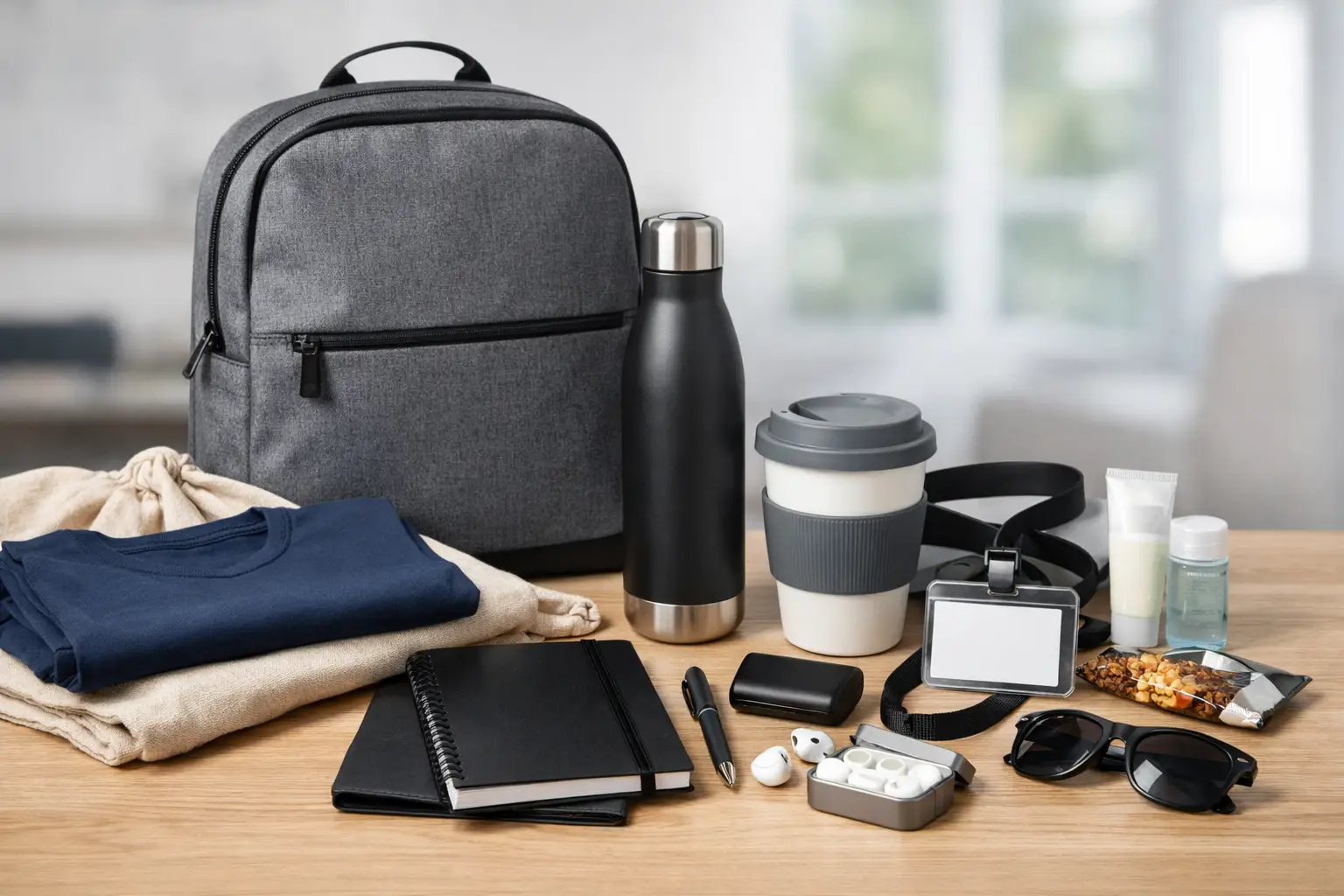
Attendees form an opinion of your event before the first keynote, sponsor conversation, or breakout session. It often happens at check-in, when they receive a badge and a few materials in a bag. The best conference welcome kit examples treat that moment as a practical brand touchpoint: easy to carry, quick to understand, and genuinely useful once the attendee steps onto the show floor.
For Las Vegas conventions, the timing is especially unforgiving. A late speaker change, an added sponsor, or a revised floor plan can require updated materials fast. The right kit is not the one with the most items. It is the one that gives attendees what they need while presenting your event with a polished, organized look.
What makes a conference welcome kit worth keeping?
A welcome kit has two jobs. First, it helps people navigate the event. Second, it gives sponsors, exhibitors, and organizers a professional way to stay visible after check-in. If an item does neither, it may be taking up space and budget.
Start with the attendee journey. Someone may be arriving from the airport, moving through a busy registration area, and heading immediately to a session or booth. They need clear information, a badge that works, and a bag or folder that does not fall apart before lunch. From there, add items that fit the event type, audience, and available budget.
A financial conference may call for a clean document folder, agenda, and premium pen. A consumer trade show may get better results from stickers, coupons, a lively event guide, and a reusable tote. The common thread is purpose. Every printed piece should earn its place.
12 conference welcome kit examples for better check-in
1. The essential registration kit
This is the reliable choice for business conferences, association meetings, and corporate events. Include a branded name badge, lanyard, folded event schedule, venue map, and a small welcome card. Package everything in a branded folder or lightweight tote.
Its strength is clarity. Attendees can find their sessions, locate key areas, and identify staff without sorting through unnecessary inserts. If schedules are changing late, a fast-turnaround print partner can help produce updated programs or map inserts without rebuilding the entire kit.
2. The exhibitor-ready tote bag
A sturdy tote is one of the most useful conference welcome kit examples because it becomes part of the attendee experience all day. People need somewhere to carry brochures, catalogs, samples, and business cards collected from exhibitors.
Print the event name, date, and a simple visual mark prominently. Avoid crowding the bag with a full sponsor directory. A clean design is more likely to be used beyond the event, giving the conference longer visibility. Use heavier stock inserts inside the tote so maps and schedules remain presentable in a crowded convention hall.
3. The premium executive folder
For leadership summits, investor events, and high-level client meetings, a pocket folder creates a more formal first impression than a bag. It can hold a personalized welcome letter, agenda, speaker biographies, note pages, and a business card.
This format works best when the content is curated. Too many loose sheets can make even a premium folder feel disorganized. Consider a branded cover sheet that lists the day’s priorities, with detailed materials placed in the interior pockets.
4. The sponsor spotlight packet
Sponsors expect visibility, but attendees do not want to receive a stack of unrelated flyers. A sponsor spotlight packet organizes offers in one place. It can include a printed coupon book, sponsored session information, a floor map with sponsor locations, and QR codes that lead to digital offers.
Keep the design consistent from page to page. Sponsors can have defined sections, but the event brand should lead. This protects the attendee experience while giving paid partners a measurable, professional placement.
5. The local Las Vegas attendee guide
Out-of-town guests appreciate useful local information, especially when they have limited time between sessions. A compact guide can include transportation tips, nearby dining categories, event shuttle details, venue entrances, and an after-hours networking schedule.
The guide should be specific to the attendee’s needs, not a general tourism brochure. If the event is near the Strip or a convention center, show the most relevant routes and locations clearly. A folded rack card or small booklet works well because it fits in a pocket or badge holder.
6. The first-time attendee kit
New attendees are more likely to need reassurance and direction. Give them a clearly marked kit with a “Start Here” card, event map, agenda highlights, networking tips, and contact information for registration support.
This is a smart choice for annual conventions with a mix of returning members and newcomers. It reduces confusion at the registration desk and helps first-time guests participate sooner. A bright sticker or colored folder can distinguish these kits from standard attendee materials without changing the full event design.
7. The education-focused workshop kit
For training conferences, workshops, and certification events, the kit should support active note-taking. A branded notebook, printed workbook, agenda, pen, and course evaluation card are usually more valuable than promotional giveaways.
Print quality matters here because attendees may keep workbooks for reference. Use readable type, durable covers, and tabs or section dividers if the program includes multiple tracks. If handouts are finalized close to the event, confirm page count, binding method, and turnaround time early so nothing delays room setup.
8. The product launch press kit
A product launch needs materials that make key details easy to verify and share. Include a branded presentation folder, product fact sheet, high-resolution image card or download instructions, press contact details, and a concise launch schedule.
The printed fact sheet should be direct: what the product is, who it serves, where it is available, and why it matters. Avoid dense marketing copy. Media, partners, and sales teams need clean information they can reference quickly after the presentation.
9. The eco-conscious event kit
Sustainable choices can be practical when they reduce waste instead of simply adding a green label. Use a reusable tote or recycled-paper folder, print only the materials attendees need, and place expanded schedules or resource libraries in a digital format.
This approach works well for organizations with clear sustainability goals. The trade-off is that not every attendee wants to rely on a phone for directions or session details. Keep a concise printed schedule and map available, then move less urgent information online.
10. The networking night kit
An evening reception, awards dinner, or hosted mixer can benefit from its own compact kit. Provide an invitation card, venue map, drink ticket if applicable, sponsor recognition, and a simple conversation prompt card or networking activity.
A well-designed invitation makes the event feel intentional rather than optional. If it is distributed at the main registration desk, use matching colors and typography so attendees recognize it as part of the same conference experience.
11. The VIP and speaker kit
VIP guests and speakers have different operational needs. Their kit may include a personalized schedule, green room details, transportation instructions, contact names, meal information, and presentation timing. A quality folder or rigid mailer keeps these materials distinct from general registration items.
Personalization is worth the extra effort here. A guest who can immediately see where to go and whom to call is less likely to need last-minute assistance. For speakers, include a final run-of-show sheet even if they already received a digital version.
12. The last-minute recovery kit
Not every event has weeks to prepare. A last-minute kit can still look professional when the essentials are prioritized: badges, lanyards, a one-page agenda, a location map, sponsor insert, and branded tote or folder.
Skip complicated packaging and multiple specialty items when the deadline is tight. Put the budget into accurate, well-produced core materials. In a convention city, a local printer that can handle rush badges, flyers, folders, signs, and wide-format event graphics can prevent a late change from becoming a visible problem at check-in.
How to choose the right materials
Before ordering, decide what attendees must receive in print and what can be delivered digitally. Printed pieces are best for credentials, maps, quick schedules, coupons, worksheets, and anything attendees will need while moving through the venue. Digital delivery is often better for long speaker bios, extensive sponsor directories, and material likely to change.
Then work backward from registration. Count kits with a reasonable overage, usually enough to cover walk-ins, replacements, staff, and late additions. Confirm the dimensions of every insert before selecting a bag or folder. A beautiful folder is not useful if the agenda sticks out, and a tote filled with oversized pieces becomes harder to manage at the registration table.
Design consistency also matters. Use the same logo treatment, color palette, and type hierarchy across badges, programs, signage, folders, and sponsor materials. This makes a large event feel coordinated, even when several vendors and stakeholders are involved.
For fast-moving Las Vegas events, Design One Printing can help organizers produce the core materials that make welcome kits work, from badges and folded programs to branded folders, stickers, signs, and trade show graphics. Bring a final count, finished artwork if available, and a clear deadline so production can be planned around the materials attendees will actually use.
A good welcome kit does not need to impress people with volume. It needs to put the right information in their hands, make your event easy to navigate, and look professional from the moment they arrive.