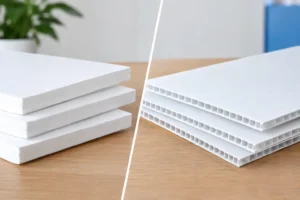
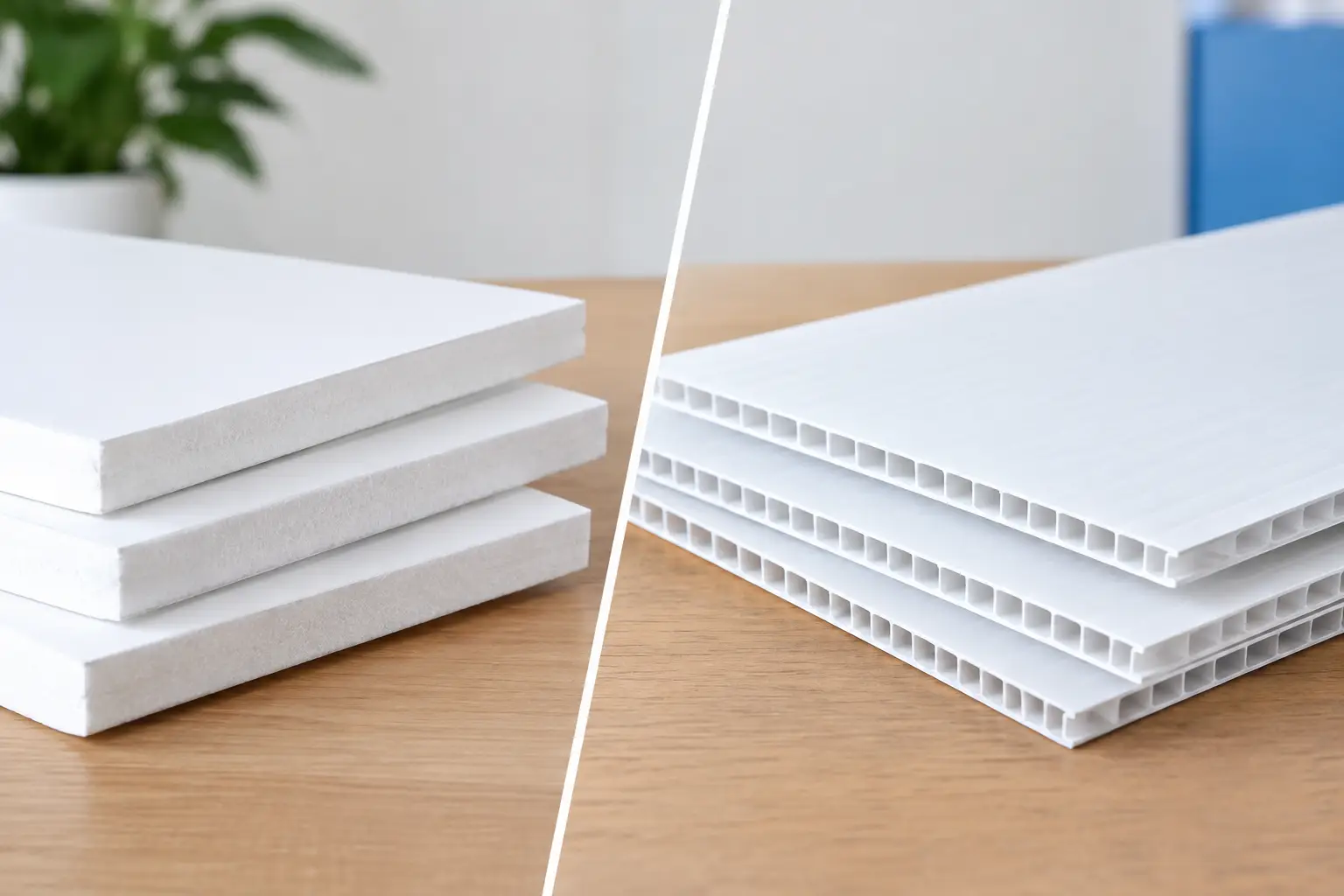
A sign that works perfectly inside a Las Vegas convention hall can fail quickly outside a hotel entrance. That is why the foam board versus coroplast decision should start with where the sign will be displayed, how long it needs to last, and how it will be handled. Both materials produce professional-looking printed signs, but they solve very different business problems.
For an indoor presentation, retail promotion, directional sign, or trade show graphic, foam board often delivers the polished look you want. For outdoor real estate signs, parking directions, construction notices, and temporary event signage, coroplast is usually the safer choice. Selecting the right substrate before production helps prevent warped signs, damaged corners, and last-minute replacements.
Foam Board Versus Coroplast at a Glance
Foam board, also called foam core, is a lightweight rigid board with a foam center and smooth paper-facing surfaces. It is commonly used for mounted presentations, indoor posters, easel signs, point-of-purchase displays, and trade show graphics. Its smooth face gives printed colors, photos, and fine text a clean, refined appearance.
Coroplast is corrugated plastic. It has a fluted interior, similar in structure to corrugated cardboard but made from polypropylene plastic. Those internal channels make it lightweight and durable while allowing the material to resist moisture far better than foam board. Coroplast is a practical choice when a sign will face wind, rain, spills, or frequent handling.
The simplest distinction is this: foam board is built for indoor presentation quality, while coroplast is built for temporary outdoor durability. There are exceptions, but that rule is reliable for most business and event sign orders.
When Foam Board Is the Better Choice
Foam board is the material to choose when the sign needs to look crisp up close. Its flat, smooth surface is especially effective for photographs, brand imagery, detailed maps, menus, product features, and presentation graphics. A mounted foam board sign also has a more substantial appearance than a paper poster without the weight of heavier display materials.
It is a strong fit for indoor events near the Las Vegas Strip, where exhibitors often need branded pricing signs, meeting-room schedules, welcome boards, sponsor displays, or tabletop presentations. It is also useful for retail counters, office lobbies, restaurant promotions, school events, and photo-mounting applications.
Foam board is easy to cut into custom sizes and works well with easel backs or display stands. Because it is lightweight, it can be transported and set up without much effort. For short-term indoor use, it offers an excellent balance of visual quality and cost.
Foam Board Limits to Plan For
Foam board does not like moisture. The paper surfaces can swell, curl, stain, or separate from the foam core when exposed to rain, humidity, or spills. It can also dent or crush at the corners if it is handled roughly during load-in, especially in busy convention areas.
It is not the best option for signs that will be staked in the ground, attached to fences, or left outside overnight. A foam board sign may survive a brief trip from a vehicle to an indoor venue, but it should not be treated as an outdoor sign material.
If your graphic will be seen in close quarters and remains indoors for a day, a week, or a short campaign, foam board is often the more polished choice. If the environment is uncertain, move to a weather-resistant material instead.
When Coroplast Is the Better Choice
Coroplast is designed for utility. It stands up well to outdoor conditions, making it a standard choice for yard signs, construction signs, election signs, parking instructions, open-house signs, event wayfinding, and temporary site notices. Its plastic surface will not absorb water like foam board, so a passing shower or sprinkler is far less likely to ruin the sign.
The fluted construction also makes coroplast compatible with wire stakes for ground installation. That is useful when you need to place directional signs around a property, guide attendees from a parking area, or promote a short-term campaign across multiple locations.
For businesses coordinating outdoor activations, coroplast is easier to move, stack, and reuse than many paper-faced boards. It is light enough for quick installation but sturdy enough to tolerate ordinary handling. For practical, temporary signage, it delivers strong value.
Coroplast Trade-Offs
Coroplast is durable, but it does not have the same perfectly smooth appearance as foam board. The flutes can become more noticeable with certain lighting, large solid-color areas, or very close viewing distances. Fine details can still print well, but foam board usually looks more premium for a boardroom, exhibit booth, or retail display where customers will stand inches away.
Wind is another consideration. Coroplast is lightweight, so a large outdoor sign needs appropriate support. A sign mounted on weak stakes or installed without enough fastening points can bend, rattle, or blow loose. The material is weather-resistant, not windproof.
If you are ordering outdoor signs, consider the size, mounting method, expected weather, and display duration together. A smaller coroplast yard sign may need only a wire stake, while a larger directional sign may require a frame, posts, or secure mounting hardware.
Choosing by Location and Use Case
The display environment should make the decision easier. Indoor signs where appearance leads should generally use foam board. Outdoor signs where weather and handling lead should generally use coroplast.
For example, an exhibitor may use foam board for product messaging inside a convention booth, then use coroplast for parking directions outside the venue. A restaurant may choose foam board for a lobby promotion and coroplast for a sidewalk event sign. The artwork can stay consistent while the material changes to match the job.
Foam board is usually the better fit for these applications: indoor event signs, presentation boards, easel-mounted welcome signs, retail displays, mounted photo prints, meeting-room graphics, and short-term trade show signage.
Coroplast is generally the better fit for these applications: yard signs, outdoor event directions, real estate signs, construction notices, parking signs, political campaigns, property management notices, and temporary exterior promotions.
Print Quality, Thickness, and Finishing Details
Material selection is not only about indoor or outdoor placement. Thickness affects how the finished sign feels and performs. Thinner boards are economical and easy to transport, while thicker options provide more rigidity for freestanding displays, larger signs, and repeated handling.
For foam board, the main concern is preventing bending and corner damage. Larger signs may benefit from thicker stock, especially if they will sit on an easel or travel through a trade show load-in. Protecting the finished board during transport is just as important as choosing the right thickness.
For coroplast, thickness and flute direction can affect rigidity. The internal channels should be oriented correctly when a sign is used with stakes or when it needs strength across a wider span. This is a production detail worth discussing before printing, particularly for outdoor signs that must be installed quickly on site.
Finishing also matters. Do you need holes for mounting, rounded corners for safety, custom trimming, or a size that fits an existing frame? Planning those details early avoids delays when the event deadline is close.
How to Make the Right Call on a Rush Order
Rush sign orders are common in Las Vegas, particularly when an event schedule changes, a booth graphic is damaged in transit, or a business needs a replacement sign before opening. In those moments, choosing the wrong material can create another urgent problem the next day.
Before approving production, answer three practical questions: Will the sign stay indoors or outdoors? Will it be mounted, carried, or staked? Does it need to look premium from close range, or simply remain readable in a demanding environment?
If the answer is indoor, close-range, and presentation-focused, choose foam board. If the answer is outdoor, weather-exposed, or stake-mounted, choose coroplast. When the sign may move between both environments, it is usually safer to prioritize the tougher condition or produce separate signs for each location.
At Design One Printing, clear use-case details help the production team recommend a material that supports both your timeline and your finished presentation. Bring the artwork, dimensions, installation plan, and deadline to the conversation so the sign can be produced for the conditions it will actually face.
The best sign material is the one that still looks right when your customer, attendee, or prospect sees it. Match foam board to polished indoor moments, match coroplast to practical outdoor demands, and your signage will work harder from setup through teardown.