A custom envelope printing review is not just about whether the logo looks sharp. For a business mailing a proposal, event invitation, direct mail offer, or follow-up package, the envelope is the first physical brand impression. If it feels thin, prints poorly, jams in a mailing process, or arrives too late for a campaign, the job has missed the mark before the recipient sees what is inside.
The right envelope depends on the mail piece, the audience, the mailing method, and the deadline. A polished envelope can make a sales packet feel intentional. A rushed choice can create avoidable problems with readability, postage, inserts, and delivery. Here is what business buyers should evaluate before approving a custom envelope order.
Custom Envelope Printing Review: Start With the Job
The most useful question is not, “What is the best envelope?” It is, “What does this envelope need to do?” A real estate office sending a neighborhood campaign has different requirements than an exhibitor delivering VIP invitations before a Las Vegas convention. A law firm mailing formal documents may need a conservative #10 envelope, while a hospitality brand promoting an opening may need a colorful square format that stands out in a stack of mail.
Begin with the contents. Measure the finished piece and account for folds, response cards, brochures, or multiple inserts. An envelope that is technically large enough can still look overstuffed, crease during insertion, or cost more to mail. For standard business correspondence and statements, #10 envelopes remain a practical choice. Invitation formats, booklet envelopes, catalog envelopes, and larger announcement sizes give more room when the contents need to arrive flat.
Then consider how the piece will be distributed. Hand-delivered event packets can use specialty stocks and bolder formats with fewer postal concerns. A large direct mail campaign needs room for addressing, barcodes, and postal markings, along with materials that run cleanly through inserting and mailing equipment. If the envelope will carry an address label rather than printed addressing, make sure the selected stock accepts labels reliably.
Paper Stock Changes the Impression
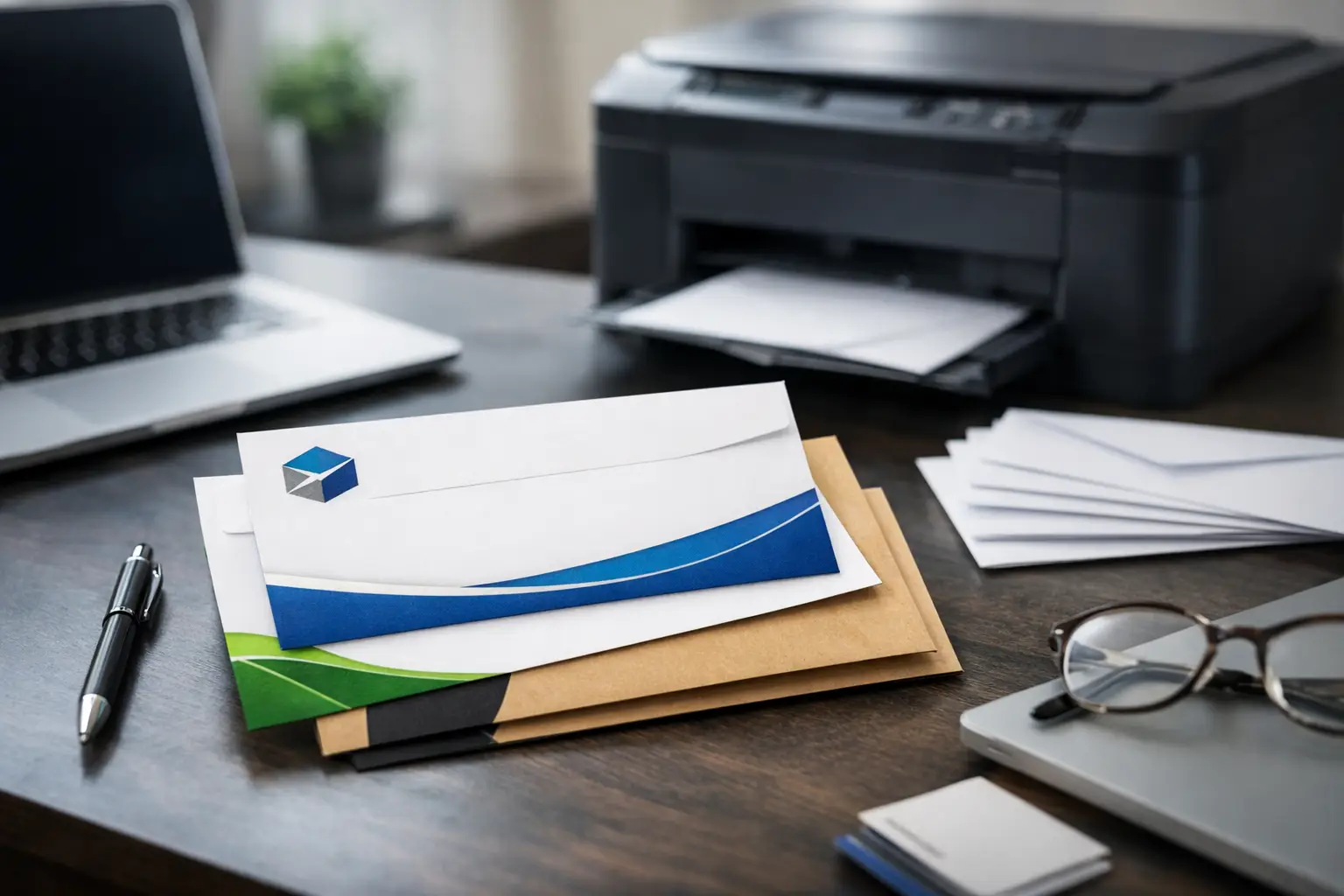
Paper is often where budget and presentation meet. Standard white wove envelopes are a dependable option for everyday invoices, correspondence, and bulk campaigns. They print cleanly, look professional, and keep costs controlled. For brands that want a more refined feel, heavier text-weight stocks, linen textures, laid finishes, or colored envelopes can add character without changing the basic format.
That upgrade has trade-offs. Textured stocks may not reproduce fine type, small logos, or large solid color areas as evenly as smooth paper. Dark stocks can require white ink or specialty production methods, which may affect cost and turnaround. A heavily coated or unusually textured envelope can also create issues if it needs to pass through an office printer after delivery.
For most business mail, choose the stock based on the message. A formal financial communication benefits from a crisp, restrained stock. A restaurant opening, wedding venue promotion, or luxury retail invitation can justify a more tactile choice. If the design relies on a full-color image or saturated background, ask for a stock and production method that support that coverage without scuffing or uneven color.
Windows, Flaps, and Size Need Early Decisions
Window envelopes reduce addressing time when the address is already printed on the enclosed document. They are efficient for statements, invoices, and recurring operational mail, but the window position must align precisely with the folded insert. Even a well-designed letter can fail if the address slips out of view or unwanted text appears through the window.
Flap style also affects the look. Commercial flaps are common for business envelopes and work well for everyday mail. Wallet flaps and square flaps can feel more promotional or formal, especially on invitations and announcement pieces. The choice should support the brand while remaining practical for the method of sealing and inserting.
Size affects postage, storage, and mailing workflow. Unusual dimensions attract attention, but they may require extra postage or slower handling. That does not make them a bad choice. It means the format should earn its added cost through stronger response, a better presentation, or a specific event purpose.
Color Printing Requires a Clear Plan
A one-color logo and return address can be cost-effective, easy to read, and appropriate for high-volume correspondence. Full-color envelope printing gives marketing teams more room to use photography, gradients, campaign visuals, and strong brand color. The right answer depends on volume, audience, and what is already doing the work inside the envelope.
Avoid treating the envelope as a second brochure. Too much copy, especially near the address area, can make mail look cluttered and complicate postal handling. A concise message, a recognizable logo, and a clean return address often perform better than a crowded design.
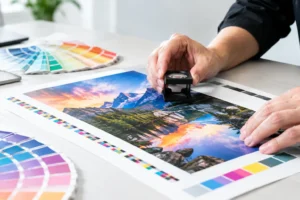
Keep sufficient contrast between ink and paper. Light gray type on a cream stock may look elegant on a screen but become difficult to read in real conditions. Fine reverse type, small colored text, and very thin rules deserve extra attention. A printed proof is valuable whenever a design includes critical brand colors, detailed artwork, or tight alignment near a window, flap edge, or address zone.
Addressing and Mailing Details Can Affect Production
Custom envelope printing can include a return address, recipient addressing, or both. For a short run of presentation packets, preprinting the return address may be all that is needed. For targeted direct mail, variable data printing can personalize recipient names, addresses, offers, or event details across a mailing list.
Mailing data deserves the same care as the artwork. Incomplete records, inconsistent abbreviations, duplicate addresses, and poor formatting can delay a campaign or create waste. Confirm who is responsible for the approved mailing list, address placement, postal preparation, and delivery to the post office. These steps are especially relevant when a campaign has a fixed event date or offer deadline.
Leave a clear area for recipient information and any required postal markings. Your print partner can help identify practical placement, but the campaign owner should decide what information must appear on the face of the envelope. A strong design protects the recipient address rather than competing with it.
File Setup That Prevents Last-Minute Corrections
Envelope printing moves faster when the file is built for the actual envelope template, not a generic page size. The flap, seams, window position, bleed, and safety area all matter. Artwork placed too close to a seam may shift visually, while background color extending into folds can produce less predictable results than it would on a flat postcard.
Before sending artwork, verify these four items:
- Use the correct template and final envelope size.
- Keep important type and logos away from folds, seams, windows, and trim edges.
- Provide print-ready artwork at the requested resolution and color mode.
- Review spelling, phone numbers, URLs, and address data before production begins.
If a file is not ready, design support can be more economical than reprinting an error. This is particularly true for time-sensitive convention invitations, sales packets, and direct mail pieces where one incorrect date can undermine the entire campaign.
Turnaround Should Include Proofing, Not Just Printing
Fast envelope production is valuable when a sales meeting, convention, or event is approaching. But turnaround is more than press time. It includes file review, revisions, proof approval, stock availability, production, and any addressing or mailing steps. A same-day need may be achievable for a straightforward, in-stock envelope with approved artwork. Specialty sizes, custom stocks, window formats, variable data, or high quantities may require more lead time.
State the in-hands deadline when requesting a quote, not just the date you want to place the order. Be specific about quantity, size, stock preference, ink colors, window requirements, addressing, and whether the pieces are being picked up, delivered, or mailed. Clear details allow a production team to recommend the fastest realistic route instead of making assumptions that lead to revisions.
For Las Vegas businesses operating around trade shows and major events, local production support can matter when plans change late. Design One Printing can help review practical choices before production, from matching envelope size to an existing brochure to preparing a rush order that still represents the brand well.
A good envelope should make the recipient want to see what is inside, while making the sender’s workflow easier. Choose the format that fits the contents, protect readability, approve a proof when details matter, and give your printer the real deadline. That approach turns a basic mailing necessity into a reliable part of the campaign.