
The first thing attendees notice at a convention booth is not your pitch. It is your print. Before anyone scans a badge, picks up a sample, or asks about pricing, they are reading your backdrop, spotting your banner, and judging whether your setup looks ready for business. That is why top convention booth print essentials matter so much. They do more than fill space. They shape first impressions, support sales conversations, and help your team stay prepared when the floor gets busy.
In Las Vegas, that pressure is even higher. Booths compete hard for attention, timelines are tight, and replacement materials are often needed faster than anyone planned. The right print pieces are not just nice to have. They are the core of a booth that looks professional and works efficiently.
What top convention booth print essentials actually include
A strong booth setup usually combines large-format graphics, handout materials, and a few practical pieces that keep your team organized. The exact mix depends on your booth size, your audience, and whether you are focused on lead generation, product demos, retail-style selling, or brand awareness.
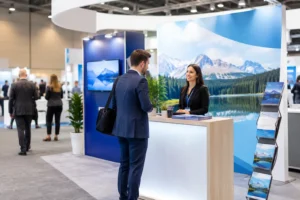
Most exhibitors start with the visual anchor of the space. That usually means a backdrop, banner stand, mounted sign, table cover, or other large-format display that makes your company recognizable from a distance. If people cannot tell what you do within a few seconds, the booth has already lost momentum.
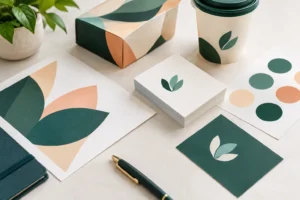
Then come the hand-held materials. Brochures, flyers, sell sheets, postcards, catalogs, and business cards still do real work at events. Even when QR codes are part of the strategy, attendees often want something they can carry, mark up, or hand to a colleague later. Print gives your message a second life after the show floor.
Finally, there are the support pieces that many teams forget until setup day. Product labels, promotional stickers, tabletop signs, price cards, directional signs, and branded forms can make a booth feel complete and easier to manage. These smaller items often solve practical problems on site.
Start with booth graphics that can be read fast
Convention traffic moves quickly. Your main graphics need to communicate clearly from several feet away, not just look good up close. That means fewer words, stronger hierarchy, and high-contrast design.
A booth backdrop or retractable banner should answer three questions right away: who you are, what you offer, and why it matters. If your messaging is too general, attendees may keep walking. If it is too dense, they will not stop long enough to figure it out.
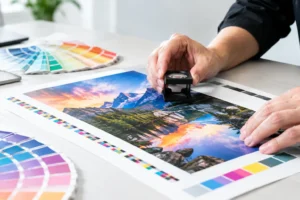
This is where print quality also matters. A sharp, color-accurate display tells people your company pays attention to presentation. Blurry images, pixelated logos, or flimsy materials suggest the opposite. For exhibitors spending heavily on event space and staffing, weak booth graphics are a costly place to cut corners.
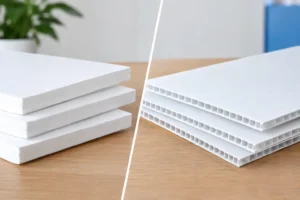
There is also a trade-off between portability and impact. Lightweight retractable banners are easy to transport and replace, while larger fabric displays or rigid signage can create a stronger visual presence. The right choice depends on your booth footprint, setup rules, and how often the display will be reused.
Printed handouts still support real booth conversions
It is easy to assume everything should be digital now. In practice, that depends on the audience and the event. Many attendees still prefer printed materials they can review after a long day on the floor, especially if they are comparing multiple vendors.
Business cards remain essential, but they should not carry the full burden of your follow-up strategy. A well-designed brochure or one-page sell sheet gives prospects more context, especially when your offer involves several services, technical details, or pricing tiers. If your team is having short conversations all day, print helps fill in the gaps.
Postcards and flyers work well when the goal is a simple offer, launch announcement, or event-specific promotion. Brochures are better when you need more room for benefits, product details, or company background. If you are targeting buyers rather than general attendees, a clean capabilities sheet can be more effective than a flashy leave-behind.
The key is choosing pieces people will actually keep. Thick stacks of generic literature often go straight into hotel trash cans. Focus on the materials that support your booth objective rather than printing every format available.
Business cards are small, but they carry a lot of pressure
At most conventions, business cards are still one of the most requested items at the booth. They need to be easy to read, consistent with the rest of your branding, and printed well enough to reflect the level of your business.
Cards are also one of the easiest items to underestimate. Teams often realize too late that contact details changed, quantities are short, or the person attending the show never received their updated cards. For companies sending multiple reps, each person should have enough cards for the full event, plus extras for networking outside booth hours.
If your sales process is relationship-driven, business cards matter even more. They are often exchanged in quick conversations where there is no time for a deeper handout. A card that feels polished and current keeps your brand looking prepared.
Tabletop print pieces do more work than most exhibitors expect
A booth table can either look like a storage surface or like a functioning sales station. Printed table covers, tabletop signs, product cards, and branded counter displays help define that space.
A fitted or draped table cover with your logo creates a cleaner presentation instantly. It also hides boxes, samples, and personal items that can make a booth feel disorganized. Small signs can direct traffic toward a demo, highlight a special offer, or explain a product line without requiring a staff member to repeat the same talking points all day.
These pieces are especially useful when your team is handling several visitors at once. Clear tabletop messaging keeps the booth working even when every staff member is occupied.
Top convention booth print essentials should match your booth goal
Not every exhibitor needs the same print package. A startup launching one product may need bold visuals and a short leave-behind. A service business may need brochures, appointment cards, and more detailed sales collateral. A company selling on the floor may need signage, price displays, labels, and branded packaging.
That is why planning around your booth goal matters more than building a generic checklist. If your priority is collecting leads, your print should support short conversations and easy follow-up. If your goal is education, the materials need to explain more. If you are replacing missing or damaged pieces hours before setup, speed and consistency become the priority.
This is where working with a local production partner can make a real difference. In a convention city, last-minute changes are common. Booth numbers change, products sell out, signage gets damaged in transit, and marketing teams realize they need more collateral after the first day. Fast turnaround is not just convenient. It can protect the investment you already made in the event.
Don’t forget the pieces that solve last-minute booth problems
Some of the most valuable convention print items are the ones ordered after something goes wrong. Replacement banners, updated flyers, rush business cards, extra posters, branded stickers, and temporary signs often save a booth from looking incomplete.
This is especially true when a shipment arrives damaged, a product update changes key messaging, or attendance is stronger than expected and handouts run low. A reliable local printer near the convention corridor becomes part of your event backup plan.
Design One Printing serves many businesses facing exactly that kind of deadline. For exhibitors in Las Vegas, speed matters, but so does getting materials that still look polished when the clock is tight.
How to choose the right print mix before the show
The best way to avoid overordering or underpreparing is to ask a few simple questions early. How far away should people be able to recognize your booth? What do they need to understand immediately? What should they leave with? What can your staff realistically hand out during a busy hour?
Those answers usually point you toward the right combination of large-format graphics, handouts, and support materials. They also help you decide where premium finishes matter and where standard production is enough. For example, your main booth display needs visual impact, while a simple information flyer may just need to be clear, readable, and ready on time.
It also helps to review logistics before printing. Check venue rules, booth dimensions, shipping deadlines, and setup schedules. A beautiful display that arrives late or does not fit the approved space creates unnecessary stress. Print planning works best when design, production, and event operations are aligned.
A convention booth does not need every printed product available. It needs the right pieces, produced well, delivered on time, and built around the way your team actually sells. When your print supports the booth instead of complicating it, your staff can focus on conversations, leads, and follow-up instead of scrambling to fix avoidable problems.