
A booth is built on timing. If your brochures arrive late, your banner prints with the wrong date, or your business cards run out on day one, the problem is not minor – it affects lead capture, brand credibility, and the pace of your entire event. That is why rush printing for conventions matters so much in Las Vegas. When schedules tighten and details change, fast print production becomes part of the event plan, not just a backup option.
Convention timelines rarely move in a straight line. Booth numbers change. Sponsors update logos. Sales teams realize they need one more version of a handout for a different audience. Sometimes materials are delayed in shipping, damaged in transit, or left behind entirely. In a convention city, these situations are common enough that experienced exhibitors plan for them. They do not assume every item will be perfect weeks in advance. They work with a printer that can respond quickly when real-world event pressure hits.
Why rush printing for conventions is different
Rush convention printing is not the same as ordering standard office materials on a short deadline. Convention work is tied to show hours, freight windows, setup times, venue rules, and brand presentation. A postcard for a local campaign can often be reprinted later with little consequence. A missing booth graphic during exhibitor setup has a much higher cost.
The stakes are higher because every printed item has a job to do. Business cards support networking. Brochures help sales conversations continue after the event. Posters and signs guide foot traffic and reinforce messaging from a distance. Stickers, handouts, and branded pieces can attract attention in crowded halls where every exhibitor is competing for a few seconds of interest.
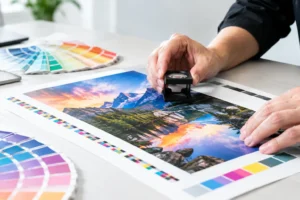
Speed matters, but speed alone is not enough. A rush job still has to be readable, color-accurate enough for brand standards, and finished in a format that works at the booth. This is where many exhibitors run into trouble. They focus only on getting something printed fast and overlook trim size, bleed, stock, mounting, or display compatibility. The result may be quick, but not usable.
What exhibitors usually need at the last minute
The most common convention rush orders are practical, not flashy. Business cards are near the top of the list because they are easy to underestimate and impossible to replace with a verbal promise. Brochures and flyers also come up often when messaging changes after final approval or when a team decides it needs something more specific for the event audience.
Large-format pieces are another frequent emergency. A banner with the wrong offer or an outdated logo can make a booth look unprepared. Foam board signs, posters, mounted graphics, and trade show display panels are often the pieces that need immediate correction because they are visible from across the floor. If they are wrong, everyone sees it.
Then there are the support materials people forget until setup begins: table signs, branded stickers, postcards, sell sheets, counter cards, directional signs, and simple handouts for product demos. These are not always the centerpiece of a booth, but they help it function. When they are missing, the team often feels it right away.
How to make a rush print order move faster
If you need rush printing for conventions, the fastest order is usually the one that is easiest to produce correctly. That starts with a press-ready file, clear specs, and a realistic understanding of what matters most. If your event starts tomorrow, reducing decision points can save hours.
Send final artwork whenever possible. Include trim size, quantity, preferred stock, finishing needs, and whether the piece will be displayed flat, mounted, folded, or freestanding. If color is critical, say so early. If you are flexible on paper or finish, that can open up faster production options. Many delays happen not in printing, but in clarification.
It also helps to prioritize. If your team needs everything at once, identify the must-have items first. A booth can often operate with temporary substitutions for some materials, but not for others. A mounted sign and business cards may need immediate production, while a secondary flyer or extra postcard can follow later the same day or next morning. Good rush service depends on smart sequencing.
Choosing the right materials under deadline pressure
Under tight timelines, the best material is not always the premium option. It is the option that supports the event goal and can be produced reliably within your window. For example, a standard coated stock for brochures may be the better choice if it is available immediately and presents your brand cleanly. Waiting for a specialty paper that risks delay may not be worth it.
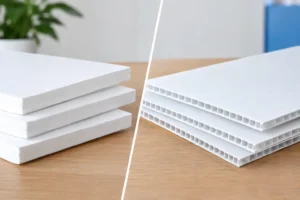
The same logic applies to signs and displays. A foam board sign may be the right answer for a quick replacement graphic because it looks polished, transports easily, and can be turned around fast. A more complex display piece might look impressive, but if setup is in a few hours, simpler production often wins.
This is where a local print partner adds value. They can tell you when to keep the spec as planned and when to make a practical adjustment that protects your deadline. Not every job should be simplified, but many emergency jobs benefit from choices that are efficient without looking rushed.
Why local production matters in Las Vegas
Convention work in Las Vegas moves quickly, and local access changes the equation. When your printer is nearby, pickup is easier, approvals are faster, and last-minute corrections are more manageable. That matters when exhibitor schedules are tight and venue timelines leave little room for shipping delays.
Local production also helps with problems that are hard to solve remotely. If a file needs adjustment for a banner stand, or a sign size has to change after booth setup, those revisions can be handled much faster when the printer understands the local event environment. A business serving convention clients every week tends to know what products are commonly needed, what deadlines are truly urgent, and what can realistically be completed on time.
For exhibitors staying near the Strip or working around major convention centers, convenience is not just a perk. It is operational value. The easier it is to get materials approved, printed, and in hand, the less disruption your team faces before showtime.
When design support becomes part of the rush solution
Not every rush order begins with a finished file. Sometimes the problem is not only production speed. It is that the artwork is incomplete, outdated, or not set up correctly for print. In those cases, design support can be just as important as press capacity.
A brochure may need a pricing update. A flyer may need a sponsor logo swapped in. A banner may need resized artwork because the original file was built for digital use, not large-format output. These are small changes on paper, but they can stop an order if no one is available to fix them quickly.
That is one reason many exhibitors prefer working with a full-service provider instead of splitting design and print between separate vendors. If both parts of the job can be handled in one place, there are fewer handoffs and fewer chances for delay. In a rush environment, coordination is part of quality control.
What to expect from a dependable convention printer
A dependable rush printer should be clear about timing, specs, and trade-offs. If a product can be completed same day, you should know what file conditions and order timing make that possible. If a finishing option may slow the job down, that should be explained before production starts, not after.
You should also expect responsiveness. Convention printing is often time-sensitive enough that slow communication creates its own risk. Fast quoting, quick proof review, and direct answers matter because they help you make decisions without losing momentum.
In Las Vegas, Design One Printing serves businesses and exhibitors that need exactly that kind of support – fast turnaround, practical guidance, and print quality that still reflects the brand professionally. When the event clock is already running, having one responsive local team can make the difference between scrambling and staying on schedule.
The best time to think about rush printing is before you need it. Keep your key files organized, know which materials matter most, and work with a printer that is built for convention deadlines. When something changes at the last minute – and at conventions, something usually does – you will be in a much stronger position to respond quickly and still show up prepared.