
A booth can look polished on paper and still fall apart on the show floor because one banner was sized wrong, the brochures arrived short, or the QR code on the handout points to last year’s landing page. A solid trade show printing checklist helps you catch those problems before they become expensive, public, and hard to fix.
If you’re exhibiting in Las Vegas or flying in for a major event, the pressure is even higher. Setup windows are tight, venues are large, and replacement time disappears fast once freight is delayed or a file issue slips through. The smartest approach is to treat print production as part of show operations, not as a last-minute marketing task.
Build your trade show printing checklist around the booth experience
Start with the attendee journey. What do people see from the aisle, what do they read once they stop, and what do they take with them when they leave? That sequence should shape your print order.
Your large-format graphics do the distance work. Backdrops, retractable banners, hanging signs, foam boards, posters, and counter wraps need to communicate your brand and core message in seconds. If the design is crowded, the print quality will not save it. Short headlines, strong contrast, and readable type matter more than trying to fit every product feature on one wall.
Your handouts do the closer work. Brochures, flyers, postcards, sell sheets, presentation folders, and business cards should answer the questions your booth graphics introduce. If your booth says, “We solve X,” your print collateral should explain how, for whom, and what the next step is.
Then there are the support pieces people often forget until setup day. Tabletop signs, directional signs, product labels, window clings, floor decals, branded stickers, badges, agenda cards, and giveaway inserts may not be the centerpiece of your booth, but they affect how organized and professional your space feels.
What to confirm before anything goes to print
The most common trade show printing problems start before production. They happen when teams approve artwork too quickly, assume quantities, or skip venue details.
Begin with dimensions. Every display item needs a final confirmed size, including visible area, bleed, and hardware compatibility if the graphic fits into a frame or retractable stand. “Close enough” does not work with trade show displays. A graphic that is off by even a small amount can wrinkle, crop awkwardly, or fail to fit at all.
Next, confirm the purpose of each piece. A brochure meant for general traffic will usually need different content and quantity than a one-page sheet your sales team uses in scheduled meetings. If you print everything in the same format because it feels easier, you often end up overspending on some items and under-ordering the ones that matter most.
Files need a real proofing pass, not just a quick glance. Check logo quality, image resolution, spelling, phone numbers, dates, booth numbers, website URLs, QR codes, and offers. Print magnifies mistakes. A typo on a digital draft is annoying. The same typo on a ten-foot backdrop is memorable for the wrong reason.
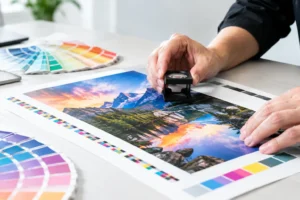
Brand consistency matters too. Colors should align across banners, brochures, cards, and signs as closely as possible, but keep realistic expectations. A fabric backdrop, vinyl banner, coated brochure, and adhesive decal do not always reproduce color exactly the same way. If precise brand color is critical, discuss that early instead of assuming every substrate will behave identically.
Quantities are not guesswork
One of the fastest ways to waste budget is printing far too much collateral. One of the fastest ways to miss leads is printing too little. The right quantity depends on traffic expectations, booth staffing, and how selective your team will be when handing materials out.
For high-volume shows, lightweight pieces like postcards or one-sheets often make more sense than a thick multipage brochure for every visitor. If your sales cycle is longer or your product is technical, a smaller run of detailed brochures plus a larger run of recap cards can be a better mix.
Business cards deserve special attention. Teams still underestimate how many they go through at conventions, especially in Las Vegas where networking continues after show hours. Make sure each attending staff member has enough, and verify titles, mobile numbers, and email addresses before reordering a familiar design with outdated details.
It also helps to separate what is essential from what is nice to have. Essential items are anything tied directly to booth function, brand visibility, or lead capture. Nice-to-have items include extras that add polish but will not derail your event if quantities are reduced.
Deadlines should work backward from install, not event day
A practical trade show printing checklist should always include timing. Event day is already too late as a production deadline. You need materials completed with enough margin to review, pack, ship, or pick up before move-in begins.
Work backward from booth installation, then from freight cutoff if materials are shipping to a venue, warehouse, or hotel. Add time for proof approval, design revisions, production, finishing, and delivery. Wide-format pieces, mounted signs, and custom display graphics often need different timelines than standard brochures or business cards.
Rush printing can absolutely save an event, but it should be a backup plan, not the plan itself. Fast turnaround is valuable when a speaker changes, booth staff increases, or a shipment goes missing. It becomes risky when the entire project is still undecided a day before setup.
If you know your event schedule is tight, consolidate vendors where possible. Working with one production partner for multiple items often reduces miscommunication, shortens approval cycles, and makes last-minute changes easier to manage.
The materials and finishes need to match the job
Print decisions are not just cosmetic. They affect durability, portability, and cost.
For handouts, think about how the piece will be used. A glossy brochure can look sharp for a premium product line, but an uncoated card may be better if your team needs to write notes on it. A heavy cardstock postcard feels substantial, but if you need to transport thousands of pieces, weight becomes a logistics issue.
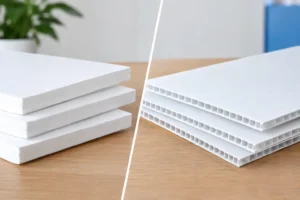
For signs and displays, ask how long the graphics need to last. A one-time event piece may not need the same material as a display used across multiple shows. Retractable banner graphics, mounted boards, adhesive graphics, and fabric displays all have different strengths. The best option depends on travel, setup conditions, storage, and how often the item will be reused.
Lamination, grommets, trimming, folding, scoring, and packaging also need to be decided before production starts. Those details sound minor until someone opens a shipment on site and realizes a piece cannot be hung, folded, or distributed the way the team expected.
Don’t forget the content that drives response
Printing the right items is only part of the job. They also need to move people toward action.
Every major printed piece should answer one core question: what should the attendee do next? That might be booking a demo, scanning a QR code, visiting a landing page, calling a rep, or taking a sample sheet for follow-up. If the call to action is weak or buried, the print piece becomes decoration instead of a tool.
Trade shows also create content compression. People are busy, distracted, and carrying too much. Your print messaging needs to get to the point quickly. Keep headlines plain, benefits specific, and offers easy to understand. If a sentence sounds like marketing filler, cut it.
This is where design and production need to work together. A file can be technically print-ready and still fail because the message is hard to scan from six feet away or the brochure opens with too much company background and not enough practical value.
A last-minute trade show printing checklist still needs priorities
When deadlines tighten, do not try to save everything equally. Protect the pieces that matter most first.
Prioritize booth identification, primary brand graphics, business cards, and core sales collateral. After that, move to support signs and secondary handouts. Promotional extras can wait if the schedule is compressed.
Proof only the changes that matter most if you are under real time pressure, but proof them carefully. Updated dates, contact info, booth numbers, and QR codes deserve extra scrutiny because they tend to change late and cause the biggest on-site problems when wrong.
For exhibitors near the Strip or major convention centers, local production can make a real difference when a shipment misses the venue, a banner is damaged in transit, or a team realizes during setup that it needs additional signs by the next morning. That is where a responsive print partner earns trust. Design One Printing regularly supports businesses dealing with exactly that kind of deadline pressure.
The best checklist is the one that keeps your booth clear, consistent, and ready before the doors open. If you treat print as part of the event plan instead of an afterthought, you give your team a better chance to show up prepared, look professional, and make the most of every conversation.