
A postcard has only a few seconds to earn attention before it lands in a stack of mail. That constraint is exactly what makes it useful. When the audience, offer, and design are clear, a well-produced postcard can put a local business, event, or promotion directly in front of the people most likely to act. This guide to business postcard marketing explains how to build a campaign that looks professional, reaches the right customers, and supports a measurable business goal.
Start With One Job for Every Postcard
The fastest way to weaken a postcard campaign is to ask one piece to do too much. A restaurant may want to promote a new menu, private events, online ordering, and a seasonal special. A trade show exhibitor may want to introduce the company, announce a booth number, and sell three services. Give the postcard one primary job instead.
That job might be driving guests to a grand opening, generating estimates for a service business, bringing previous customers back, filling appointments, or inviting qualified prospects to a Las Vegas convention booth. Once the objective is defined, every decision gets easier: the mailing list, headline, offer, call to action, format, and tracking method should all support it.
A useful test is simple: if someone sees only the front of the postcard, can they tell what is being offered and what they should do next? If not, simplify before printing.
Choose an Audience Before You Choose a Design
Postcard marketing works best when it is targeted. A broad mailing can make sense for a neighborhood restaurant, a community event, or a retail opening with local appeal. For higher-value services, a more focused list usually produces better results and wastes fewer printed pieces.
Define the audience by the factors that affect buying behavior. Geographic radius matters for salons, medical offices, restaurants, home services, and retail locations. Business type, job title, company size, and event attendance may matter more for B2B campaigns. A hotel supplier targeting convention exhibitors, for example, needs a different list than a contractor promoting services to homeowners.
Past customers are often the strongest starting point. They already know your business, so the message can be more specific: a seasonal offer, a reorder reminder, a new location, or an invitation to return. Prospect lists require more context and a stronger reason to respond.
Keep the message relevant to the audience. A postcard sent to nearby offices can emphasize convenience and a local offer. A postcard sent to event planners can lead with deadline reliability, production capabilities, or an appointment opportunity around an upcoming show.
Build an Offer Worth Keeping
A postcard does not need a deep discount to work, but it does need a clear reason to respond now. The most effective offers reduce hesitation. Think of a complimentary consultation, a limited-time package, priority booking, a sample, an event-only rate, or a service upgrade.
The offer should fit the value of the purchase. A percentage-off coupon may suit retail or dining. For professional services, a deadline-based consultation or a bundled add-on can preserve the perceived value of the brand. If the offer is too complicated, it will not be remembered. If it is too vague, it will not create urgency.
Use a real deadline when possible. “Book by Friday” is more actionable than “Limited time only.” For a trade show or convention, use the actual event dates and make the next step clear before attendees arrive.
Design for the Mailbox, Not the Monitor
Digital layouts often fail when they are treated as print layouts without adjustment. A postcard must be readable at arm’s length, survive handling, and communicate quickly. Start with a strong headline, one main image or visual idea, and a prominent call to action.
Keep the front focused on the benefit. The back must accommodate addressing and postal requirements, so it should be planned early rather than treated as leftover space. Avoid placing important copy too close to edges, and leave room for required address and postage areas if the postcard will be mailed.
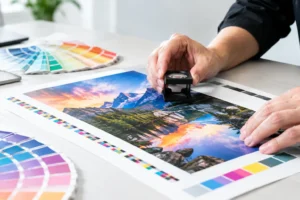
Typography should be easy to read. Fine script fonts, long paragraphs, and low-contrast text may look polished on a screen but become hard to scan in print. Use high-resolution images and inspect brand colors carefully. A good proof catches small issues before they become hundreds or thousands of printed pieces.
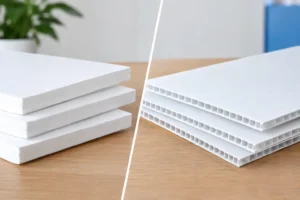
Paper stock also changes how the piece is perceived. A standard glossy stock can make colorful promotions pop, while a heavier uncoated stock can feel more premium and is easier to write on. If your campaign includes a handwritten follow-up or note, that trade-off matters. For high-touch industries such as real estate, hospitality, or professional services, a heavier stock can help the postcard feel more substantial.
Pick a Format That Supports the Message
The standard 4 x 6 postcard is economical and familiar. It works well for simple offers, appointment reminders, restaurant promotions, and neighborhood announcements. A 5 x 7 or 6 x 9 format gives you more room for photography, benefit-driven copy, maps, multiple service categories, or event information.
Bigger is not automatically better. Larger formats cost more to print and mail, so they need to earn their additional expense through a stronger offer, better creative, or a higher-value audience. For a short, direct message, a smaller postcard may be the smarter choice. For a convention campaign where booth visuals and product imagery matter, additional space can be worthwhile.
Consider whether the postcard is part of a larger printed set. Matching postcards, flyers, business cards, brochures, and booth graphics creates a more consistent presentation when prospects encounter your business at multiple points.
Make the Call to Action Easy to Follow
Every postcard needs one clear next step. It may be to call, scan a QR code, visit a landing page, bring in the card, request a quote, or stop by a booth. Do not give equal visual weight to five different actions. The reader should know exactly what to do without searching.
QR codes work best when they lead to a mobile-friendly page built for the campaign. Sending a prospect to a generic home page creates extra work and makes results harder to track. A dedicated page can repeat the offer, collect contact information, and provide a clear record of postcard traffic.
For local campaigns, include practical details: location, phone number, hours when relevant, and a recognizable service area. For an event campaign, include the event name, dates, venue, and booth number. A postcard is often read away from a desk, so the details should be immediately usable.
Plan Production and Mailing Around the Deadline
A postcard campaign has more moving parts than the print date alone. You may need time for design, list preparation, address processing, proof approval, printing, mail preparation, and postal delivery. If the postcard promotes a fixed event, work backward from the date when recipients need to see it.
For a local event, allow enough time for the piece to arrive with room for recipients to make plans. For appointment-based businesses, mail early enough for the response window to be useful. If you are promoting an upcoming Las Vegas convention, avoid relying on delivery at the last minute. A postcard should create anticipation, not arrive after the booth has been packed up.
Rush production can be valuable when plans change, inventory runs low, or a new opportunity appears. It is still best to finalize content before the deadline pressure begins. Last-minute edits are where incorrect phone numbers, outdated dates, and missed postal details tend to appear.
Track Response and Improve the Next Drop
Postcard marketing becomes more valuable when you know what produced the response. Use a unique offer code, campaign-specific phone number, QR code, landing page, or form field. Ask walk-in customers how they heard about the offer, then record the answer consistently.
Track more than redemptions. Compare the number of inquiries, scheduled appointments, quote requests, sales, and average order value against the total campaign cost. A campaign with fewer responses may still be the better performer if it reaches more qualified buyers.
Test one major variable at a time when possible. You might test a different headline, offer, audience segment, or postcard size. Changing everything at once makes it difficult to identify what helped. Repeating a successful campaign with refinements is usually more effective than constantly starting over.
When Local Print Support Makes the Difference
A postcard is a small piece of marketing, but it often connects to a larger deadline: an opening, sale, trade show, fundraiser, or sales push. Working with a local production partner can help when you need to review paper options, verify file setup, coordinate matching materials, or move quickly on a rush order.
Design One Printing supports Las Vegas businesses and exhibitors with postcard production, design assistance, and fast turnaround for campaigns that cannot wait on a distant vendor. The right postcard is not simply printed on time. It arrives with a focused message, a polished finish, and a clear reason for the recipient to respond.