
A corrugated plastic sign can solve a very immediate problem: you need visible, professional messaging that holds up outside, installs quickly, and does not consume the budget reserved for the rest of your campaign. This corrugated plastic sign review looks at where these signs perform well, where their limits show, and how to order them in a way that supports your business, event, or exhibit deadline.
For Las Vegas businesses, timing often matters as much as appearance. A property listing needs directional signs before an open house. A convention exhibitor needs booth messaging before doors open. A restaurant, retailer, or event organizer may need temporary signage replaced with little notice. Corrugated plastic is one of the most practical materials for those jobs because it is lightweight, weather-resistant, and easy to display.
What Is a Corrugated Plastic Sign?
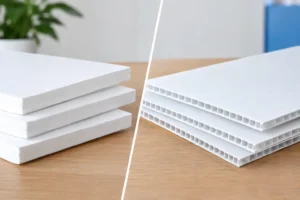
Corrugated plastic, often called coroplast, is a rigid sheet made from fluted polypropylene. The internal channels give it structure without adding much weight. Think of it as a plastic board with a series of small parallel air channels running through the middle.
That construction makes the material especially useful for yard signs, real estate signs, parking notices, directional signs, construction messaging, campaign signs, event information, and short-term retail promotions. It is not intended to feel like a premium permanent plaque or a heavy architectural panel. It is intended to deliver clear messaging reliably and efficiently.
The material is commonly printed in full color on one or both sides. It can be cut to standard sizes or custom dimensions, and the flutes can be oriented to accept wire stakes for ground installation. For many temporary and semi-permanent business needs, that combination is hard to beat.
Corrugated Plastic Sign Review: Key Strengths
The main advantage is practical durability. Corrugated plastic does not absorb water the way paperboard does, so rain, sprinkler spray, and humidity are far less likely to ruin the sign. In a market where outdoor messaging may stay up for days or weeks, that matters.
It is also light enough for quick handling. A team can carry a stack of signs to an event, install directional markers around a venue, or move promotional signs between locations without special equipment. For exhibitors and event organizers working against a load-in schedule, that convenience saves time.
Print quality is another strong point when the artwork is prepared correctly. High-resolution images, bold color blocks, readable type, and clean logo files reproduce well on corrugated plastic. The finished sign gives customers a much more polished impression than handwritten boards or improvised paper notices taped to a wall.
Cost is often the deciding factor. Corrugated plastic typically offers a lower-cost alternative to aluminum composite panels, acrylic, PVC, or fabricated signage. If you need multiple signs across a property, a neighborhood, a trade show floor, or several store locations, the material allows you to maintain consistency without overbuilding the job.
Best uses for corrugated plastic
This material earns its place when the message needs to be temporary, mobile, or easy to replace. Real estate professionals use it for open-house and directional signage. Contractors use it for site identification and safety messaging. Political campaigns use it for yard signs because it works naturally with wire stakes.
For businesses, the strongest applications are often promotional or operational: curbside pickup instructions, event parking, wayfinding, sale messaging, grand-opening notices, sponsor recognition, and temporary service information. Convention vendors can use corrugated plastic signs for booth pricing, product highlights, meeting directions, and off-site event details.
In Las Vegas, it is also a useful option for hotel-adjacent events, pop-up activations, hospitality functions, and local networking programs. If messaging may change after one event or one season, a replaceable sign is usually more sensible than investing in a permanent substrate.
Where Corrugated Plastic Has Limits
A useful review should be clear about the trade-offs. Corrugated plastic is durable for its category, but it is not indestructible. Strong winds can bend or damage a poorly supported sign. Extended direct sun can gradually affect color over time, especially on signs expected to remain outdoors for many months.
It can also look less refined than thicker, solid materials. The fluted edge is visible up close, and the board can flex if it is very large or unsupported. For a corporate lobby, an upscale retail interior, or permanent building signage, acrylic, metal, foam PVC, or another rigid sign material may produce the better result.
Installation deserves attention as well. A sign is only as effective as its mounting method. Yard signs need compatible stakes and flute direction. Wall-mounted signs need appropriate holes, hardware, or adhesive based on the surface. Large signs may need a frame or a more rigid substrate to avoid sagging.
The right question is not whether corrugated plastic is the best sign material in every situation. It is whether it is the best material for the duration, location, budget, and visibility requirements of your specific project.
Choosing the Right Size, Thickness, and Design
Sign size should be driven by viewing distance. A small countertop or booth sign can communicate a price, QR code, or brief instruction at close range. A parking direction sign needs larger type and stronger contrast because drivers must understand it in seconds. A roadside or property sign needs room for a concise message that stays readable from a distance.
Avoid trying to make one sign do too much. The most effective corrugated plastic signs usually lead with one message: “Open House,” “Event Entrance,” “Now Hiring,” “Reserved Parking,” or “Sale Today.” Add a logo, contact information, or directional arrow only after the primary message is easy to see.
Color contrast is more valuable than decorative complexity. Dark text on a light background or light text on a dark background generally reads quickly. Fine lines, small reverse type, and low-contrast colors can disappear outdoors or at a busy convention. If customers have to stop and study the sign, it is not doing its job efficiently.
Thickness should match the environment and support method. Thinner material works well for short-term indoor displays or signs supported in a frame. A thicker board may be the better choice for outdoor use, frequent handling, or larger sign sizes. Your print provider can recommend an option based on where and how the sign will be used.
Single-sided or double-sided printing?
Single-sided printing is appropriate when the sign will sit against a wall, window, booth structure, or other surface that blocks the back. Double-sided printing is more useful for yard signs, hanging displays, aisle messaging, and locations where people approach from either direction.
Double-sided signs increase visibility, but they are not automatically necessary. If the sign faces a specific traffic flow, putting the budget toward a larger size, better mounting, or more locations may create a better return.
Artwork and Production Details That Affect Results
Good production begins before the sign reaches the printer. Use a high-resolution logo file whenever possible. Vector artwork is ideal for logos, text, icons, and simple graphics because it stays sharp at larger sizes. Photos should be large enough for the final print dimensions, not pulled from a small web image.
Keep important text away from the edge. A safe margin gives the sign a cleaner appearance and protects essential information if the sign is trimmed or installed with hardware. If a wire stake will slide into the flutes, plan the design around that orientation so the message remains upright.
For rush orders, clear decisions make the process faster. Provide the final size, quantity, one-sided or two-sided requirement, installation method, and print-ready artwork early. If the design still needs work, say so immediately. A production-oriented print partner can help with layout adjustments, but knowing the intended use prevents costly revisions.
At Design One Printing, this is especially relevant for businesses and exhibitors working around Las Vegas event schedules. A sign that is designed for the correct viewing distance, installation method, and turnaround window is easier to produce accurately under pressure.
Is Corrugated Plastic Worth It?
For temporary outdoor signs, event directions, property messaging, promotions, and campaign-style displays, corrugated plastic is usually worth it. It provides a professional printed surface, withstands typical outdoor exposure, travels easily, and keeps per-sign costs manageable when you need quantity.
Choose another material when permanence, rigidity, a premium edge finish, or long-term outdoor exposure is the priority. That is not a weakness in corrugated plastic. It is simply a reminder to match the substrate to the job rather than forcing every project into the same format.
If your deadline is close, start with the practical details: where the sign will be seen, how long it must last, how it will be installed, and what one message the viewer needs to understand. Those answers turn a basic plastic board into signage that directs traffic, supports sales, and helps your business look prepared when it matters most.