A menu gets handled more than almost any other piece of marketing in your restaurant. Guests read it, servers point to it, spills find it, and it has to keep representing your brand through every shift. The best restaurant menu printing options balance appearance, durability, update frequency, and the pace of your service – not just the lowest cost per piece.
For a Las Vegas restaurant, bar, café, or hotel venue, that decision can carry extra weight. High guest volume, seasonal traffic, convention crowds, and last-minute menu changes all affect the format that makes sense. A fine-dining dinner menu has different production needs than a poolside cocktail list or a quick-service counter menu.
Start With How Your Menu Is Used
Before selecting paper stock or finish, look at what happens to the menu once it reaches the table. Is it replaced every week to accommodate chef specials? Does it need to survive breakfast, lunch, and dinner service? Is it displayed behind a counter, tucked into a check presenter, or handed to guests at a busy event?
The right print choice comes from those answers. Restaurants that change prices or offerings frequently often benefit from economical flat menus or printed inserts. Operations with a stable menu and heavy table turnover may get better value from a more durable laminated format. For temporary events, a polished single-sheet menu can deliver the right look without investing in a long-lasting piece that will be outdated tomorrow.
Also consider the environment. Patio dining, bars, pool areas, and family restaurants typically need greater moisture and wear resistance than a quiet dining room. A menu that looks excellent on opening night but curls, stains, or tears after a few days is not the cost-effective choice.
Best Restaurant Menu Printing Options by Format
Flat Menus for Flexible Updates
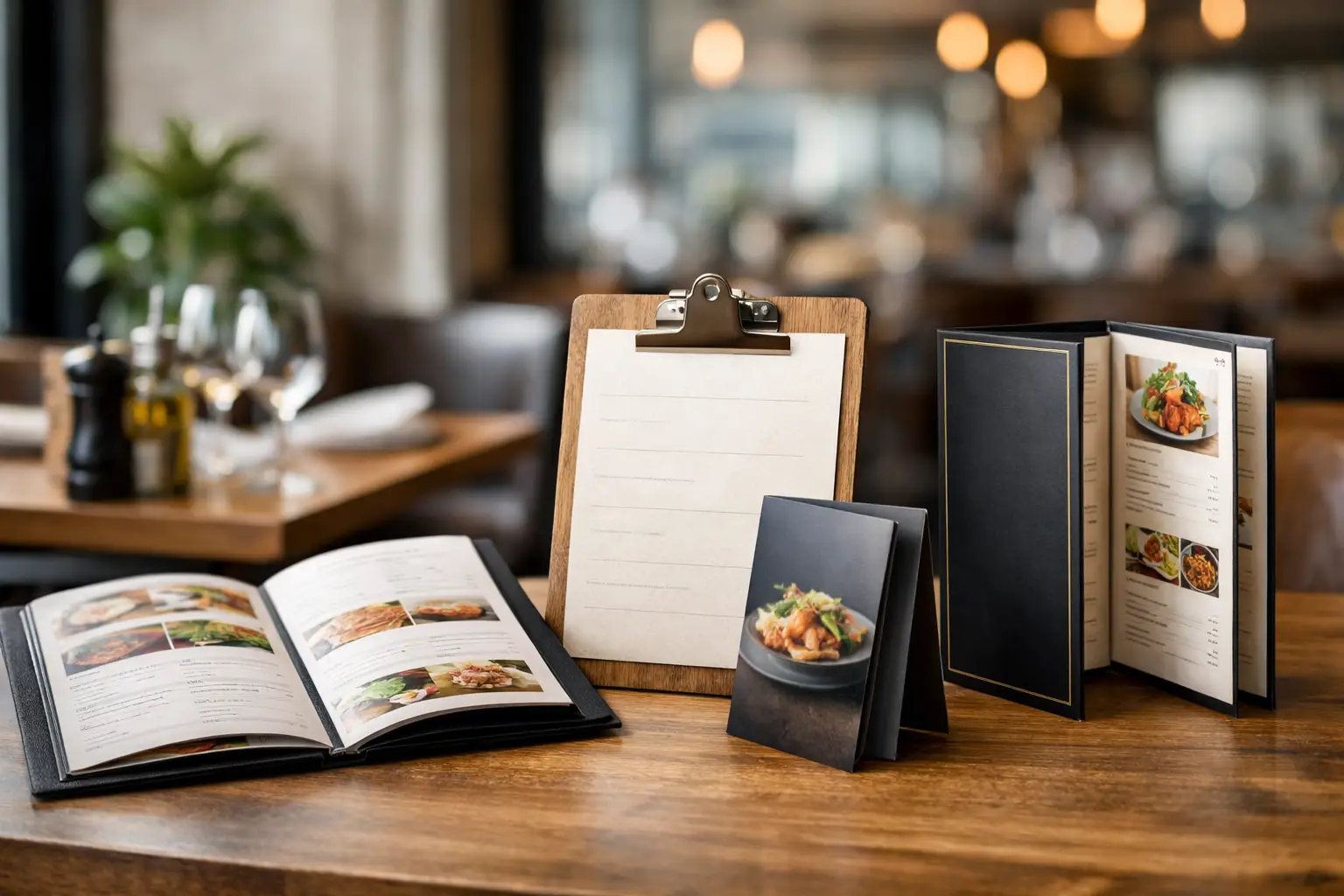
A flat menu is a single printed sheet, usually produced in a standard size such as 8.5 x 11 inches, 11 x 17 inches, or a custom trim size. It is straightforward, professional, and easy to replace. This format works especially well for cafés, lunch menus, takeout menus, tasting menus, event menus, and restaurants that revise offerings often.
Uncoated text-weight paper gives a relaxed, tactile feel and is easy to write on when needed. A heavier cover stock feels more substantial and holds up better during service. If your menu includes high-quality food photography, cocktails, or colorful branding, a coated stock can make images and color blocks appear more vivid.
The trade-off is durability. Without protection, flat menus can show fingerprints, moisture marks, and folded corners quickly. They are best when low replacement cost and fast updates matter more than long-term reuse.
Folded Menus for More Space
Folded menus provide additional content space without making the menu feel oversized at the table. A bi-fold menu works well for a wine list, full dinner menu, or restaurant with distinct categories such as appetizers, entrées, desserts, and beverages. Tri-fold menus can suit casual dining, room-service menus, or counter-service operations that need to organize a larger selection.
The layout matters as much as the fold. Panels should guide the guest naturally from one category to the next, with pricing and descriptions easy to scan under restaurant lighting. Avoid squeezing too much copy into small type simply because a folded menu offers more room. A crowded menu slows down ordering and can make even a strong brand look less polished.
For folded menus used repeatedly, consider a heavier paper stock with scoring before folding. Scoring creates a cleaner fold and reduces cracking, particularly on coated paper with dark or solid-color backgrounds.
Laminated Menus for High-Volume Service
Laminated menus are a practical choice for busy dining rooms, patios, bars, and family-friendly restaurants. Lamination adds a protective layer that helps resist spills, grease, frequent handling, and routine cleaning. It can extend the usable life of a menu significantly compared with an uncoated sheet.
Gloss lamination produces bold color and a noticeable shine, which can be effective for cocktail menus and image-heavy designs. Matte lamination has a more refined, low-glare appearance and is often easier to read under bright overhead lighting. Soft-touch lamination offers a premium feel, though it may not be the first choice for menus that need constant wiping and the lowest possible replacement cost.
Lamination is not ideal for menus that change every few days. When prices, ingredients, or specials move frequently, reprinting laminated sets can create unnecessary expense. In that situation, use a durable menu cover with replaceable printed inserts instead.
Menu Covers and Replaceable Inserts
Menu covers give restaurants a more upscale presentation while allowing individual pages to be changed as needed. They are a strong fit for steakhouses, hotel restaurants, wine programs, fine dining venues, and concepts with seasonal pricing or rotating chef selections.
The cover creates the lasting brand impression. Inside, printed inserts can be updated without replacing the entire menu system. This approach offers flexibility, but it does require attention to sizing, hole placement, binding style, and the number of pages. An insert that shifts, wrinkles, or feels loose can undermine an otherwise premium presentation.
For the cleanest result, plan the cover and insert dimensions together from the start. That is particularly useful when menus include separate lunch, dinner, beverage, dessert, or wine sections.
Waterproof Synthetic Menus for Demanding Environments
Synthetic paper menus are designed for conditions where regular paper struggles. They are water-resistant, tear-resistant, and well suited to pool decks, outdoor dining, beachside service, bars, breweries, and high-turnover casual concepts.
This option generally costs more than standard paper, but it can reduce replacement needs in the right setting. It is also useful for menus that need to be wiped down regularly. The main consideration is feel: synthetic stock does not have the same texture as premium uncoated paper, so it may not match every brand, especially restaurants aiming for a warm, handcrafted aesthetic.
Table Tents, Inserts, and Limited-Time Menus
Not every menu message belongs on the main menu. Table tents, drink cards, seasonal inserts, and chef-special sheets let you promote profitable items without redesigning a complete menu. They are useful for happy hour, brunch, conventions, holiday offerings, limited-time cocktails, dessert features, and catering packages.
These pieces should look connected to the primary menu through matching colors, fonts, and logo treatment. A table tent that feels unrelated to the rest of the brand can look like an afterthought. On the other hand, a well-designed insert can focus attention exactly where you want it – on a premium pour, featured entrée, or upcoming event.
Paper, Finish, and Color Choices That Affect Results
Paper and finishing choices influence how guests perceive the restaurant before they taste the food. Thick uncoated stock can feel approachable and craft-focused. Glossy stock can make full-color photography pop. Matte stock often reads as more modern and upscale, while reducing glare from overhead lights.
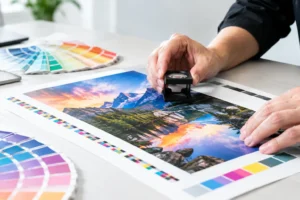
Color accuracy matters when your menu uses branded colors or food images. A deep red, warm gold, or signature green that prints inconsistently can weaken brand recognition. Build adequate contrast between text and background, especially for prices and descriptions. Light gray type on a dark background may look stylish on a screen but become difficult to read in a dim dining room.
If your menu includes QR codes, test them from a printed proof before placing a full order. Codes should have enough clear space around them and sufficient contrast to scan reliably from different phone cameras.
Design for Faster Ordering and Better Margins
A menu is both a service tool and a sales tool. Guests should be able to identify categories, understand descriptions, and locate pricing quickly. Clear hierarchy helps servers move orders along during peak periods, while thoughtful placement can draw attention to signature dishes, add-ons, and higher-margin items.
Keep type sizes realistic for the audience and setting. Fine dining can support more descriptive copy, while a fast-casual menu needs immediate clarity. Use high-resolution logos and food photography, and leave enough space around important content. Dense layouts often lead to missed details, longer ordering times, and a menu that feels less confident.
When time is tight, having design and production coordinated through one local print partner can prevent avoidable delays. Design One Printing can help restaurants prepare menu files, select practical materials, and produce polished menu pieces for regular service, a grand opening, or a time-sensitive Las Vegas event.
Plan Your Print Quantity Around Change Frequency
Ordering a larger quantity usually lowers the price per menu, but only when the content will stay current. If you are testing new dishes, updating prices, or adjusting to seasonal supply changes, a shorter run is often the smarter business decision. It protects you from storing stacks of menus that no longer match the kitchen.
For stable menus, consider ordering enough for active service plus a reserve set for replacements. For changing menus, print the core piece in a durable format and use smaller insert runs for the information most likely to change. That approach keeps the guest experience consistent while giving your team room to adapt.
The best menu is the one guests can read easily, your staff can use confidently, and your restaurant can update without stress. Choose materials based on real service conditions, then print a format that still looks as good during the rush as it did when it came off the press.