A banner installed outside a Las Vegas storefront at 9 a.m. can face intense sun, dry heat, wind, dust, and heavy foot traffic before the day is over. Choosing the best materials for outdoor banners is not just a print decision. It determines whether your message stays sharp, readable, and professionally presented for the full length of a promotion, event, or campaign.
For most business uses, vinyl remains the reliable starting point. But a solid vinyl banner is not automatically the right answer for every location. A banner stretched across a windy fence, mounted above a busy entrance, or displayed for months in direct sun needs a material selected around its actual conditions. The right choice balances durability, image quality, viewing distance, installation method, and deadline.
Best Materials for Outdoor Banners by Use
Vinyl banners for everyday business promotion
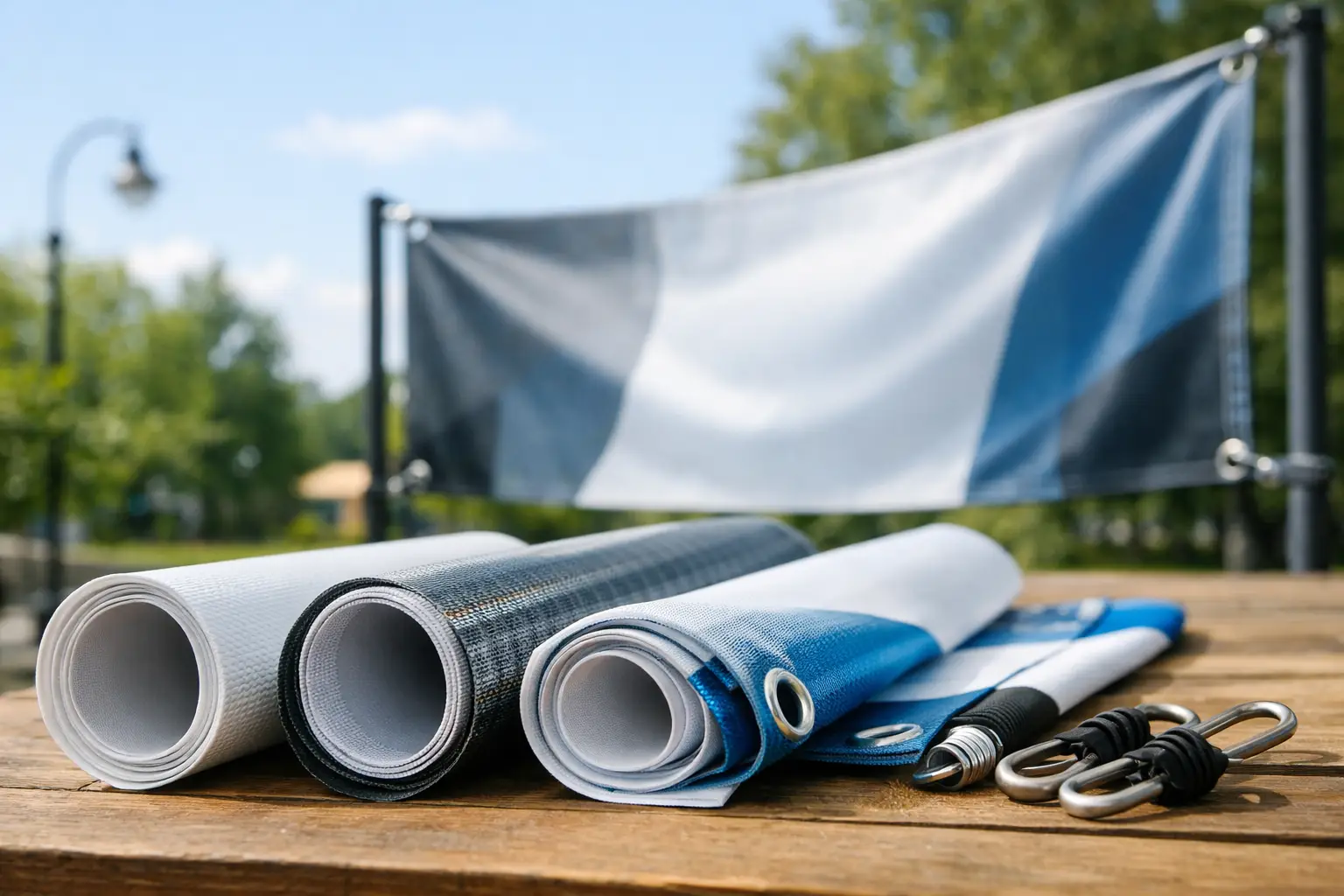
Scrim vinyl is the standard material for many outdoor banners, and for good reason. It is made with a polyester mesh reinforcement sandwiched between vinyl layers, giving it the strength needed for short- and medium-term outdoor display. It produces strong color, crisp graphics, and a smooth surface that works well for logos, large type, product images, and promotional offers.
A 13-ounce vinyl banner is often a practical choice for grand openings, retail sales, restaurant specials, event wayfinding, sponsor banners, and temporary construction messaging. It is durable enough for typical exterior conditions while remaining easy to roll, transport, and install. For a banner that will be used repeatedly or left up longer, a heavier 18-ounce vinyl can provide additional body and resistance to handling wear.
Vinyl is especially effective when your message needs to be read from a distance. High-contrast colors and bold lettering print clearly on its opaque white surface. If a banner will hang against a wall, fence, or solid storefront, standard vinyl gives you a clean, polished result without adding unnecessary cost.
The trade-off is wind. A large solid vinyl banner acts like a sail. Even strong material can strain at the grommets, hems, or mounting points if it is installed in an exposed area without enough tension or support.
Mesh banners for windy locations
Mesh banner material is designed for places where wind is part of the job. Its small perforations allow air to pass through, reducing stress on the banner and the structure holding it. For fence graphics, parking lot banners, street-facing promotions, job sites, sports facilities, and large exterior event signage, mesh is often the safer choice.
From a few feet away, the perforations are barely noticeable. At the viewing distance common for outdoor signage, the image and message remain clear. Up close, however, mesh does not have the same solid, photo-smooth finish as standard vinyl. Fine details and very small text are less effective, so artwork should be designed with larger type, simple graphics, and strong contrast.
Mesh can also be a smart option for convention-related outdoor activations in Las Vegas, where temporary signage may be exposed to gusts around open entries, parking areas, and event venues. It helps protect the banner from excessive wind load, but it does not replace proper installation. Reinforced hems, securely placed grommets, and appropriate hardware still matter.
Blockout vinyl for double-sided messages
When a banner must be read from both sides, blockout vinyl is worth considering. This material contains an opaque layer that prevents the artwork on one side from showing through the other. It is a strong fit for pole banners, hanging promotions, entrance signage, directional displays, and any installation where viewers approach from more than one direction.
Standard vinyl can sometimes be printed on both sides, but light passing through the material may reduce readability and muddy colors. Blockout vinyl solves that problem by keeping each side visually separate. It generally costs more than a one-sided banner, yet the investment makes sense when both sides are part of the campaign.
Because double-sided banners are often suspended or mounted in exposed positions, material selection should be paired with the right finishing method. A heavier hem, durable grommets, and adequate support points help the banner remain straight and readable rather than curling or pulling under tension.
Polyester fabric for a premium event look
Fabric banners can work outdoors for short-term, protected, or event-focused applications. Polyester fabric offers a softer, more upscale appearance than vinyl, making it a good match for hospitality events, branded entrances, photo opportunities, ceremonies, and sponsor displays where presentation carries as much weight as durability.
Fabric also reduces glare. That can be useful for banners placed near lighting, windows, or event check-in areas where vinyl reflections could interfere with photography or visibility. Dye-sublimated fabric graphics can deliver rich color and a refined finish, particularly for brand-heavy displays and high-end event environments.
For long-term exposure to rain, dust, strong wind, and constant direct sunlight, fabric is usually not the first choice. It can absorb moisture, become soiled more easily, and require more careful handling. Use it when visual finish and a temporary outdoor setting are the priority, not when the banner must endure months of hard weather.
Match Material Weight to the Job
Material weight affects how a banner hangs, how it handles wind, and how well it holds up over time. Heavier is not always better. A large, heavy banner mounted with insufficient hardware can create more stress at the installation points than a lighter material properly matched to the location.
For short promotions under a few weeks, standard vinyl is commonly enough. For repeat use, extended campaigns, or locations where the banner may be handled frequently, a heavier vinyl and reinforced finishing can be worthwhile. For open fencing or exposed exterior areas, mesh often beats a heavier solid vinyl because airflow matters more than thickness.
Think about the size, too. A small 2-by-4-foot banner near a storefront door and a 10-by-20-foot banner on a perimeter fence are completely different production projects. The larger banner needs more attention to material, hem strength, grommet spacing, and the condition of the structure where it will be installed.
Finishing Is Part of Outdoor Durability
The printed material gets most of the attention, but finishing often determines whether an outdoor banner lasts. Grommets, hems, pole pockets, and reinforcement should be chosen for the way the banner will be displayed.
Grommets are useful for most wall, fence, and frame installations, especially when placed at regular intervals along the perimeter. Hemming folds and reinforces the edges so the banner is less likely to tear under tension. For larger banners or windy sites, reinforced hems and extra grommets add meaningful protection.
Pole pockets are appropriate when the banner will slide onto a rod, crossbar, or hanging system. They create a cleaner presentation than visible grommets and work well for stage backdrops, storefront frames, and event installations. They are not always the best option for highly exposed outdoor locations unless the banner is also secured along other edges.
Avoid tying a banner too tightly with thin cord or using only a few attachment points. A little controlled movement can be normal, but uneven tension causes edge stress and can distort the printed message. If the banner needs to stay up through an event weekend or a seasonal promotion, use hardware suited to the installation surface.
Design Choices That Help Outdoor Banners Perform
Even the right material cannot rescue artwork that is too busy to read. Outdoor viewers are often walking, driving, or scanning a crowded event area. Your main offer, event name, directional message, or call to action should be understood within seconds.
Use large type and reserve the smallest text for details that people can read only after they stop. A phone number, booth number, date, or website should have enough contrast against the background to remain visible in bright sunlight. Avoid relying on subtle color shifts, thin fonts, or low-contrast photography for essential information.
For mesh banners, simplify further. The material performs best with bold graphics and generous spacing. For fabric banners, account for folds and movement by keeping critical copy away from edges and avoiding designs that depend on perfectly flat viewing conditions.
Las Vegas sun can be unforgiving on exterior graphics, particularly for banners displayed day after day. High-quality printing, suitable inks, and a material selected for the display period help colors stay more consistent. If your campaign will run for an extended season, plan for that exposure from the start instead of choosing solely on the lowest initial price.
A Practical Choice for Your Next Banner
Choose standard vinyl for most storefront, sale, event, and directional banners. Choose mesh when wind exposure is significant, especially on fences and open exterior structures. Choose blockout vinyl when both sides need to communicate clearly, and choose polyester fabric when a temporary outdoor event needs a more polished, low-glare presentation.
If the installation is rushed, provide the banner size, location, expected display period, and mounting method when requesting production. Those details allow a print partner to recommend material and finishing that fit the real job, not just the artwork file. At Design One Printing, that practical production guidance helps Las Vegas businesses and exhibitors move quickly while keeping their signage ready for public view.
A banner earns its space only when people can read it and trust what it says. Select the material around the environment it will face, then give the message enough visual room to do its job.