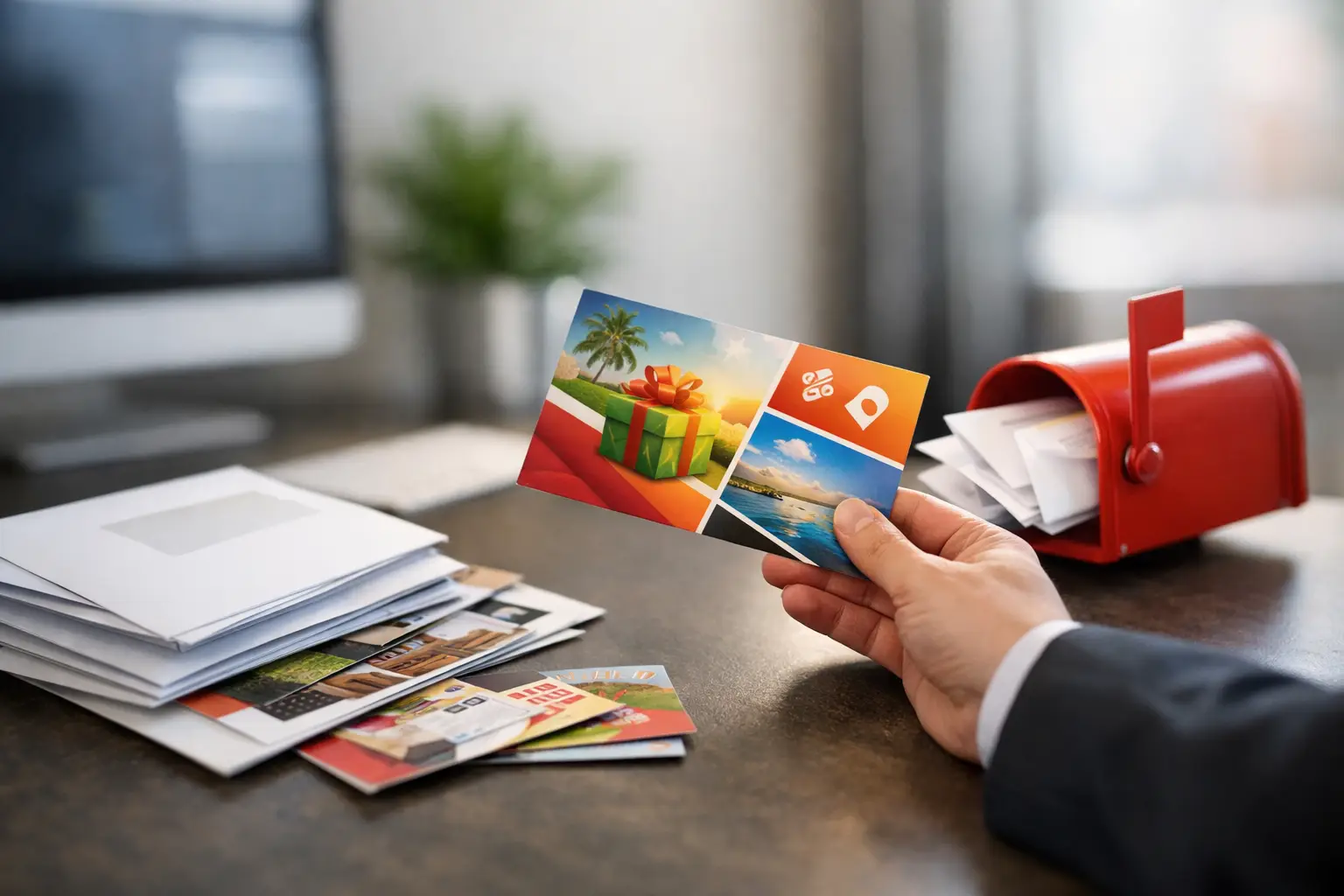
A postcard that lands in the right Las Vegas mailbox can do more than announce a sale. It can fill appointments before a slow week, bring local shoppers through the door, introduce a new service, or keep your brand visible after a convention ends. Direct mail gives businesses a physical, focused way to reach people who may not respond to another email or social ad.
For local businesses, the advantage is straightforward: a well-produced mail piece puts your offer directly in a prospect’s hands. The result depends on more than attractive printing, though. Audience selection, timing, message, format, and follow-up all determine whether a campaign earns attention or gets tossed aside.
Why Direct Mail Still Works for Local Marketing
People sort through physical mail differently than they scroll through a feed. A postcard, flyer, or folded mailer has a presence on the kitchen counter, front desk, or office mail station. It can be saved for later, passed to a colleague, or brought into a store. That extra visibility is valuable when your message is clear and the offer is relevant.
Direct mail also gives local businesses control over where their budget goes. A restaurant can target nearby neighborhoods. A medical practice can reach households within a practical driving radius. A contractor can focus on ZIP codes with the home types or service areas that make sense for the job. An exhibitor can send a post-show offer to qualified contacts rather than relying on a general follow-up email.
It is not the right channel for every objective. If you need immediate, constantly changing messaging, digital ads may be more flexible. If you have a narrow audience with incomplete addresses, an email or phone campaign may be more efficient. But when geography, presentation, and a tangible offer matter, direct mail remains a practical part of the marketing mix.
Start With One Clear Business Goal
The strongest campaigns are built around a specific action, not a vague desire for exposure. Decide what you want recipients to do after they see the piece. That may be booking an appointment, visiting a location, scanning a QR code, redeeming a coupon, requesting a quote, or attending an event.
A salon might promote a first-visit service package. A restaurant might use a neighborhood mailer to introduce weekday lunch specials. A convention vendor could send an invitation to schedule a private product demonstration before the show floor opens. Each offer has a clear next step and a reason to act soon.
Avoid trying to fit every service, every product, and every company detail on one postcard. A mailer is a conversation starter, not a full catalog. Lead with the most relevant benefit, support it with a concise offer, and make the response path obvious.
Build an Offer Worth Keeping
Discounts can work, but price is not the only reason people respond. Priority scheduling, a complimentary consultation, a limited-time upgrade, a free sample, or access to an event can be equally compelling. The best offer matches the audience and protects your margins.
Use a real deadline when urgency is part of the promotion. “Offer expires Friday, October 18” is more actionable than “limited time only.” If the offer requires conditions, state them clearly. Small print should clarify the promotion, not hide the terms.
Choose the Right Direct Mail Format
The format should support the message and the expected response. Postcards are a popular choice because the offer is visible immediately and there is no envelope to open. They work well for restaurant promotions, retail sales, real estate announcements, appointment reminders, grand openings, and neighborhood services.
A folded self-mailer gives you more room for service details, before-and-after images, menus, or multiple offers. An envelope package can feel more personal and is useful when the message needs privacy, a letter, or inserts. For higher-value prospects, a dimensional package or premium stock may justify the added production and postage cost.
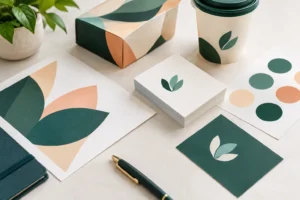
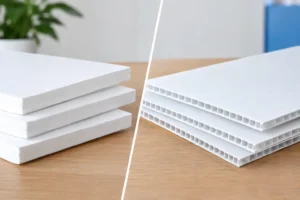
Paper stock, size, coating, and finishing affect how your brand is perceived. A heavy uncoated stock can feel approachable and easy to write on. Glossy stock makes photography and color stand out. Matte finishes often suit professional services, luxury brands, and editorial-style designs. The choice should reflect your audience and your message, not just the lowest per-piece price.
Design for a Fast Decision
Most recipients will decide within seconds whether your mailer deserves another look. The front side needs a strong visual hierarchy: a clear headline, one primary image or visual direction, and an offer that is easy to find. Do not make people search for what you want them to do.
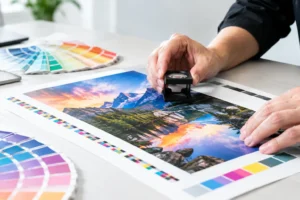
Use your brand colors consistently, but prioritize contrast and readability. Light text over a busy photograph may look polished on screen and fail in print. Tiny type, crowded service lists, and low-resolution images are common reasons a campaign looks less professional than intended.
Your call to action should stand out in both wording and placement. “Call today for a same-week estimate,” “Bring this card in for 15% off,” or “Scan to reserve your seat” tells recipients exactly what happens next. Include a phone number, website, physical address, or QR code based on how your customers prefer to respond. For many local businesses, providing more than one response option is smart.
A QR code should lead to a page that matches the mailer. If the postcard offers an event registration, the code should open directly to registration, not a general homepage. Test every phone number, URL, QR code, and promotional code before the job goes to print.
Targeting Determines Whether the Message Feels Relevant
Great printing cannot fix a poorly matched mailing list. Start with the people most likely to benefit from the offer. Depending on your campaign, you may target existing customers, nearby households, specific business categories, recent movers, or selected ZIP codes.
Existing customers are often the easiest group to reactivate because they already know your business. A new-customer campaign needs a stronger introduction and a clear reason to try you. For business-to-business mail, the list should identify the appropriate decision-maker whenever possible. Sending a trade show service offer to a company is less useful if it never reaches the event manager or marketing contact.
Las Vegas adds a local timing consideration. Convention schedules, seasonal travel patterns, major events, and hospitality demand can influence when an offer will be most useful. A campaign for exhibitors should arrive early enough for planning. A neighborhood promotion should avoid getting lost during periods when residents are distracted by holiday mail or major local events.
Prepare Your Mailing List and Postal Details Early
Address quality affects both cost and deliverability. Review your list for duplicate records, incomplete apartment numbers, outdated addresses, and inconsistent formatting. A clean list reduces wasted postage and prevents your team from paying to send offers to people who will never receive them.
Mail pieces must also meet postal requirements for size, addressing, barcode placement, and clear zones. Those details are easy to overlook when designing from a screen, especially on postcards and custom-sized pieces. Bringing print production and mailing preparation together early helps prevent last-minute redesigns or delays.
For time-sensitive campaigns, build in room for proofing, printing, addressing, mail preparation, and postal travel time. Same-day or next-day print production can solve an urgent production problem, but the postal system still has its own schedule. If an event date cannot move, consider a hand-delivered component, targeted in-person distribution, or a coordinated digital reminder alongside the mail campaign.
Measure the Response Before You Mail
A campaign does not need complicated tracking to be useful. Give the mailer a way to identify its own results. Use a unique promo code, dedicated phone number, campaign-specific landing page, QR code, or ask staff to record the source when customers call or visit.
Track more than redemptions. Note how many pieces were mailed, the cost of printing and postage, inquiries generated, appointments booked, average sale, and repeat business where possible. A promotion that brings fewer responses but higher-value customers may outperform a broad discount campaign.
Keep a sample of every version you send. Over time, you can compare formats, neighborhoods, offers, headlines, and timing. Small improvements compound. Changing one variable at a time makes it easier to understand why one mailing performed better than another.
Get Production Right When Deadlines Are Tight
A professional mail piece has to look right, arrive on time, and support a measurable business goal. That requires more coordination than simply uploading a design and ordering postcards. Design One Printing can help Las Vegas businesses move from concept to finished direct mail pieces with production guidance that considers format, print quality, and deadline requirements.
Before approving a job, confirm the final size, quantity, stock, finishing, mailing list status, response method, and in-home target date. If your artwork is still taking shape, address the offer and call to action first. A clean, well-organized design can be produced quickly. A confusing message will not become more effective just because it printed on premium stock.
The mailer that performs best is usually not the flashiest one. It is the one that reaches the right audience with a useful offer, looks professional in their hands, and makes the next step easy. Start there, and give your campaign a reason to be kept instead of discarded.