A retail sign has only a few seconds to do its job. It must stop someone walking past, explain the offer, and point that person toward the next action. The most useful retail signage trends are not about adding more decoration to a store. They are about making decisions easier for customers while giving businesses flexible, professional materials they can update quickly.
For Las Vegas retailers, hospitality businesses, pop-up operators, and convention exhibitors, that need is especially immediate. Foot traffic changes by the hour, promotions are often short-lived, and a worn or unclear sign can make a polished operation look unprepared. The right mix of permanent and short-run signage helps a business stay visible without overproducing materials that will be outdated next week.
Retail Signage Trends Center on Clarity and Flexibility
The strongest current trend is simple: customers respond to signage that communicates one clear message at a time. That may mean a window poster promoting a limited-time service, a counter sign explaining a package upgrade, or a directional sign guiding event guests to registration. Large type, high contrast, and a direct call to action outperform crowded layouts packed with product details.
This does not mean every sign should look minimal. A luxury retailer may need refined finishes and restrained color, while a family attraction may benefit from bolder graphics and playful visuals. The common requirement is hierarchy. Customers should be able to identify the main message from a distance, then understand the offer as they get closer.
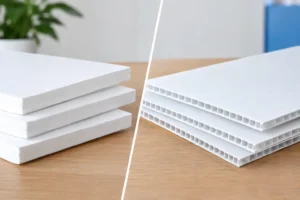
Flexible signage is equally valuable. Businesses are relying more on posters, window graphics, foam board signs, banners, tabletop displays, and removable decals that can be swapped when inventory, pricing, events, or seasonal campaigns change. Rather than treating every sign as a permanent fixture, smart operators build a system: durable brand elements stay in place, while promotional pieces are designed for fast replacement.
Short-Run Promotions Need Fast, Consistent Print
Retail calendars move quickly. A restaurant may add a weekend special, a boutique may receive a new product shipment, and an exhibitor may need updated pricing the night before a show opens. Short-run production allows businesses to print the quantity they need without committing to a large inventory of dated materials.
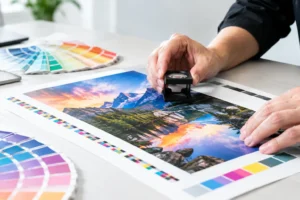
Consistency matters as much as speed. A temporary sign should still match the colors, type, logo treatment, and overall quality of the business. When a handwritten notice sits next to an upscale lobby display or a carefully built retail wall, customers notice the disconnect. Professionally printed inserts, posters, and counter cards protect the presentation while giving staff room to act quickly.
For recurring promotions, it helps to create approved design templates in advance. Keep the brand framework fixed, then update only the date, offer, price, or featured product. This reduces design time, lowers the risk of errors, and makes rush reprints more manageable. It is a practical approach for businesses that run monthly specials, rotating menus, recurring events, or trade show appearances.
Window Graphics Are Doing More Than Announcing Sales
Windows remain some of the highest-value real estate in a retail environment. Current window signage is moving beyond the familiar sale poster toward graphics that establish the brand, create privacy where needed, and guide people through the entry point.
Perforated window graphics are useful when a business wants strong exterior visibility while preserving views from inside. Frosted vinyl can add a polished look to offices, salons, medical-adjacent businesses, and hospitality spaces while also defining private areas. Full-color window decals can turn an otherwise blank storefront into a campaign surface for a grand opening, product launch, or convention-week offer.
The trade-off is visibility. Covering every inch of glass may make a storefront feel closed off, especially in a pedestrian-heavy area. Leave enough open space for people to see activity inside, and make sure the primary message can be understood from the direction customers approach. A well-designed window graphic should invite entry, not create a barrier.
Directional Signage Is Part of the Customer Experience
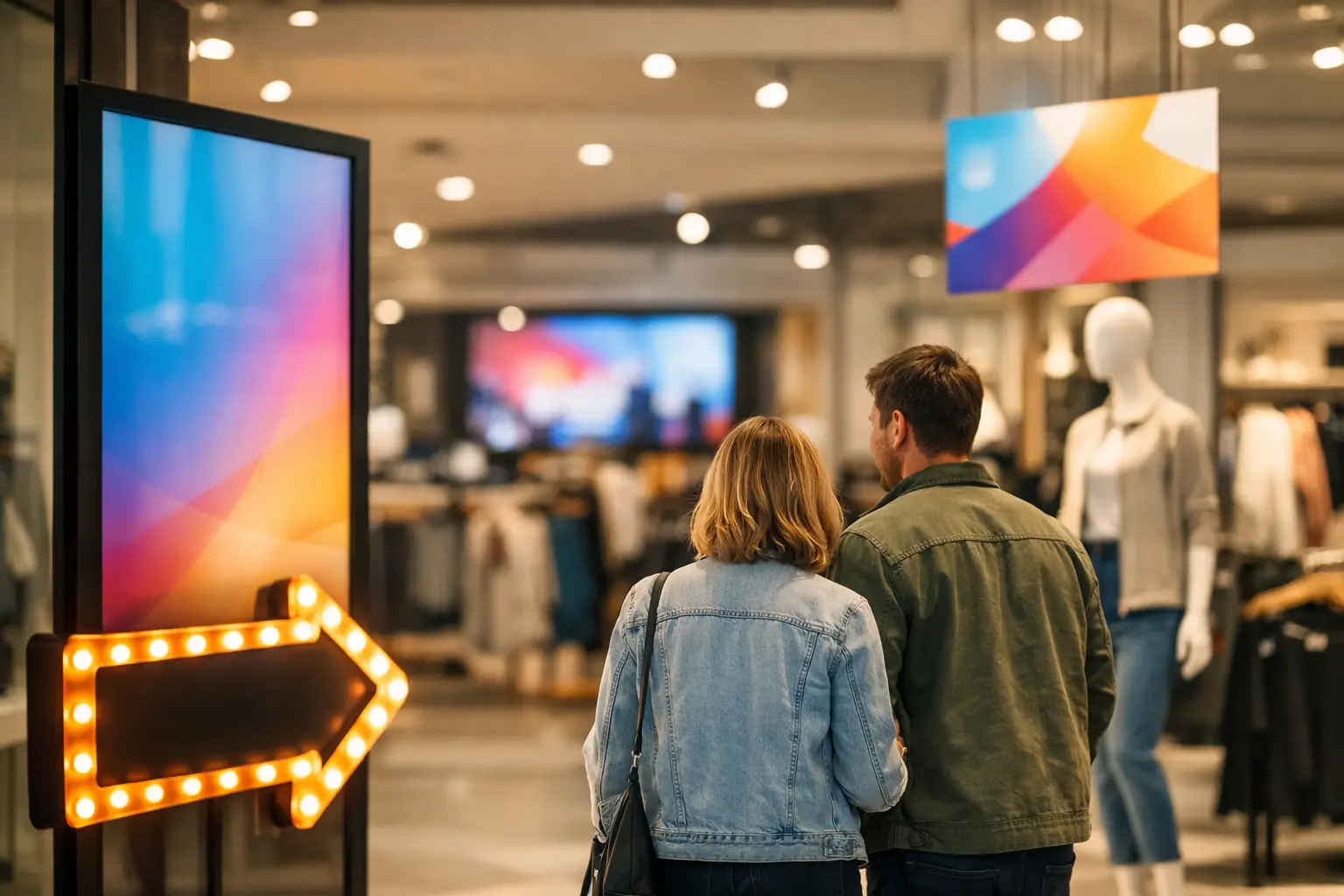
Customers should not have to ask where to check in, pick up an order, find a fitting room, or enter an event. Directional signage has become more important as businesses add pickup counters, self-service options, pop-up activations, and temporary layouts.
The best directional signs use plain language and repeat visual cues. If the check-in point uses a specific color or icon, carry that cue from the door to the counter. For large events or retail spaces with several zones, floor decals, easel signs, retractable banners, and mounted boards can work together to create a clear path.
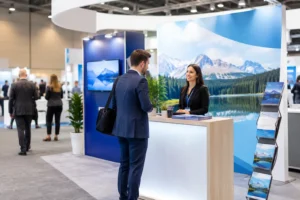
In Las Vegas, this is particularly useful for exhibitors and event organizers working in unfamiliar venues. Signage often needs to be produced quickly, transported easily, and installed without a complicated setup. Lightweight foam boards, posters, and retractable banner stands are practical choices when the message is temporary but the presentation must remain professional.
Texture, Finish, and Dimension Are Adding Value
Digital messages compete for attention everywhere. Physical signage can stand out because people can see its scale, finish, and placement in the real world. Retailers are using matte and gloss contrasts, dimensional lettering, layered panels, vinyl graphics, and larger-format visuals to make key areas feel more intentional.
Finish should support the setting. A matte poster can reduce glare under bright retail lighting, while a gloss finish may make product photography appear more vivid. Mounted signs give menus, pricing boards, and informational displays a more substantial presence than a loose paper sheet. Banners are durable and visible for promotions that need to be seen from a distance.
There is no need to add premium finishes everywhere. Reserve them for high-touch customer zones, storefront features, photo moments, and displays that represent the brand for an extended period. For a two-day sale or a one-week convention, a clean, well-printed poster may be the better investment. The goal is not to make every sign expensive. It is to put the right level of production where it will have the most impact.
QR Codes Work Best When They Have a Clear Purpose
QR codes remain useful on retail signage, but only when they shorten the customer journey. A code can send shoppers to an appointment page, digital menu, loyalty signup, product details, event schedule, or special offer. It should not be included simply because it is available.
Place the code where people have time to scan it. A checkout counter, waiting area, tabletop display, or window graphic near a queue is usually more effective than a sign people pass at full speed. Pair it with a specific instruction, such as Scan for the full menu or Scan to reserve your spot. Test it before production and leave enough white space around the code so it scans reliably.
The destination matters, too. If the landing page is slow, confusing, or not mobile-friendly, the sign has created friction instead of convenience. Businesses should track whether the code is producing signups, calls, purchases, or other useful activity. If it is not, revise the offer or remove it from the next print run.
Build a Signage Plan Around Real Store Moments
A strong signage program usually starts with the customer path, not a product list. Consider what a person needs to know before entering, immediately after entering, while browsing, at the point of purchase, and after leaving. This reveals gaps that a single large sign cannot solve.
Start with the moments that affect revenue or operations most: storefront visibility, current promotions, wayfinding, pricing, pickup instructions, and event information. Then choose formats based on distance, duration, and location. A message across a room needs a banner or large-format graphic. A message at the counter may need a small sign or display card. A campaign that changes weekly should be easy to reprint.
Design One Printing can help Las Vegas businesses match those needs to practical print formats, including rush posters, banners, signs, window graphics, mounted displays, and trade show materials. Early planning is always helpful, but a responsive local production partner also matters when a promotion changes, a sign is damaged, or an event deadline moves up.
The best next sign is rarely the busiest one. It is the one that gives a customer the right information at the exact moment they need it, printed clearly enough to make the business look ready for whatever comes next.