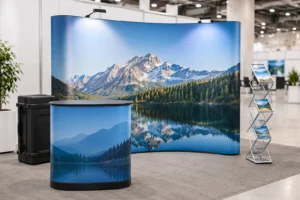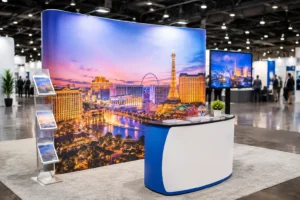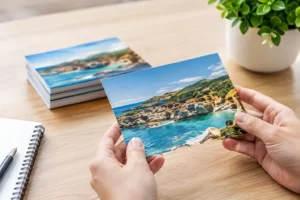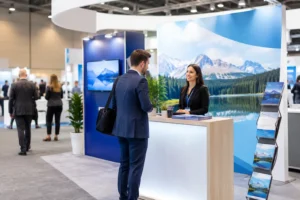
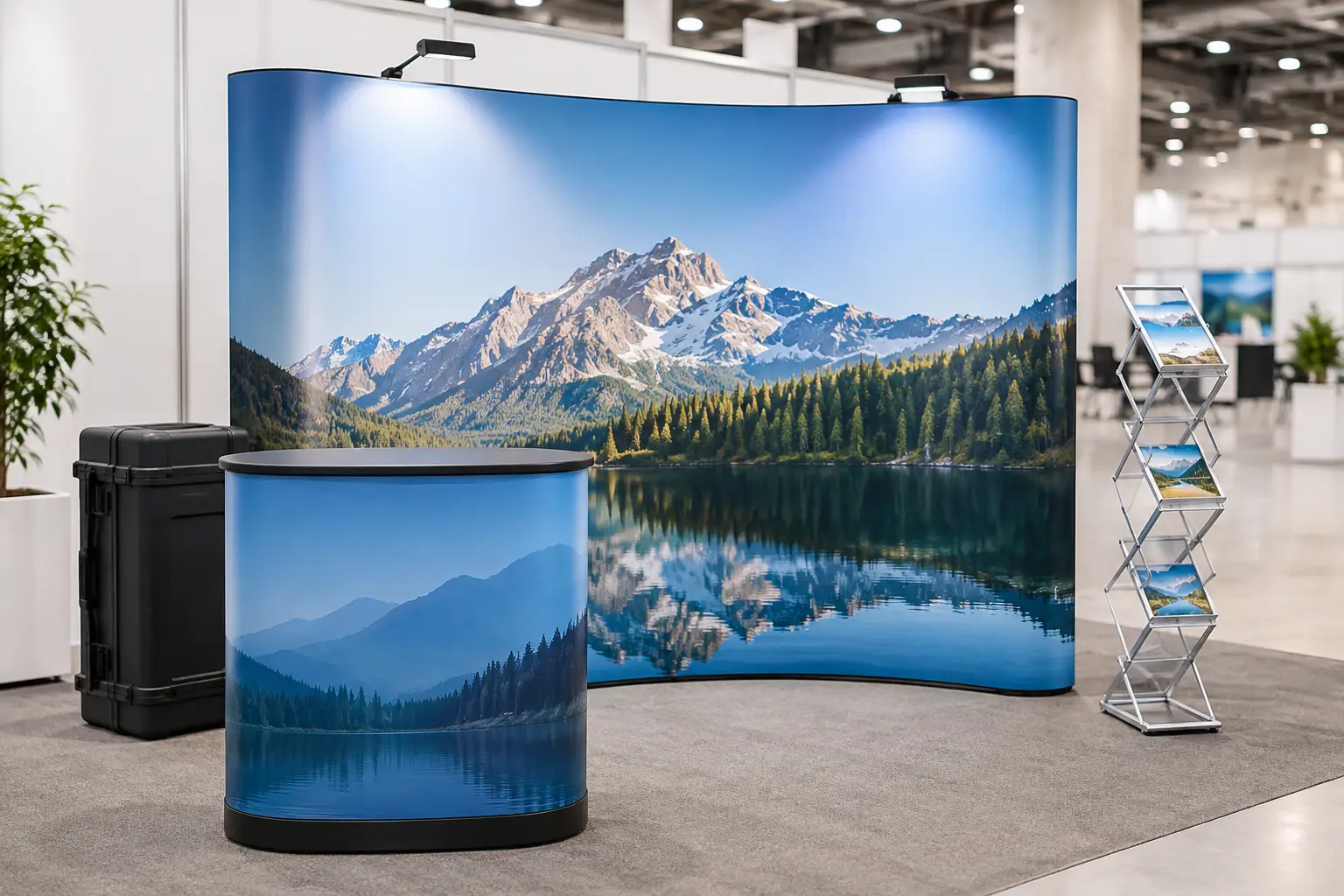
A pop-up display can look excellent in a proof and still disappoint on the convention floor if the material does not match the job. Thin media can ripple under bright exhibit lighting. Heavy panels can complicate transport. A premium fabric graphic may be the right long-term choice, while a rigid board is often the smarter answer for a one-day activation. The best pop-up display materials depend on where the display will be used, how often it will travel, how close attendees will stand, and how quickly it needs to be produced.
For Las Vegas exhibitors, those details matter. A display may need to survive a flight, fit into a hotel ballroom, stand out in a busy convention hall, or replace damaged booth graphics with little notice. Material selection should support the event plan, not just the artwork.
Best Pop-Up Display Materials at a Glance
For most portable backdrops and step-and-repeat style displays, dye-sublimated polyester fabric offers the strongest balance of appearance, portability, and reuse. It produces rich color, resists glare, and can be folded or packed more easily than rigid graphics. Fabric is especially effective for full booth backwalls, media walls, and branded photo areas where people will be standing close to the display.
Vinyl remains a practical choice when you need a smooth graphic surface, bold color, and a cost-conscious option for short-term use. It works well for certain retractable banners, temporary signage, and graphics mounted to compatible pop-up hardware. The trade-off is that vinyl can show glare under convention lighting and may crease or curl if stored poorly.
Rigid materials such as foam board, PVC board, and corrugated plastic are not typically used as the main graphic skin on a collapsible pop-up frame, but they are valuable additions to a booth. They are effective for product messaging, directional signs, price boards, countertop displays, and mounted graphics that need to hold a flat shape.
The right choice is not always the most expensive material. It is the material that looks professional through the full event cycle: transport, setup, show hours, teardown, and storage.
Fabric Displays for a Polished, Reusable Booth
Fabric is often the preferred material for premium pop-up backdrops because it is designed for portability. Most fabric display graphics use polyester printed through dye sublimation, a process that bonds ink into the fibers rather than placing it on top of the surface. The result is a soft, matte finish with strong color and minimal reflection.
That matte finish matters in Las Vegas venues, where overhead lights, spotlights, and camera flashes are common. A fabric backdrop photographs well for social content, interviews, and attendee photos. It also avoids the shiny glare that can make portions of a vinyl graphic harder to read from certain angles.
Stretch fabric graphics are commonly fitted around an aluminum frame, creating a clean, tailored appearance without visible seams or hardware across the front. Pillowcase-style fabric covers are particularly useful for exhibitors who use the same frame for multiple shows and want to switch graphics between campaigns.
Fabric does have limitations. Fine text and intricate image details can appear softer than they would on a smooth rigid panel, especially if the source files are low resolution. A stretched graphic also needs proper tension and alignment during setup. If the message includes dense product specifications or small pricing details, keep that information on separate rigid signs or printed handouts rather than relying on the backdrop alone.
For an exhibitor planning several events each year, fabric generally provides the best return. It packs efficiently, wears well when handled correctly, and gives a booth a more finished presence.
Vinyl Graphics for Short-Term Impact
Vinyl is a familiar display material for a reason. It is durable, versatile, and capable of producing saturated color and sharp graphic detail. Depending on the display system, vinyl may be used as a banner panel, mounted graphic, or printed insert for portable hardware.
For short-term promotions, grand openings, sponsored events, and single-show booth graphics, vinyl can be an efficient option. It is also a good fit when a design uses high-contrast colors, large product photography, or bold promotional messaging that must be visible from a distance.
The main consideration is finish. Glossy vinyl can make colors appear more vivid, but it catches light. In a convention center or hotel ballroom, that reflection can become distracting. Matte vinyl reduces glare and is generally the safer choice for close-viewing displays, presentations, and areas where photos will be taken.
Storage is another factor. Vinyl graphics should be rolled correctly, protected from heat, and kept from being crushed. A rushed teardown can leave permanent creases that become obvious when the display is installed again. If a graphic is intended for repeated travel, confirm that the chosen media and hardware are designed for that level of use.
Rigid Boards for Supporting Signs and Booth Messaging
A complete exhibit rarely relies on one backdrop alone. Rigid display boards help exhibitors guide traffic, explain offers, and bring important details closer to the customer. The material should match the setting and expected lifespan.
Foam board is lightweight and economical for indoor, short-term signs. It is useful for presentation boards, promotional messaging, easel signs, and check-in displays. It prints cleanly, but its foam core can dent or bend, so it is best for controlled indoor environments and one-time or limited use.
PVC board is a more durable indoor option. It has a smooth plastic surface, resists moisture better than foam board, and holds up well for signs that will be handled repeatedly. It is a strong choice for retail-style messaging, menu boards, sponsor signs, and booth graphics that need more structure.
Corrugated plastic is lightweight, weather-resistant, and useful when a sign may move between indoor and outdoor areas. It is commonly used for directional signs, parking instructions, event notices, and temporary wayfinding. Its fluted construction makes it less refined for high-end close-up branding, but it is dependable for practical event signage.
Acrylic and other premium rigid substrates can create a more upscale look for reception areas, product displays, or permanent interior signage. They are not usually the first material to choose for a fast, portable convention setup because they are heavier, more expensive, and require more careful handling.
How to Choose the Right Material for Your Event
Start with the life of the display. If it will be used once for a two-day show, the most durable option may not be necessary. If it will travel to several conventions, folding, setup time, replacement graphics, and storage become part of the cost calculation.
Next, consider viewing distance. Large backdrops need simple headlines, high-resolution images, and materials that look good from six to 20 feet away. Counter signs and product boards are read from much closer, so they benefit from smooth surfaces and crisp small text. Trying to put every message on one large backdrop usually weakens the booth rather than strengthening it.
Lighting should also influence the decision. Glossy materials can be useful for eye-catching retail graphics, but matte fabric and matte vinyl are often better for convention halls. If the display will appear in photos or video, reducing glare is usually worth it.
Finally, work backward from the deadline. A material may be ideal on paper but impractical if it requires finishing, mounting, or hardware that is not available in time. For rush projects, a production partner should confirm the final size, bleed, file setup, finishing requirements, and pickup or delivery plan before printing begins.
Match the Display Material to the Message
The strongest trade show setups use each material for what it does best. A fabric pop-up wall can establish the brand from across the aisle. Matte vinyl can carry a vivid promotional panel. PVC or foam board can deliver the offer, product features, QR code, or directional message at eye level.
This approach also makes last-minute changes easier. If a price, sponsor logo, or call to action changes before the event, replacing a smaller rigid sign is often faster and less costly than reprinting an entire backdrop. It gives your team flexibility without making the booth feel improvised.
At Design One Printing, the goal is to help exhibitors choose materials that fit the display, the venue, and the deadline. Bring the intended use, booth dimensions, artwork, and event date into the conversation early. The right material choice gives your graphics a better chance to do their job when the doors open.