
The booth opens tomorrow. A shipment is delayed, a graphic arrives with the wrong date, or the sales team realizes the brochures are still sitting in an office across the country. Convention deadline recovery is not about printing everything at the last minute. It is about quickly identifying what the attendee will see, touch, and take away, then producing the right replacement materials without creating a second problem.
Las Vegas conventions move fast, and exhibitors often have little room for error once they are near the Strip or the convention center. A focused recovery plan can protect your presentation, help your team sell with confidence, and keep a preventable production issue from becoming the story of your event.
Start Convention Deadline Recovery With Priorities
When time is short, not every missing item deserves the same response. The first task is to separate must-have booth materials from items that are useful but nonessential. Your priority should be anything that affects brand visibility, visitor direction, lead capture, or the ability of your team to explain the offer.
For most exhibitors, that means replacing the primary booth graphic or banner first, followed by product sheets, business cards, price lists, and a sign that tells attendees where to go or what to do. If a scheduled promotion, giveaway, or meeting depends on a printed piece, move it into the essential category.
A rushed order works best when someone on your team has authority to make decisions. One person should confirm artwork, approve proofs, choose quantities, and communicate any venue restrictions. Multiple approval layers can cost more time than the actual production process.
Ask What the Material Must Accomplish
A replacement does not always need to duplicate the original piece exactly. If your 10-foot fabric display is unavailable, a well-designed retractable banner or mounted sign may still communicate the headline, product benefit, and call to action. If a full catalog cannot be produced in time, a concise sell sheet with a QR code, contact information, and top products may be the smarter recovery option.
This is where trade-offs matter. Matching every brand detail is ideal, but a clear, accurate, professional piece in hand is usually more valuable than a perfect concept that misses setup. Focus on the message attendees need now.
Confirm the Files Before Production Begins
The fastest print job can still be delayed by incomplete or incorrect artwork. Before sending files, verify the final dimensions, spelling, dates, booth number, phone number, website, and QR codes. A typo on a rush banner is especially costly because it is highly visible and difficult to ignore once installed.
For print-ready files, use the dimensions requested for the product and supply high-resolution images. Large-format graphics need enough image quality to look sharp at viewing distance. Small text on banners, posters, and directional signs should be easy to read from several feet away. If a file was designed for social media or email, it may not have the resolution or proportions needed for print.
If the artwork is not ready, say so immediately. A production-oriented print partner can often help simplify, resize, or rebuild a practical version, but design time must be included in the recovery schedule. Sending an unfinished file while assuming it is ready creates avoidable back-and-forth.
Keep the Recovery Brief Short and Complete
A clear request speeds up quoting and production. Include the product, finished size, quantity, whether it is single- or double-sided, the needed completion time, and where it must be picked up or delivered. For convention materials, also specify finishing details such as grommets, retractable banner hardware, mounting, lamination, folding, or trimming.
If you need several pieces, identify the order of importance. For example, a booth backdrop may be needed before setup, while brochures can arrive later that day. That information helps the production team schedule work around the deadline that actually matters.
Choose Materials That Can Be Produced Reliably
During a deadline recovery, material choices should support both your brand and the timeline. A special stock, unusual coating, or custom fabrication may add value when there is enough lead time. When the show is close, standard materials with dependable availability often make the most sense.
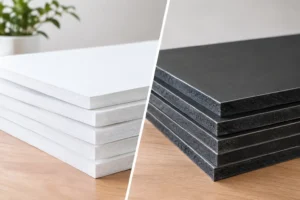
Vinyl banners, posters, foam board signs, retractable banner displays, flyers, brochures, postcards, business cards, stickers, and tabletop signage can cover many immediate convention needs. The right combination depends on the booth footprint and how attendees interact with your team.
A simple large-format graphic can restore booth presence quickly. Printed brochures or product sheets give sales representatives something tangible to leave behind. Business cards and postcards keep follow-up moving even if a more elaborate catalog did not arrive. For menus, schedules, price lists, or product comparisons, mounted signs can prevent your staff from repeating the same explanation all day.
Do not over-order simply because the situation feels urgent. Consider expected traffic, show duration, how many team members are collecting leads, and whether the piece is meant to be handed out or displayed. It may be better to produce a smaller quantity of the most useful materials now and place a later order for the rest.
Build a Booth That Still Looks Intentional
A recovery plan should never look like an apology. Even if you are replacing missing pieces, the booth can still appear organized and credible when the visual hierarchy is right.
Start with one dominant message: what you do, who you help, or why attendees should stop. Place that message on the largest visible graphic. Use supporting signs for product categories, demonstrations, promotions, meeting times, or directional information. Keep colors consistent, use the same logo treatment across pieces, and avoid cramming every available detail onto the replacement banner.
For smaller booth spaces, one strong backdrop or banner, a tabletop sign, and polished handouts may outperform a crowded collection of mismatched materials. Larger exhibitors may need directional signs, counter graphics, product posters, and multiple handouts. The goal is not to print more. The goal is to make it easy for a visitor to understand the brand within a few seconds.
Plan for Venue Access and Handoff
A completed print job only solves the problem if it gets to the right place on time. Convention centers, hotels, and show contractors can have receiving rules, loading dock procedures, package labels, and delivery windows that affect your plan. Confirm whether materials should be picked up locally, delivered to a hotel, brought to the booth during setup, or shipped through the official event contractor.
For rush work, local pickup is often the most controllable option. It gives your team a chance to inspect the materials before entering the venue and avoids uncertainty around receiving desks or freight schedules. If someone else is collecting the order, provide that person’s name and phone number in advance.
Design One Printing can be a practical local production resource for exhibitors who need fast-turnaround convention graphics and marketing materials in Las Vegas. The most efficient requests include final artwork, required quantities, the real deadline, and a direct contact who can approve questions quickly.
Inspect Before You Leave
Take a few minutes to check the finished materials. Confirm quantities, sizes, page order, folds, mounting, spelling, and any variable information such as booth numbers or offer dates. For banners and displays, make sure you have the correct hardware, stand, or carrying case.
This check is not about expecting a problem. It is about protecting the time you just recovered. Finding a missing sign before heading to the venue is far easier than discovering it after booth setup begins.
Prevent the Next Rush Without Slowing Down
Convention deadline recovery can reveal weak spots in the event workflow. After the show, save approved artwork in clearly named folders, including final dimensions and version dates. Keep a record of quantities that actually performed well, plus the products your team wished it had on-site.
It also helps to maintain a small emergency kit: editable source files, logo files, approved brand colors, current contact information, booth dimensions, and a short list of core items that can be reproduced quickly. That preparation does not eliminate surprises, but it makes the next response faster and more accurate.
When a deadline tightens, clarity is your best advantage. Decide what must be visible, provide complete information, choose practical materials, and inspect the order before setup. A focused replacement plan can turn a stressful production gap into a booth that still looks ready to do business.