A booth can be fully staffed, a sales team can have a strong pitch, and an event can have plenty of foot traffic – but weak printed materials still cost businesses attention. The most useful print marketing trends 2026 are not about printing more pieces. They are about producing the right pieces, for the right audience, with a finish and message that make people stop, scan, save, or respond.
For Las Vegas businesses, exhibitors, hospitality brands, and local organizations, that often means working backward from a deadline. A postcard may need to arrive before an event. A banner may need to be installed before doors open. A brochure may need to help a prospect understand an offer in 20 seconds on a crowded trade show floor. Print remains one of the most practical ways to put a brand directly in front of people when it is planned with a clear purpose.
Print Marketing Trends 2026: More Intent, Less Waste
The strongest shift is toward intent-driven print. Rather than ordering generic collateral in large quantities and hoping it lasts all year, businesses are creating smaller, better-targeted runs for specific promotions, neighborhoods, events, customer segments, and sales opportunities.
This approach reduces outdated inventory and makes messages more relevant. A real estate team may use different postcards for homeowners and investors. A restaurant can promote a convention-week offer near the Strip while running a separate neighborhood campaign for local repeat customers. A trade show exhibitor can prepare a focused one-sheet for qualified buyers instead of handing every visitor a thick catalog.
Shorter runs are not automatically the best answer. High-volume printing can still provide excellent value for evergreen materials such as envelopes, business cards, menus, product labels, and core brochures. The decision depends on how often pricing, offers, staff details, or product information change. If the message has a short shelf life, ordering closer to the campaign date can prevent expensive leftovers.
Direct Mail Is Becoming More Measurable
Direct mail continues to earn attention because it is physical, targeted, and harder to dismiss than an email notification. In 2026, the most effective campaigns will connect the mail piece to a measurable next step rather than treating it as a standalone announcement.
A postcard can direct recipients to a custom offer, a registration page, a QR code, a specific phone number, or an in-store promotion. The printed design should make the action obvious. If a recipient has to search for the offer, decode the message, or guess where to go next, response rates suffer.
Personalization also matters, but it should be used carefully. Variable data printing can tailor names, locations, offers, or service details to the audience. That is valuable when the data is accurate and the offer is genuinely relevant. Poor data or forced personalization can feel impersonal fast. For many local campaigns, a well-designed neighborhood-specific message will outperform a complicated personalization effort with weak targeting.
Build mail pieces around one decision
A direct mail piece works best when it asks for one clear action: schedule an appointment, claim an offer, visit a location, register for an event, or request a quote. Avoid putting every service, promotion, and brand message on one postcard. A focused offer gives the design room to breathe and gives recipients a reason to respond.
Tactile Print Is Doing More of the Selling
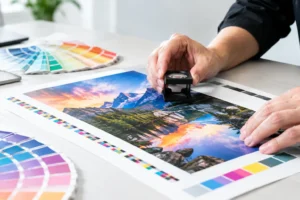
Digital messages compete for attention by being louder and more frequent. Print can compete by being more memorable. Paper weight, texture, coating, color accuracy, die cuts, foil accents, raised effects, and specialty finishes can make a business card, invitation, presentation folder, or premium postcard feel worth keeping.
That does not mean every job needs a luxury finish. A high-end business card may be a smart investment for a financial advisor, luxury property professional, design firm, or executive sales team. It may be unnecessary for a fast-moving event handout intended for one-day use. The key is matching the finish to the job.
For example, a thick uncoated stock can support a warm, approachable brand while giving customers a surface to write on. A glossy finish can make food photography and colorful retail promotions stand out. Matte lamination often creates a refined look for premium service brands, but it can reduce the ease of writing notes directly on the piece. These are production decisions, not just design preferences.
Event Graphics Must Work From a Distance
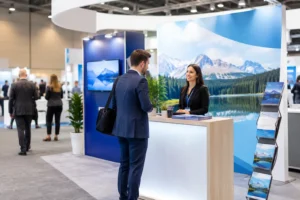
Las Vegas conventions, expos, meetings, and pop-up events create a different print environment. Attendees move quickly, visual competition is intense, and booth materials have only a few seconds to communicate who a company is and why someone should stop.
In 2026, event graphics will continue to favor large, simple messaging over crowded layouts. A retractable banner should not read like a brochure. A backdrop should not rely on small copy. Large-format graphics need a strong headline, a recognizable brand, a clear visual hierarchy, and enough contrast to be readable across an aisle.
Use brochures, sell sheets, and product sheets for detail after the initial conversation. Use banners, posters, floor graphics, window graphics, and trade show displays to create the first impression. When every element tries to do every job, the booth becomes harder to understand.
Plan for last-minute changes before they happen
Event marketing has a habit of changing late. A speaker is added, a product launch date moves, booth staffing changes, or a sponsor needs to be included. Building editable source files and allowing room in the design for updates helps prevent a small change from becoming a full redesign.
Fast turnaround also matters. When an exhibitor discovers a damaged banner, missing handouts, or an incorrect sign after arriving in Las Vegas, the ability to produce professional replacements quickly can protect the entire event investment. Design One Printing supports businesses that need business cards, brochures, signs, banners, posters, and display materials produced on tight schedules without treating the rush as an excuse for weak output.
QR Codes Need a Real Reason to Be There
QR codes are now familiar to most customers, but familiarity does not guarantee use. A code should lead to something useful: a menu, booking page, event schedule, product demo, coupon, directions, portfolio, or lead form. Sending people to a generic homepage creates an unnecessary extra step.
Placement and size are equally important. A QR code needs clear space around it, enough contrast to scan, and a short instruction nearby. “Scan for event pricing” is more useful than “Scan me.” Test it on multiple phones before production, especially if it appears over a photo, on reflective stock, or at a small size.
For event pieces, consider what happens after the scan. If the page is slow, difficult to use on mobile, or unrelated to the printed promise, the printed piece has done its job only halfway. Print and digital marketing should support the same customer journey.
Sustainability Is Becoming a Practical Choice
Sustainability remains part of the conversation, but the practical version matters most. Businesses are reducing waste by ordering more accurately, choosing durable materials where reuse makes sense, and avoiding disposable pieces that do not serve a clear marketing purpose.
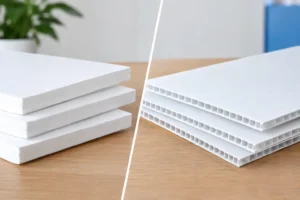
Reusable trade show displays, updated graphic panels, recyclable paper stocks, and right-sized mail campaigns can all reduce unnecessary waste. However, material selection must still fit the application. A temporary outdoor sign needs weather resistance. A restaurant menu may need wipeable protection. A premium invitation may call for a heavier stock. The best choice balances appearance, performance, budget, and the expected lifespan of the piece.
Design Systems Keep Campaigns Moving Faster
Speed is not only about press time. It starts with organized design. Businesses that maintain approved logos, brand colors, fonts, image libraries, and reusable templates can produce new flyers, postcards, signs, and sales sheets far faster than teams starting from scratch each time.
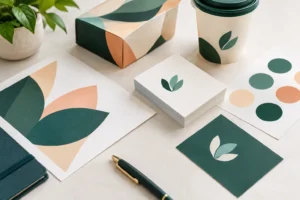
A simple design system also improves consistency across print formats. The offer on a postcard should look connected to the booth banner. The brochure should feel like the website and sales presentation. Customers may encounter only one piece first, but repeated visual cues build recognition over time.
For businesses with frequent promotions or multiple locations, templates are especially useful. Leave room for changing dates, calls to action, locations, and product images while keeping the brand framework consistent. That is how rapid production stays professional instead of looking rushed.
The practical opportunity in print for 2026 is clear: use every piece as a working part of the campaign. Start with the audience and action you need, choose the format and finish that fit the moment, and allow enough production time to check the details. When deadlines tighten, a prepared design and a responsive local print partner can turn a last-minute need into materials that still represent your business well.