
A meeting can shift from promising to productive when a prospect leaves with the right document in hand. Sales sheet printing for meetings gives your team a clear, credible way to present key benefits, support the conversation, and keep your offer visible after everyone leaves the room.
A good sales sheet is not a brochure trying to say everything. It is a focused leave-behind designed for one job: helping a buyer understand why they should take the next step. For Las Vegas businesses, exhibitors, and sales teams working around conferences, client appointments, and tight event schedules, that clarity matters just as much as fast turnaround.
What a Sales Sheet Should Accomplish in a Meeting
Sales sheets work best when they reinforce the discussion rather than repeat a full presentation. A prospect should be able to glance at the page during the meeting and quickly identify the product or service, the main value proposition, and the action you want them to take.
That means the strongest sheets usually lead with a short headline, not a block of company background. Follow it with the problem you solve, a few proof points, and a direct next step such as scheduling a demo, requesting a quote, visiting a location, or contacting a representative. If pricing is central to the decision, include it clearly. If pricing varies, explain what affects the quote instead of filling the page with fine print.
The format depends on the meeting. A one-page sheet is often the right choice for a quick sales call, a hotel meeting, or an introduction at a convention. A two-sided sheet gives you more room for specifications, service packages, testimonials, or a simple comparison. For complex B2B services, a small set of coordinated sales sheets can be more useful than one crowded page, with each sheet covering a different solution or audience.
Sales Sheet Printing for Meetings Starts With the Audience
Before choosing paper or placing a rush order, consider who will receive the sheet and what they need to know first. A purchasing manager may want specifications, lead times, and cost factors. A business owner may be more interested in outcomes, reliability, and the level of service. An event planner may need setup details, dimensions, deadlines, and a clear view of available options.
This is where generic collateral often falls short. A sheet built for broad awareness can look polished but still fail to answer the question a meeting attendee is asking. Tailoring the message to the meeting type improves its usefulness without requiring a complete redesign every time.
For example, an exhibitor selling branded merchandise may create one version for corporate buyers and another for event organizers. The product line may be the same, but the first version can emphasize brand consistency and ordering volume, while the second focuses on event deadlines and attendee experience. Small changes in headline, images, and proof points can make the material feel much more relevant.
Keep the Page Easy to Scan
Meeting materials should not require a prospect to read a dense page while someone is talking. Use clear section breaks, short paragraphs, strong images, and enough white space for the content to breathe. Important details such as a phone number, email address, QR code, or meeting follow-up offer should be easy to spot without searching.
Avoid shrinking text just to fit more information. If the sheet is becoming crowded, the better answer is usually to remove secondary details or print a second page. Readability supports confidence. A crowded document can make even a strong offer feel harder to understand.
Paper, Size, and Finish Affect the Impression
The design gets attention, but the paper stock shapes how the sheet feels in the buyer’s hands. Standard letter size, 8.5 by 11 inches, is practical for most meetings because it fits folders, portfolios, and document sleeves. It is also easy for recipients to file after the meeting. A half-page format can work well for quick introductions or event handouts, while an oversized sheet may make sense for visual products, construction plans, hospitality packages, or detailed service maps.
For stock, a heavier text weight or a lighter cover stock generally creates a more professional leave-behind than standard office paper. Gloss stock makes photographs and color-heavy graphics stand out. Matte stock offers a refined, low-glare finish that is easier to write on and often suits service businesses, professional firms, and premium brands.
There is a trade-off. Gloss can be excellent for a bold retail or product presentation, but it may show fingerprints and reflect overhead lighting in a meeting room. Matte can feel more understated, but large photos may appear less vivid. The right choice depends on the design and the setting, not just the budget.
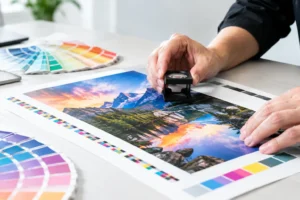
Color accuracy also deserves attention. Brand colors, product photography, and logos should look consistent across sales sheets, business cards, banners, and presentation materials. When a prospect sees several pieces together, mismatched color can make the package feel rushed. Providing print-ready files with properly prepared images and margins helps prevent avoidable production delays.
Prepare for the Meeting Timeline, Not Just the Print Deadline
Rush printing is valuable when plans change, but the best meeting materials start with a realistic production plan. Build in time to review content, check contact information, approve the final proof, and decide how many copies each representative needs. A single typo in a phone number or an outdated offer can turn a high-quality sheet into wasted inventory.
Quantity should reflect the purpose. For a scheduled presentation with five decision-makers, printing 25 copies may be enough to cover attendees, internal staff, and follow-up packets. For a convention appointment schedule, plan for additional copies. Meetings run long, buyers bring colleagues, and a strong sheet often gets passed to someone who was not in the room.
If your team is traveling to Las Vegas for a show or client meetings, local production can reduce shipping risk and make last-minute updates easier to manage. Design One Printing can help business teams coordinate fast-turnaround sales sheets alongside matching flyers, business cards, presentation folders, posters, and trade show graphics when timing is tight.
Use Version Control for Teams and Events
Sales collateral changes quickly. A new promotion, revised package, updated case study, or corrected contact name can create confusion when several versions are circulating. Name files clearly by date, audience, or event, and assign one person to approve the final version before it goes to print.
This simple step matters most when multiple sales representatives are attending the same event. Everyone should be handing out the same current material unless different versions are intentional. Consistency makes follow-up easier and prevents a prospect from receiving conflicting details from two members of the same team.
Make the Follow-Up Part of the Printed Piece
A sales sheet should continue working after the meeting. Give recipients an obvious path to act while the conversation is still fresh. That may be a direct contact name, a scannable code leading to a request form, a limited-time meeting offer, or a short list of next steps discussed with the representative.
The most effective call to action is specific. “Contact us for more information” is acceptable, but “Request a custom quote by Friday” gives the buyer a clearer reason to respond. If the meeting centers on a particular project, leave space for handwritten notes, estimated quantities, or the name of the account representative. Those personal details can make a standard printed sheet feel more connected to the discussion.
A Professional Sheet Helps the Conversation Last
A strong sales sheet does not replace a knowledgeable representative or a well-run meeting. It gives both a foundation. When the page is easy to scan, accurately printed, and built around the buyer’s priorities, it carries the conversation into the next decision. Bring materials that make it simple for prospects to remember what you offered, why it matters, and exactly how to move forward.