
The freight doors open, exhibitors start unloading, and the first impression of your booth is already taking shape. Trade displays do more than fill rented floor space. They tell attendees who you are, what you offer, and whether your team is worth stopping for before a conversation even begins.
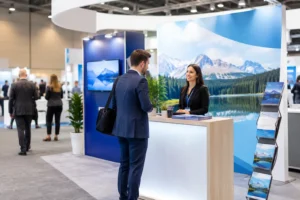
For Las Vegas exhibitors, that first impression has to work under real show conditions: bright convention lighting, crowded aisles, strict move-in schedules, and competitors positioned a few feet away. The right display is not necessarily the largest or most elaborate one. It is the one that makes your message clear, supports your sales process, and can be produced on time without looking rushed.
Start With the Job Your Display Needs to Do
Before choosing hardware, fabric, or graphics, decide what success looks like at the event. A company launching a new product needs a display that creates immediate awareness. A service business may need to establish credibility and give attendees a reason to schedule a consultation. A retailer or hospitality brand may be promoting a limited-time offer, location, or event.
This distinction affects every production choice. A quick lead-generation booth can rely on a strong headline, one focused image, and a simple call to action. A product demonstration area may need several coordinated pieces: a branded backdrop, tabletop signs, product labels, and directional graphics. Trying to force every message onto one banner usually creates visual noise instead of interest.
Think about how attendees will encounter the booth. People walking past need to understand the main idea in seconds. People who stop need supporting details, proof points, and a clear next step. Your trade show graphics should be built for both distances.
Choose Trade Displays for the Booth Size
A display that looks effective in a showroom can feel cramped or underpowered on a convention floor. Match the display format to the footprint you have reserved, including any furniture, demo stations, storage, and staff space.
Tabletop spaces and small activations
For a tabletop exhibit, a fitted table cover, retractable banner, and tabletop sign can create a professional branded presence without overwhelming the area. Keep the primary message high enough to be seen above the table and avoid placing essential copy where products, laptops, or giveaway items will block it.
This setup is also practical for networking events, hotel meetings, job fairs, and pop-up promotions. It packs easily, goes up quickly, and gives a small team a polished presentation.
Standard 10-by-10 booths
A 10-by-10 booth is often best served by a full backdrop or pop-up display paired with one or two targeted accessories. A step-and-repeat style backdrop may be appropriate for photo opportunities, while a fabric or tension display can carry a larger brand message with fewer visible seams.
Retractable banners work well at the open corners of a booth, where they can promote a product category, show an offer, or guide traffic toward a demo. They should support the backdrop, not repeat it word for word.
Larger booths and custom environments
Larger spaces allow for more layers, but they also require stronger hierarchy. Use large-format wall graphics, hanging signs where permitted, freestanding displays, and counters to create zones for discovery, demonstrations, and conversations. The risk is clutter. If every surface competes for attention, attendees will not know where to look first.
A good rule is to give each major display one purpose. One may establish the brand, another may feature a product, and another may capture leads. Clear roles produce a more organized booth than a single wall of competing claims.
Design for the Three-Second Scan
Most aisle traffic will not read paragraphs. Your display needs to communicate the essentials before an attendee reaches your booth. Start with a short headline that says what you do or what outcome you provide. Then add one supporting statement and a visual that reinforces the message.
For example, a healthcare staffing company may lead with “Qualified Staff When Coverage Cannot Wait,” followed by a concise service line. A restaurant group promoting private events might use a strong food image with “Private Dining for Groups of 20 to 200.” The wording is direct, specific, and useful from a distance.
Avoid shrinking copy to fit more information. Small text is a common trade show mistake because it may be readable on a proof screen but disappear from the aisle. Keep phone numbers, web addresses, detailed specifications, and long feature lists for brochures, QR destinations, or follow-up materials.
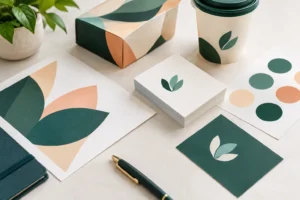
Color also needs practical consideration. Brand colors should carry through the display, but contrast matters more than strict brand rules. A pale logo on a light background can get lost under convention hall lighting. Dark text on a clean light field, or light text on a rich dark field, generally reads better from a distance. Review the design at full scale whenever possible.
Select Materials That Match the Event
Trade show hardware and print materials affect appearance, setup time, transport, and reuse. There is no one right choice for every exhibitor.
Fabric displays offer a clean, high-end look and are popular for backdrops because they reduce glare in photographs. They travel well and can be reused when the message remains current. They may not be the best option if your graphics change frequently or if you need a very rigid, structured surface for mounting additional pieces.
Vinyl banners are durable, versatile, and well suited for bold graphics, outdoor promotions, or temporary signage. Depending on the finish, they can show glare under strong lights, so design and placement matter. Retractable banner stands remain one of the most efficient choices for exhibitors who need portable graphics that can be set up quickly by one person.
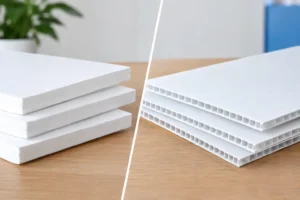
Rigid signs are useful for pricing, product information, directional messaging, and counter displays. Foam board can be cost-effective for short-term indoor use, while more durable substrates may make sense for repeated handling or longer campaigns. The material should reflect the lifespan of the message. There is little value in investing heavily in a permanent panel for a one-day offer, just as a lightweight temporary sign may not hold up for a multi-show tour.
Plan Production Before the Deadline Becomes a Crisis
Convention deadlines are not limited to the date doors open. You may need time for design approval, print production, finishing, packing, freight coordination, venue deliveries, and a final quality check. If your display includes custom hardware or specialty components, allow even more lead time.
Still, last-minute changes happen. A shipment gets delayed, a sponsor logo changes, a team discovers an outdated phone number, or an exhibitor arrives in Las Vegas without a critical banner. In those moments, choosing a local production partner with wide-format capability and responsive support can protect the event plan.
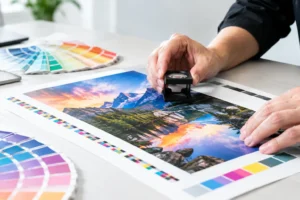
Provide production-ready files when possible, but do not assume a file is ready because it looks sharp on a laptop. Large-format printing requires the right dimensions, resolution, bleed, color setup, and safe areas. If artwork needs help, address it early. A small design adjustment before printing is far less expensive than replacing a finished display on the show floor.
Build a Display System, Not a One-Time Purchase
The most efficient exhibitors create a flexible system they can adapt across events. A core branded backdrop can be reused, while smaller banners, posters, and counter signs change by industry, audience, product launch, or promotion. This approach keeps the booth recognizable without making every event look identical.
Store the hardware with labeled graphics, replacement parts, instructions, and a photo of the finished setup. After each show, inspect banners for damage and make notes about what attendees responded to. Did the headline start conversations? Did the offer draw people in? Was a sign blocked by the table? Those observations improve the next event more than guessing from memory.
For businesses working on tight convention schedules, Design One Printing can help coordinate display graphics, banners, signs, and matching sales materials from one local production source. That matters when the booth needs to look consistent and the deadline does not move.
The strongest booth is not the one with the most printed pieces. It is the one where every graphic earns its place, every message is easy to understand, and your team can walk onto the show floor ready to start useful conversations.