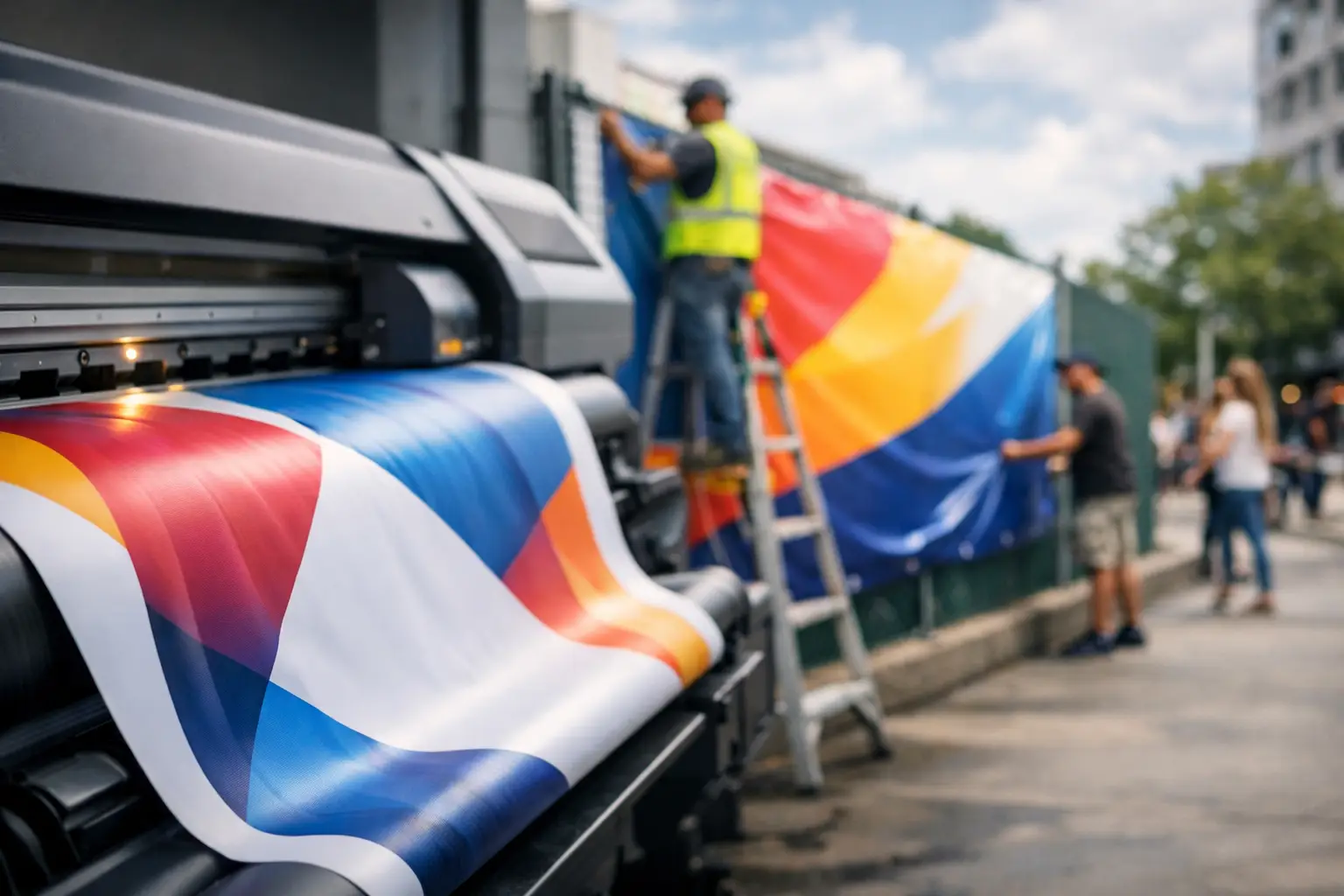
A banner has only a few seconds to do its job. On a crowded Las Vegas convention floor, outside a busy storefront, or at a registration table before an event opens, people need to understand who you are and what to do next at a glance. Effective banner printing turns that brief moment of attention into foot traffic, leads, and brand recognition.
The difference is rarely just a logo on vinyl. Size, viewing distance, material, color contrast, finishing, and installation all affect whether a banner looks polished or gets lost in the background. When the deadline is close, choosing those details correctly the first time also prevents costly reprints and last-minute setup problems.
Start Banner Printing With the Job It Needs to Do
Before choosing dimensions or uploading artwork, identify where the banner will be used. A banner behind a six-foot trade show table has different requirements than one mounted above a storefront entrance. The first is viewed from a few feet away and needs a focused message. The second must remain legible across a parking lot or sidewalk.
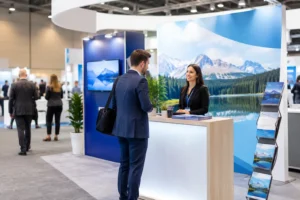
For conventions and expos, banners often need to establish the brand quickly. A retractable banner stand near the aisle can feature a logo, a short benefit statement, and one strong image. A larger back-wall banner can support the full booth experience, but it should still prioritize the message a visitor can read from several steps away.
Retail, hospitality, and service businesses may use banners for grand openings, seasonal promotions, directional signage, job fairs, and special events. In these cases, clarity usually matters more than including every offer or service. A large headline, a deadline or price when relevant, and a clear call to action will outperform a design packed with small copy.
Outdoor banners need another layer of planning. Wind exposure, mounting points, sun, and the length of the promotion all influence the right substrate and finishing. A temporary weekend event can use a different solution than a banner expected to stay outside for months.
Choose the Right Banner Size and Viewing Distance
The best banner size depends on where customers will stand, walk, or drive. Larger is not automatically better. An oversized banner in a narrow booth can overwhelm the space, while a small banner on a building facade may be invisible from the street.
For tabletop displays and check-in areas, compact banners work well when the audience is close. For trade show aisles, vertical retractable banners provide strong visibility without requiring much floor space. Wide horizontal banners are useful for booth backdrops, stage areas, fencing, and storefront windows.
Text size should follow viewing distance. If people will read the banner from across an aisle, the headline needs to be substantially larger than body copy. A useful practical rule is to build the design around one message that can be understood from a distance, then use secondary text only for viewers who come closer.
Keep logos clear of edges, grommets, pole pockets, and retractable stand hardware. Leave a safe margin around important information. That small production detail can make the difference between a professionally finished banner and one with a clipped phone number or partially hidden logo.
Match the Material to the Environment
Material selection affects durability, appearance, portability, and cost. It is a production decision, not an afterthought. The right choice depends on how long the banner will be used and what it needs to withstand.
Common banner materials include:
- Vinyl banners for versatile indoor or outdoor promotions, events, and storefront messaging.
- Mesh banners for windy locations, since the perforated surface allows air to pass through.
- Fabric banners for a softer, more upscale indoor presentation with reduced glare.
- Retractable banner media for portable trade show and presentation displays that set up quickly.
Vinyl is often the practical choice for general-purpose business banners because it is durable and produces vivid color. Mesh is better when wind is a real concern, but the perforations can slightly reduce image density. Fabric can elevate the appearance of a booth or interior display, although it may not be the best fit for long-term outdoor use.
If the banner will travel repeatedly, consider how it will be rolled, stored, and transported. A retractable display is convenient for exhibitors moving between events, while a grommeted vinyl banner can be rolled and reused when handled carefully. Discussing the setup location with a print professional before production helps avoid choosing a material that looks good on screen but is wrong for the environment.
Design for Fast Recognition, Not More Information
Businesses often try to make a banner do the work of a brochure. That is understandable, especially when there is a lot to say. But banners are visual signals first. Their job is to attract, identify, and direct attention.
Lead with the most valuable message. For a restaurant, that might be a new location or daily special. For an exhibitor, it could be the problem the company solves. For an event organizer, it may be the event name, date, and entrance direction. Place that message at the largest scale in the strongest part of the layout.
Use high-contrast color combinations. Dark text on a light background or light text on a dark background is generally easier to read than colors with similar brightness. Brand colors should remain recognizable, but legibility has to win when the two conflict. A subtle gray headline on a medium-blue background may look refined on a laptop and disappear under convention center lighting.
Images should be high resolution and purposeful. A sharp product photo, a compelling hospitality image, or a simple graphic can support the headline. Low-resolution photos, crowded collages, and tiny screenshots usually weaken large-format output because every flaw becomes more visible at banner size.
If a QR code is included, give it room. It needs enough contrast, a clear quiet area around it, and a realistic scanning distance. A QR code placed too low, too small, or in a busy visual area may look modern without generating any scans.
Build Files for Large-Format Production
For the best result, provide artwork at the final banner dimensions whenever possible. Vector logos and graphics are ideal because they remain sharp when scaled. PDF files are commonly preferred for production-ready layouts, while high-resolution image files can work when they are created at an appropriate size.
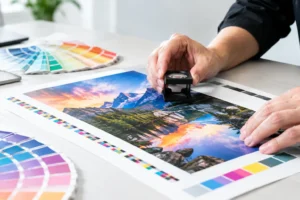
Use CMYK color settings for printed work when your design software allows it. Screen colors are made with light, while printed colors use ink, so exact color matches are not always possible. Brand-critical colors may require extra attention, particularly when matching existing signage, booth graphics, or printed collateral.
Proofread at full attention before approving the job. Check dates, booth numbers, website addresses, phone numbers, pricing, and event details. A typo on a large banner is more noticeable than one on a business card, and a correction can be difficult once event setup is underway.
Plan Finishing and Installation Before Production
A finished banner needs a way to hang, stand, or attach securely. Grommets, pole pockets, hemming, banner stands, and mounting hardware are selected based on the installation method. These details should be decided before artwork is finalized because they affect safe areas and overall dimensions.
Grommets are practical for attaching banners to walls, fences, and frames. Pole pockets work when a banner will slide onto a rod or display structure. For outdoor banners, reinforced hems and properly spaced grommets help distribute tension. Pulling tightly on only two corners can cause wrinkles, tearing, or an uneven display.
For a trade show, confirm booth rules before ordering. Convention organizers may restrict hanging signs, maximum heights, or the placement of graphics near aisle boundaries. Also consider who will install the banner and how much time they will have. A display that requires complicated assembly may not be the right choice for a small team arriving just before the show opens.
Make Rush Banner Printing Work in Your Favor
Rush production is most successful when decisions are made early and files are ready. If an event date is approaching, provide the intended size, use case, quantity, artwork status, and required pickup time when requesting a quote. That allows the production team to recommend a realistic material, finish, and turnaround.
If the design is not complete, focus first on the essential message and required branding. A clean, well-produced banner with a strong headline is more valuable than an overdesigned piece that misses the event. Local production also gives Las Vegas businesses and exhibitors an advantage when plans change, graphics are damaged in transit, or a booth needs an unexpected addition.
Design One Printing can help evaluate artwork, materials, and finishing for banners that need to look professional on a tight schedule. Bring the location, deadline, and intended setup into the conversation from the start.
Your banner does not need to say everything about your business. It needs to give the right person a reason to stop, look closer, and take the next step.