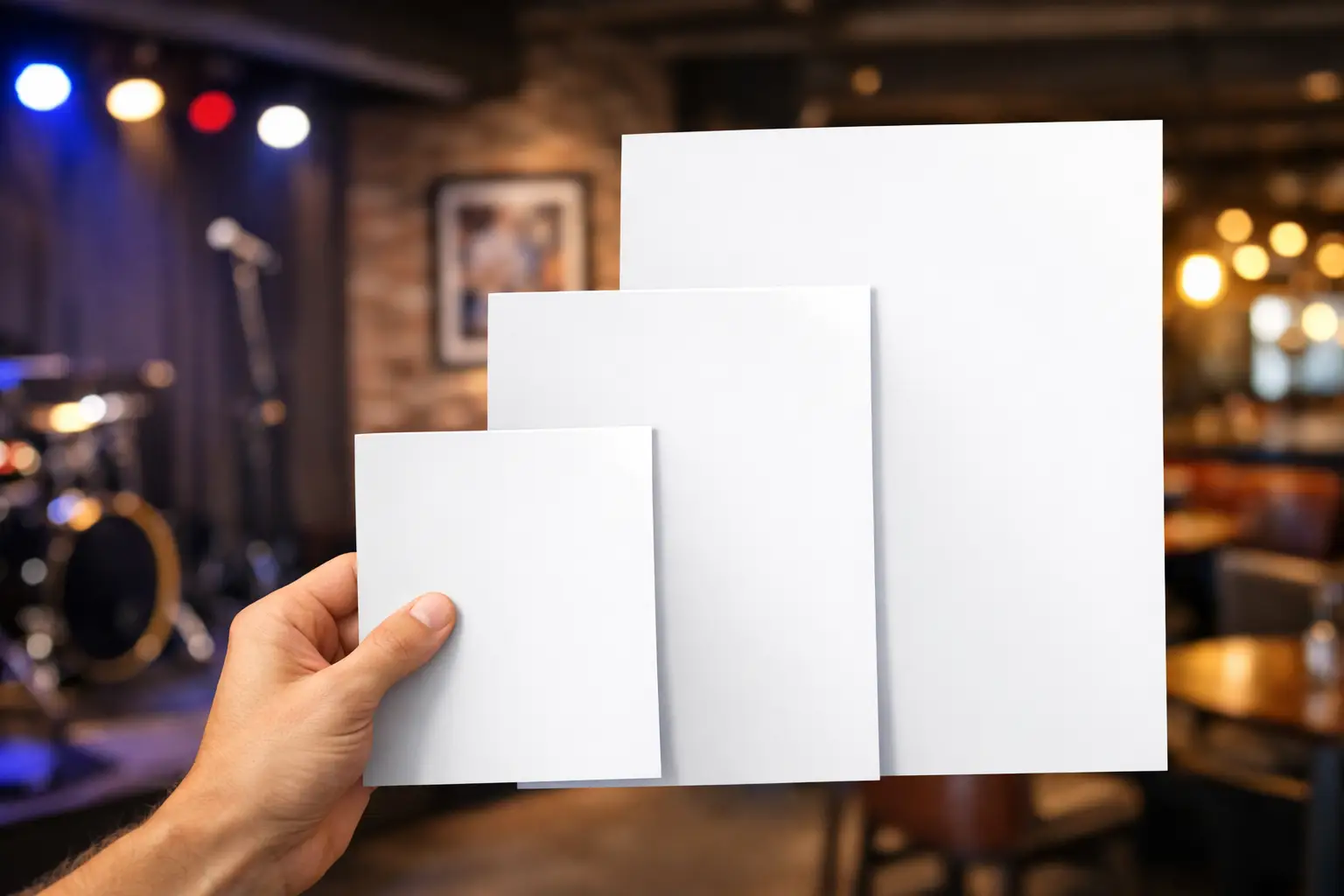
A poster that looks great at arm’s length can disappear completely across a busy hotel lobby, exhibit hall, or parking lot. So, what size should event posters be? The right answer depends on where people will see them, how far away they will be standing, and how much information they need to absorb before walking past.
For most local promotions, 11 x 17 inches is a practical starting point. For high-traffic venues, large entrances, and convention spaces, 18 x 24 or 24 x 36 inches usually delivers the visibility an event needs. The goal is not simply to print the biggest poster possible. It is to select a format that fits the placement, protects readability, and makes your event details easy to act on.
Start With Viewing Distance, Not Poster Design
Poster size should follow the distance from which the audience will first notice it. A small poster can work well on a checkout counter or community bulletin board because viewers are already nearby. The same poster is ineffective when mounted on a wall across a ballroom or placed outside a busy meeting room.
As a working rule, the main headline should be readable from the expected viewing distance. A short event name or callout can be large and bold. Dates, times, locations, sponsor information, and registration instructions can be smaller because interested viewers will move closer. If every detail is treated as a headline, none of the message will stand out.
Placement also affects the amount of time someone has to read. A poster in an elevator lobby may get several seconds of attention. A poster beside a convention corridor or casino walkway may get only a quick glance. In fast-moving environments, use a larger format and keep the message focused: event name, date, location, and one clear reason to attend.
Common Event Poster Sizes and Where They Work
11 x 17 inches: The everyday event poster
An 11 x 17 poster is one of the most useful sizes for restaurants, retail counters, office break rooms, school campuses, community boards, and registration desks. It is large enough to feel more polished and noticeable than a standard letter-size flyer, while remaining easy to distribute in quantity.
Use this size when the audience will be close to the poster or when you need to place many copies across several locations. It is a smart choice for networking events, happy hours, fundraisers, classes, store promotions, and restaurant entertainment. The trade-off is visibility: it should not be your only format for a large venue or a major public event.
18 x 24 inches: A strong choice for indoor promotion
For many event organizers, 18 x 24 inches is the sweet spot. It gives your headline, photography, branding, and event details enough room to breathe without becoming difficult to display. This size works well for hotel meeting spaces, office lobbies, event entrances, mall displays, framed sign holders, and indoor directional promotion.
An 18 x 24 poster is especially useful when your design includes a speaker photo, entertainment lineup, product imagery, or a short agenda. It supports a more premium presentation than a smaller poster while still fitting comfortably into many standard display systems.
24 x 36 inches: Best for major visibility
A 24 x 36 poster is a reliable choice for larger events, busy public spaces, trade show areas, campus promotions, street-facing windows, and venue entrances. It gives attendees a better chance of spotting the event from across a room or down a corridor.
This size is often appropriate for Las Vegas conventions, hotel events, grand openings, live entertainment, and multi-day conferences. It is also useful when the poster has to compete with surrounding signage. However, large format does not fix an overcrowded layout. Keep the primary message prominent and avoid filling the space with paragraphs of copy.
27 x 40 inches and larger: Use for display impact
Movie-poster size, commonly 27 x 40 inches, and larger custom formats are best when the poster functions as a visual feature rather than a simple announcement. Think sponsor walls, high-visibility lobby displays, retail window promotions, photo opportunities, or event decor.
These sizes can create impact, but they require the right production plan. Confirm where the poster will be mounted, whether a frame or easel is available, and whether the artwork has enough image resolution to print cleanly at scale. For exterior use, a weather-resistant sign material may be a better fit than paper poster stock.
What Size Should Event Posters Be at Trade Shows?
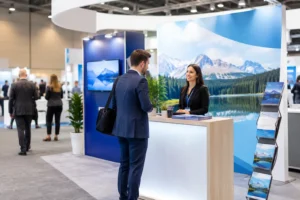
At a trade show, poster size is tied directly to booth layout and attendee traffic. An 11 x 17 poster can be useful at the table for pricing, giveaway details, or a product feature. It is rarely large enough to attract people from the aisle. For that purpose, 18 x 24 or 24 x 36 is more effective, especially when mounted at eye level.
If you need visitors to find your booth from a distance, consider whether a poster is actually the best tool. A retractable banner, foam board sign, fabric display, or large-format mounted graphic may offer better height and stability. Posters are versatile and cost-effective, but a crowded expo floor calls for graphics designed to rise above tables and neighboring displays.
For exhibitor deadlines, plan the display hardware before printing. A perfectly sized poster can still underperform if it is taped low on the back wall, curled at the edges, or placed behind product samples. Ask where it will go, how it will be secured, and what attendees can see from the aisle.
Match the Size to the Information You Need to Share
The more information an event poster must communicate, the more carefully you need to balance size and hierarchy. A simple concert announcement may need only an event name, date, venue, and ticket message. A business seminar may need speakers, session times, sponsors, registration details, and a QR code.
Larger posters provide more room, but they should not become information sheets. Prioritize content in this order: what the event is, why someone should care, when and where it happens, and how to respond. Supporting information can be reduced, moved to a separate handout, or delivered through a QR code.
QR codes deserve particular attention. They need enough physical size and clear contrast to scan reliably. Do not tuck one into a crowded corner or print it so small that a viewer has to stand inches away. Test it from the likely viewing position before approving the final artwork.
Choose Orientation and Paper Stock With Placement in Mind
Portrait posters are familiar and work naturally for most bulletin boards, easels, and wall displays. Landscape posters can be a better choice for a wide logo, a panoramic image, or a message designed for a table display or horizontal window. Neither orientation is automatically better. The decision should support the event’s visual hierarchy and available display area.
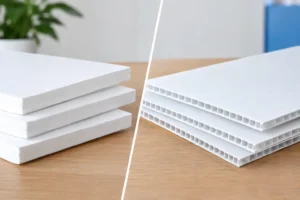
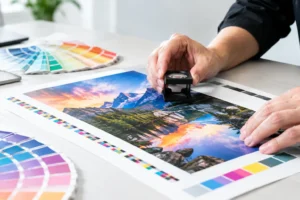
Paper choice matters, too. Glossy stock makes photos and color-rich designs pop, while matte stock reduces glare under bright venue lighting and can be easier to read. For a poster that will be handled frequently or displayed for an extended period, a heavier stock offers a more substantial, professional feel. Mounted posters provide added rigidity for presentation areas and exhibit spaces.
If the promotion will be outside, near a pool area, or exposed to weather, discuss alternate sign materials. Paper posters are ideal for many indoor uses, but outdoor conditions call for a material built to hold up.
Prepare the Artwork Before the Deadline Gets Tight
Event details change quickly, particularly for conferences, launches, and hospitality events. Before sending a poster to print, verify the date, start time, venue name, suite or ballroom number, sponsor logos, contact details, and QR code destination. One incorrect detail can turn a fast print job into a costly reprint.
Build artwork at the final print size whenever possible. Use high-resolution images, keep key text away from the edges, and leave room for trim where required. If your team is working from a last-minute file, professional design support can help correct low-resolution images, spacing problems, and print-ready setup before production begins.
For Las Vegas organizers and exhibitors facing a short turnaround, Design One Printing can help match the poster format to the venue, deadline, and display plan. That conversation is often faster and more effective than guessing at a size after the artwork is already finished.
The best event poster is not the one with the most square inches. It is the one attendees can notice, understand, and act on at exactly the moment they encounter it.