A storefront sign has a job to do before anyone walks through the door. It needs to be readable from the street, fit your brand, hold up in the local weather, and justify the cost over time. If you are comparing the best storefront sign materials, the right answer usually comes down to visibility, lifespan, installation method, and how often you expect to update the sign.
For Las Vegas businesses, that decision matters even more. Strong sun, heat, wind, dust, and heavy traffic can expose the weaknesses in the wrong material fast. A sign that looks sharp on day one but fades, warps, or cracks early can cost more than a better-built option that lasts.
How to choose the best storefront sign materials
The best storefront sign materials are not the same for every business. A retail shop on a busy road has different needs than a salon in a strip center, a restaurant with nighttime traffic, or a convention-related business that changes promotions often.
Start with four practical questions. How long does the sign need to last? Will it be indoors, outdoors, or both? Does it need illumination? And are you building a permanent brand fixture or a sign that may change with seasons, tenants, or campaigns?
A permanent exterior sign usually calls for a rigid, weather-resistant material with a professional finish. Temporary promotional signage leans more toward lighter, lower-cost substrates that are easy to replace. If your location depends on visibility after dark, the conversation shifts from printed material alone to sign faces, dimensional letters, and illuminated elements.
Acrylic signs for a polished brand look
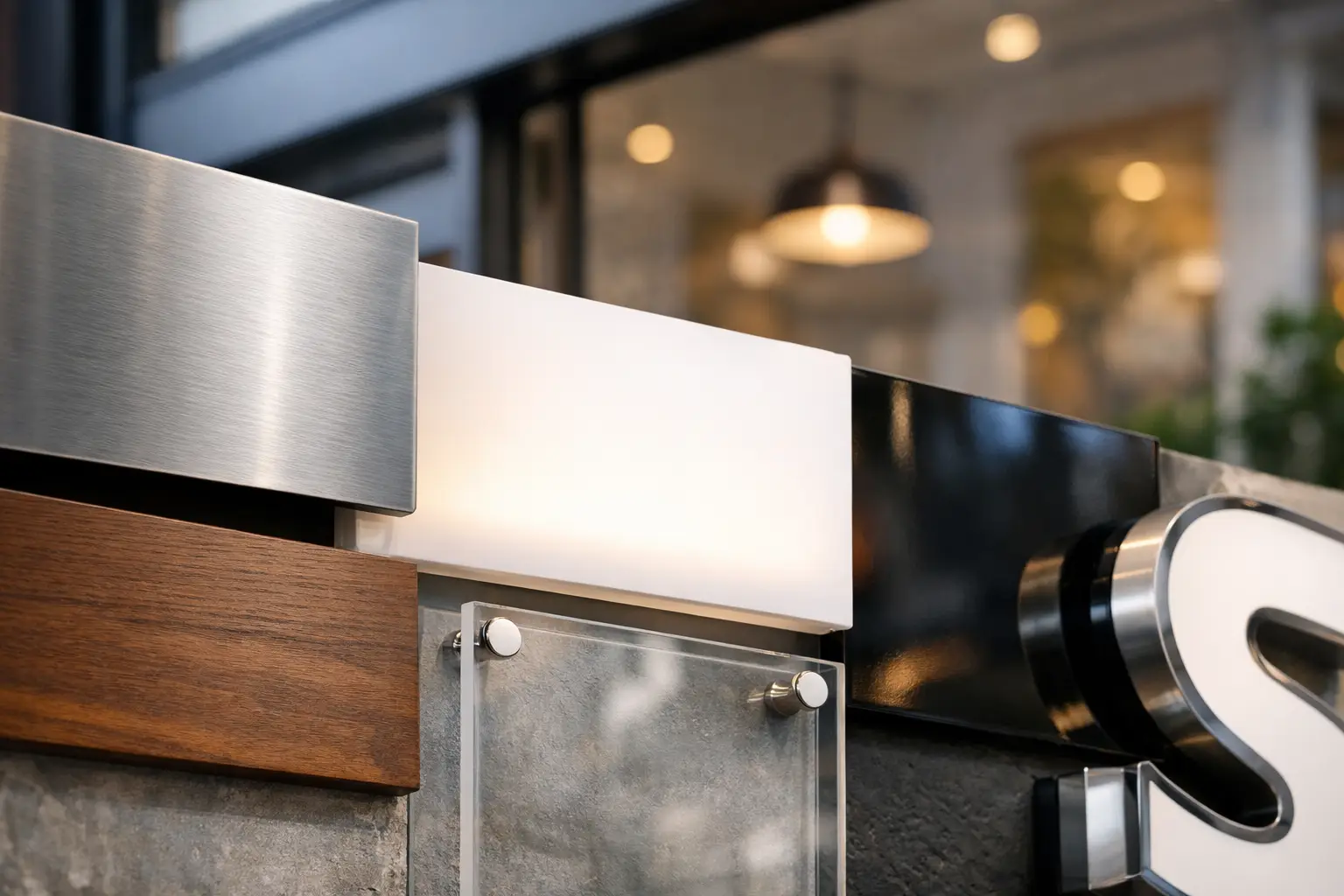
Acrylic is a strong option when appearance is the priority. It delivers a clean, modern look and works well for businesses that want a more upscale presentation. Acrylic panels can be printed directly, mounted with vinyl graphics, or used with standoffs for a dimensional effect.
This material is often chosen for lobby signs and covered exterior applications, but it can also work outdoors when properly fabricated. It holds color well and offers a smooth finish that photographs nicely and supports a premium brand image.
The trade-off is impact resistance. Acrylic can crack under stress more easily than some alternatives, and for exposed outdoor locations, fabrication quality matters. If a sign is likely to take abuse from wind, debris, or frequent handling, acrylic may not be the most forgiving choice.
Aluminum composite is one of the best storefront sign materials for outdoors
For many businesses, aluminum composite material is one of the best storefront sign materials for exterior use. It is lightweight, rigid, weather-resistant, and professional-looking without the high cost of heavier metal signs.
It performs well in heat and sun, which makes it a practical fit for the Las Vegas market. Printed graphics on aluminum composite maintain a crisp appearance, and the panel itself resists rust and general wear better than many budget materials. This is a popular choice for long-term storefront signs, building panels, and branded exterior displays.
Another advantage is versatility. It can support simple branding, bold full-color graphics, or more minimalist design depending on your storefront. If you need a dependable exterior panel that balances cost and durability, this material is hard to beat.
PVC signs for indoor use and short-to-mid-term installs
PVC is a common sign substrate because it is lightweight, smooth, and affordable. It works especially well for indoor storefront graphics, menu boards, wall signs, and temporary branded displays where a rigid panel is needed without the weight or expense of metal.
For storefront use, PVC can be a smart choice in covered areas or for shorter-term applications. It prints cleanly and cuts easily into custom shapes, which gives businesses flexibility in design.
The limitation is outdoor endurance. Extended exposure to heat and direct sun can cause warping over time, especially on thinner panels. If your sign faces intense weather and needs to stay up for years, PVC is usually not the first recommendation.
Corrugated plastic for temporary promotions
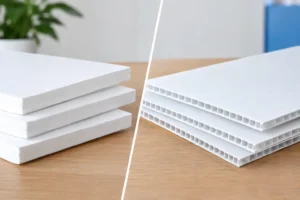
Corrugated plastic is built for affordability and speed. If you need a temporary grand opening sign, event directional signage, short-term promotion, or a replaceable message panel, it gets the job done quickly and at a lower cost.
This is not usually the material businesses choose for their main storefront identity sign. It is better suited for short campaigns, seasonal messaging, and temporary announcements. The printed surface can look good, but the material itself does not project the same permanence as metal, acrylic, or dimensional signage.
That does not make it the wrong choice. If the goal is to promote a limited-time sale or support a fast-moving event schedule, using a lower-cost material can be the smarter business decision.
Vinyl graphics for windows and doors
Some storefronts do not need a large rigid panel at all. Vinyl can be one of the best storefront sign materials when the glass itself is the signage opportunity. Window graphics, door lettering, hours of operation, logos, and promotional messages can all be produced with cut vinyl or printed vinyl.
Vinyl is especially useful for businesses that want to maximize visibility without blocking the storefront. Perforated window film can add large-scale graphics while preserving visibility from inside. Frosted vinyl can create a more refined look for offices, salons, and service businesses.
The biggest advantage is flexibility. Vinyl can be updated faster than many permanent sign systems, which helps if your offers, branding, or occupancy changes. The downside is that lifespan depends on sun exposure, installation quality, and the specific film being used.
Foam board and similar materials for short-term interior displays
Foam board is more often used for indoor presentations, point-of-purchase displays, and event signage than for permanent storefront use. Still, it has value for businesses that need short-term messaging near an entrance or inside a retail environment.
It is lightweight, easy to mount, and budget-friendly. For pop-up promotions, seasonal campaigns, or convention-related retail setups, it can serve a purpose.
For exterior storefront signage, though, it is not a durable long-term solution. Moisture, dents, and handling wear can quickly reduce its appearance.
Dimensional letters and routed signs
If your storefront needs a stronger architectural presence, dimensional letters can outperform flat panels visually. These signs are often made from acrylic, metal, PVC, or foam with laminate finishes, and they create depth that reads well from a distance.
This option is common for retail centers, professional offices, restaurants, and businesses where brand presentation affects perceived value. Dimensional signs can look more established than printed panels alone, especially when paired with clean lighting and simple design.
The trade-off is cost and production complexity. Installation is more involved, and the sign system needs to match the building facade, local sign rules, and visibility goals. Still, for many permanent storefronts, dimensional letters are worth considering because they improve presence without relying on a busy design.
What matters more than the material alone
Even the best substrate will underperform if the sign is designed poorly. Letter size, color contrast, finish, and placement all affect how well a storefront sign works. A durable panel with weak typography or low contrast can be harder to read than a simpler sign on a less expensive material.
Mounting also matters. A good material installed badly can fail early. Wind load, wall surface, sun angle, and clearance all influence how long the sign holds up and how professional it looks after installation.
That is why businesses often benefit from discussing the sign as a complete production decision, not just a material choice. The right recommendation comes from matching the design, environment, budget, and timeline.
Which storefront sign material is best for your business?
If you want a practical answer, aluminum composite is often the safest all-around exterior choice for durability, appearance, and value. Acrylic works well when presentation and polish matter most. PVC fits indoor or shorter-term rigid signs. Vinyl is ideal for windows, doors, and graphics that may need to change. Corrugated plastic serves temporary outdoor promotions, while dimensional letters make sense for businesses investing in a stronger permanent identity.
For businesses working on a tight deadline, material availability can also influence the decision. Sometimes the best choice is not just what lasts longest, but what can be produced quickly without compromising your brand. That is especially true in Las Vegas, where retail openings, event schedules, and convention traffic create real time pressure. A local production partner like Design One Printing can help match the sign material to both the storefront and the turnaround window.
A storefront sign should earn its place every day it is up. Choose the material that fits how your business operates, not just how you want it to look in a mockup, and you will get better performance from the investment.