A crowded convention floor gives attendees seconds to decide what makes it into their tote bag and what gets left behind. The best business event handouts earn that space by doing more than displaying a logo. They answer a useful question, support a sales conversation, or give the recipient a clear reason to follow up after the event.
For Las Vegas exhibitors, meeting planners, and local businesses, the right choice also has to work within real production constraints. Quantity, budget, booth traffic, branding, and turnaround time all matter. A premium item can make sense for qualified prospects, while a simple printed piece may be the better tool for reaching thousands of attendees. The goal is not to hand out the most items. It is to put the right message in the right hands.
Start With the Event Goal
Before choosing a product, define what the handout needs to accomplish. A networking breakfast, a multi-day trade show, a grand opening, and a sales presentation require different materials. When the objective is lead generation, a handout should make the next step easy: schedule a consultation, request pricing, visit a location, or redeem an offer. When the objective is brand awareness, visibility and practical usefulness often carry more weight.
Think about who will receive it, too. Decision-makers may appreciate a well-designed presentation folder with a capabilities sheet, case study, or price overview inside. General show traffic may respond better to a postcard-sized offer, a sticker, or a useful branded item that is easy to carry. For hospitality and entertainment events, materials with a strong visual appeal can reinforce the experience without requiring a long explanation.
A handout should also match the moment. Someone standing in an aisle does not have time to read a dense brochure. Someone who has agreed to sit for a product demo may be ready for detailed printed information. Matching the format to the interaction prevents waste and makes your booth team more effective.
Best Business Event Handouts by Use Case
Business cards remain essential, especially when they are designed for a specific event instead of serving as a generic contact card. A clean card with a direct call to action, event-only offer, QR code, or appointment link gives it a job beyond sharing a phone number. Premium stocks, spot finishes, or unusual dimensions can help a card stand out, but clarity should come first. If attendees cannot immediately tell who you are and why they should contact you, the finish will not fix it.
Postcards are one of the strongest choices for high-volume events. They are affordable, easy to stack, and large enough to feature a bold image, offer, map, or product highlight. Use the front to catch attention and the back to make the response simple. A limited-time discount, a scan-to-enter giveaway, or a location-based offer can turn a postcard from passive collateral into a measurable campaign.
Flyers work well when you need more room for information without the cost of a full brochure. They are useful for service menus, event schedules, special announcements, restaurant promotions, and product launches. Keep the hierarchy tight: headline first, benefits second, action third. A flyer overloaded with small text often goes unread, especially in a busy exhibit hall.
Brochures are a better fit for higher-consideration services or products with multiple features. A tri-fold brochure can organize capabilities, packages, and contact details in a format prospects can take back to their office. For professional services, real estate, healthcare, construction, and B2B providers, brochures give sales teams a polished leave-behind after a meaningful conversation.
Presentation folders are ideal for appointments, press meetings, sponsorship discussions, and VIP outreach. They create a professional package for proposals, rate sheets, brochures, and sell sheets. The folder itself stays useful after the event, which can keep your company name visible longer than a single sheet of paper.
Stickers can be surprisingly effective when the design has personality and the audience is likely to use them. They work particularly well for retail brands, food and beverage businesses, community events, youth-focused promotions, and product launches. The key is to make the sticker feel worth keeping on its own. A plain logo may not be enough, while a clever graphic, local reference, or useful label can travel onto laptops, water bottles, and packaging.
For booths where product samples or small branded items make sense, custom packaging, labels, and inserts deserve attention. The presentation of a sample can shape perceived value before a prospect even tries it. Branded labels and printed instruction cards are a practical way to keep the experience consistent without overspending on the container itself.
Make Printed Handouts Easy to Act On
A handout should never leave the recipient wondering what to do next. Every piece needs one primary action. That may be scanning a QR code, calling a sales representative, using a promotional code, visiting a nearby location, or booking a meeting. Trying to promote five different actions usually weakens all of them.
QR codes are useful, but only when they lead somewhere relevant and mobile-friendly. Send attendees to an event landing page, a short form, a digital catalog, or a specific offer rather than a generic homepage. Place the code where it can be scanned easily, add a brief instruction, and test it before the job goes to print. A code without context often looks like decoration.
Your contact information should be easy to find without dominating the design. Include the essentials: company name, website or phone number, and a clear contact person when appropriate. For local businesses, a Las Vegas location, service area, or booth number can make the message more immediate. If the handout is tied to a time-sensitive offer, make the expiration date visible.
Design for the Reality of the Show Floor
Event printing needs to perform under less-than-perfect conditions. Attendees may be walking, carrying bags, speaking with several vendors, and sorting through materials at the end of a long day. Strong contrast, readable type, and one focused message are more valuable than a crowded layout.
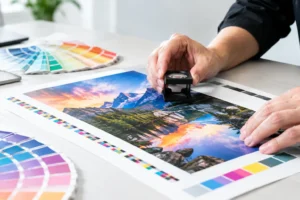
Use high-resolution images and print-ready brand colors, particularly for event graphics that need to match your booth, banner, table throw, or display. Consistency makes a smaller handout feel like part of a more established brand presence. If you are using a distinctive campaign headline at the booth, repeat it on the postcard or brochure so attendees can connect the piece to the conversation they had.
Paper choice changes the impression as well. A lightweight flyer is economical for mass distribution, while a heavier cardstock postcard feels more substantial and survives travel better. Gloss finishes can make product photography and bold colors pop. Matte finishes can feel refined and are often easier to write on. There is no universal best option; the right stock depends on the message, the expected quantity, and whether people need to take notes or collect signatures.
Plan Quantities and Turnaround Without Guesswork
Ordering too few handouts can leave a booth empty during peak traffic. Ordering far too many can consume budget and create boxes of outdated materials after the show. Estimate attendance, then consider your booth location, event duration, and how selective your team plans to be. A high-volume giveaway may require a large run, while premium folders and detailed brochures should be reserved for more qualified conversations.
Build in time for proofing, design approval, and production. Last-minute changes happen often in the convention business: a booth number changes, a speaker is added, an offer is revised, or a shipment does not arrive as planned. Choosing a local print partner with fast turnaround can reduce the risk when timing is tight. Design One Printing can help businesses coordinate rush event materials, from business cards and postcards to banners, brochures, signs, and trade show displays.
Do not assume that faster is always better, though. Rush production is valuable when you need it, but early planning gives you more room to compare paper options, refine messaging, and catch errors before they become expensive. For recurring events, create an approved template that can be updated with each show date, offer, or location.
Use Handouts as Part of the Follow-Up Plan
The strongest event handouts connect the booth to what happens next. Train staff to reference the piece while speaking with attendees: point out the offer, explain what the QR code delivers, or write a personal note on the back. That small interaction turns a printed item into a reminder of a real conversation.
After the event, use the same message in your follow-up email, sales call, or direct mail campaign. Consistent wording and visuals help prospects remember where they met you. If the handout includes a trackable offer or event-specific landing page, review the response after the show to guide the next order.
A well-chosen handout does not need to be extravagant. It needs to be clear, useful, professionally produced, and ready when your event opens. When the piece supports your team instead of competing for attention, it has a much better chance of making the trip home with the people you want to reach.