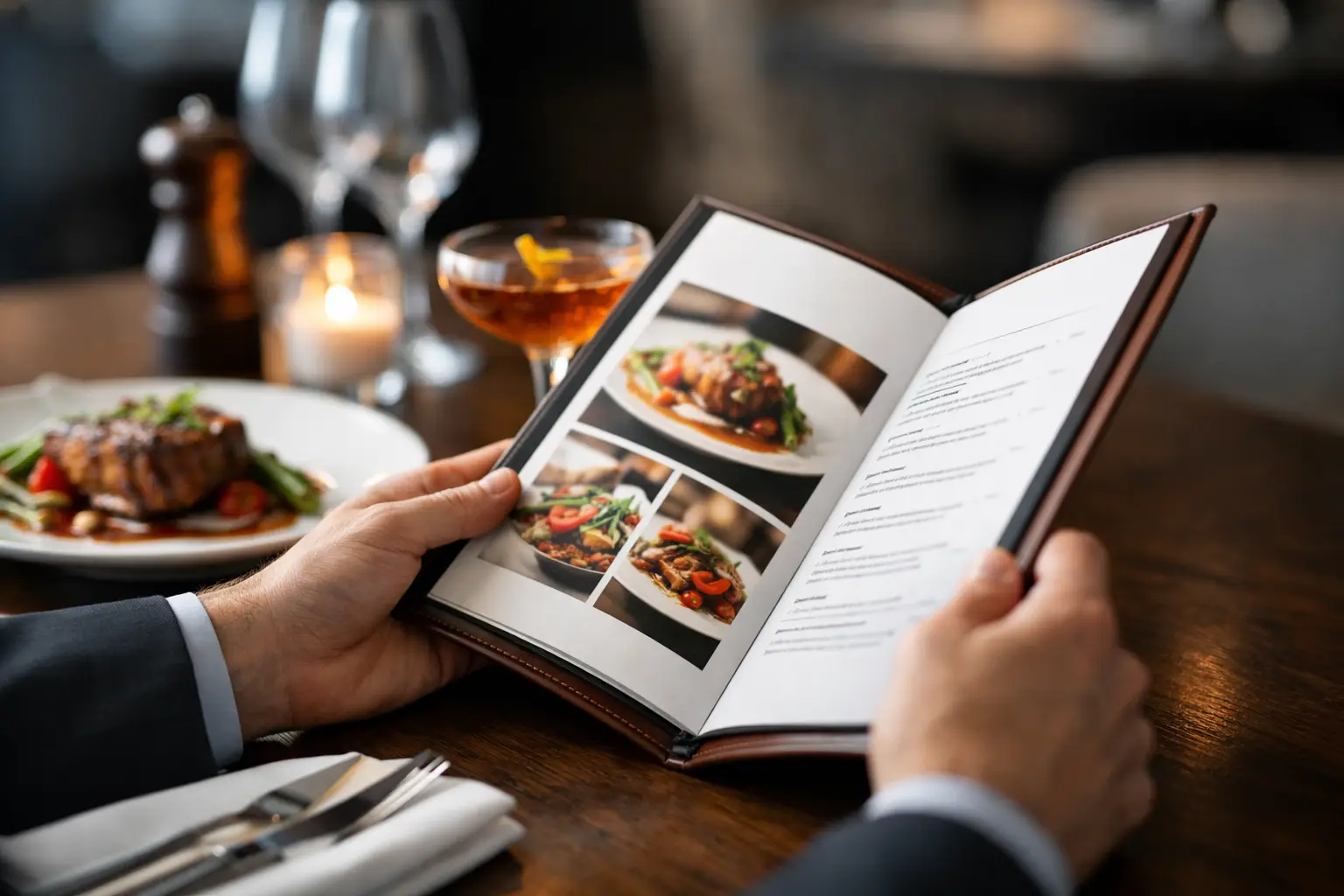
A guest may spend only a few minutes reading a menu, but that piece of print has a major job to do. It has to communicate your brand, make choices easy, guide profitable ordering, and survive constant handling. Menu printing for hospitality brands should be treated as an operational priority, not a last-minute design detail.
For restaurants, bars, hotels, resorts, cafes, poolside venues, and event spaces, menus are among the most frequently handled branded materials in the building. A faded cover, cramped layout, stained laminate, or out-of-date insert can make an otherwise polished operation feel less prepared. The right printing plan gives your team materials that look professional at the table and work reliably during service.
What Hospitality Menus Need to Accomplish
A menu has different requirements than a brochure or flyer. It is read in varied lighting, handled by guests and staff, exposed to food and beverages, and revised more often than many other marketing pieces. The format, paper stock, finish, and binding method all need to match the way the menu will be used.
A fine-dining dinner menu may call for a heavier uncoated stock, clean typography, and a refined presentation folder. A high-volume casual restaurant may need wipeable laminated menus that can move through hundreds of covers each week. A hotel lounge may benefit from a compact drink menu with premium color and a durable finish, while a convention banquet team may need fast-turnaround buffet cards, place cards, and branded event menus.
The best choice depends on service style, update frequency, budget, and expected wear. There is no single menu format that works for every hospitality business. What matters is selecting materials that support the guest experience without creating unnecessary replacement costs.
Menu Printing for Hospitality Brands Starts With Use
Before choosing a size or finish, consider where and how guests will use the menu. A menu handed out at a hostess stand has different demands than one placed in hotel rooms, displayed at a counter, or mounted in a pool cabana.
Table menus must be easy to hold and read. Large folded menus provide more room for categories and descriptions, but they can be awkward in tight dining spaces. Single-sheet menus are efficient for quick-service venues and daily specials, although they may need sturdier stock or lamination to last. Booklet menus give upscale concepts room for food, wine, cocktails, and brand storytelling, but updates can become more involved if pricing or offerings change often.
For hospitality teams with frequent changes, inserts are often the practical answer. A durable cover or menu jacket can stay in circulation while seasonal pages, wine lists, and limited-time promotions are replaced as needed. This approach protects the core presentation while reducing the cost of reprinting the entire piece.
Choose Materials That Match the Service Environment
Paper and finishing choices affect more than appearance. They influence how long the menu lasts, how it feels in the guest’s hands, and how well it stands up to real service conditions.
Matte or uncoated stocks are easy to read under bright overhead lighting and work well for concepts with a natural, understated, or premium look. Gloss finishes can make food photography and bold color stand out, though glare may be a concern in heavily lit spaces. Soft-touch laminates provide a high-end feel, while standard lamination adds protection for menus exposed to spills, frequent wiping, and outdoor service.
Water-resistant synthetic materials are worth considering for pool decks, patios, bars, and high-turnover casual dining. They cost more than standard paper, but can reduce replacement needs when moisture and cleaning are part of daily operations. For a short-run event menu or one-night function, a high-quality cardstock may be the smarter investment than a fully laminated product.
Binding also matters. Saddle-stitched booklets work well for multi-page menus with regular updates. Coil binding is durable and practical for training or wine references, but may not fit every brand aesthetic. Loose sheets in branded folders offer flexibility for resorts, private dining rooms, and banquet programs.
Build a Layout That Helps Guests Order
A menu should not force guests to hunt for information. Clear sections, readable type, consistent pricing, and sensible spacing keep the ordering process moving. This is especially important during busy meal periods, when staff need to answer questions quickly and guests may be making decisions under time pressure.
Start with a strong visual hierarchy. Category names should be easy to spot. Item names should stand apart from descriptions. Prices need to be visible without dominating every line. If your menu includes dietary indicators, spice levels, or add-on options, use a simple system and apply it consistently.
Avoid trying to fit too much onto one page. Small type may reduce page count, but it can frustrate guests and make the menu feel crowded. A better approach is to simplify descriptions, remove low-priority copy, or split beverage and food offerings into separate pieces. The menu should feel organized at a glance, even when it includes a broad selection.
Strategic emphasis can also support sales. Featured cocktails, chef specials, premium pairings, and high-margin additions can be given extra space or a distinct visual treatment. The goal is not to make every item compete for attention. It is to create an easy path through the menu while giving selected offerings the visibility they deserve.
Plan for Updates Before You Place the Order
Pricing changes, seasonal dishes, supplier availability, event packages, and beverage updates are normal in hospitality. A menu system that is expensive or slow to revise can create avoidable pressure on your team.
Keep editable source files organized and make sure the final print version has been proofread by both operations and management. Check item names, prices, allergens, service charges, hours, and contact details before production begins. A missed price or outdated offering can cost more than a careful proofing round.
It also helps to identify which parts of the menu are permanent and which are likely to change. Your logo, core brand colors, signature items, and main category structure may stay stable. Seasonal features, prix fixe details, wine selections, and event-specific packages are better suited to inserts or short-run replacement pages.
For Las Vegas hospitality businesses, this flexibility is particularly valuable. A restaurant preparing for a major convention, a hotel hosting a private group, or a venue adding a last-minute event package may need updated materials quickly. Design One Printing can help coordinate menu formats and production schedules that support both planned updates and rush needs.
Keep the Full Guest Journey Consistent
Menus rarely stand alone. Guests may first see a sidewalk sign, host stand display, table tent, room-service card, cocktail list, event program, or promotional postcard. When these pieces share the same colors, type styles, logo treatment, and tone, the experience feels more intentional.
This does not mean every item has to look identical. A pool menu can be more relaxed than a steakhouse dinner menu, and a wedding banquet card can be more formal than a lobby cafe board. The connection should come from recognizable brand elements and consistent print quality.
Consider the supporting pieces that affect ordering and guest communication. Table tents can promote a limited-time drink. Counter cards can highlight happy hour. Takeout inserts can encourage return visits. Branded folders can present private dining packages or group menus. Producing these materials together can improve consistency and simplify the approval process.
Work Backward From Your Service Deadline
Hospitality timelines are often unforgiving. Menus may be needed before an opening, a weekend rush, a convention arrival, or a private event setup. Leave time for proofreading, color review, production, trimming, folding, lamination, and delivery or pickup.
If timing is tight, communicate the deadline, quantity, final size, and intended use at the start. A print partner can recommend practical alternatives when the original specification risks delaying the job. For example, a simplified fold, available stock, or separate insert may keep production moving without compromising the guest-facing result.
The strongest menu is not simply the most elaborate one. It is the one that looks right for your brand, reads clearly in service, withstands its environment, and arrives when your team needs it. When your menu supports both presentation and operations, every table is better prepared for the experience you want guests to remember.