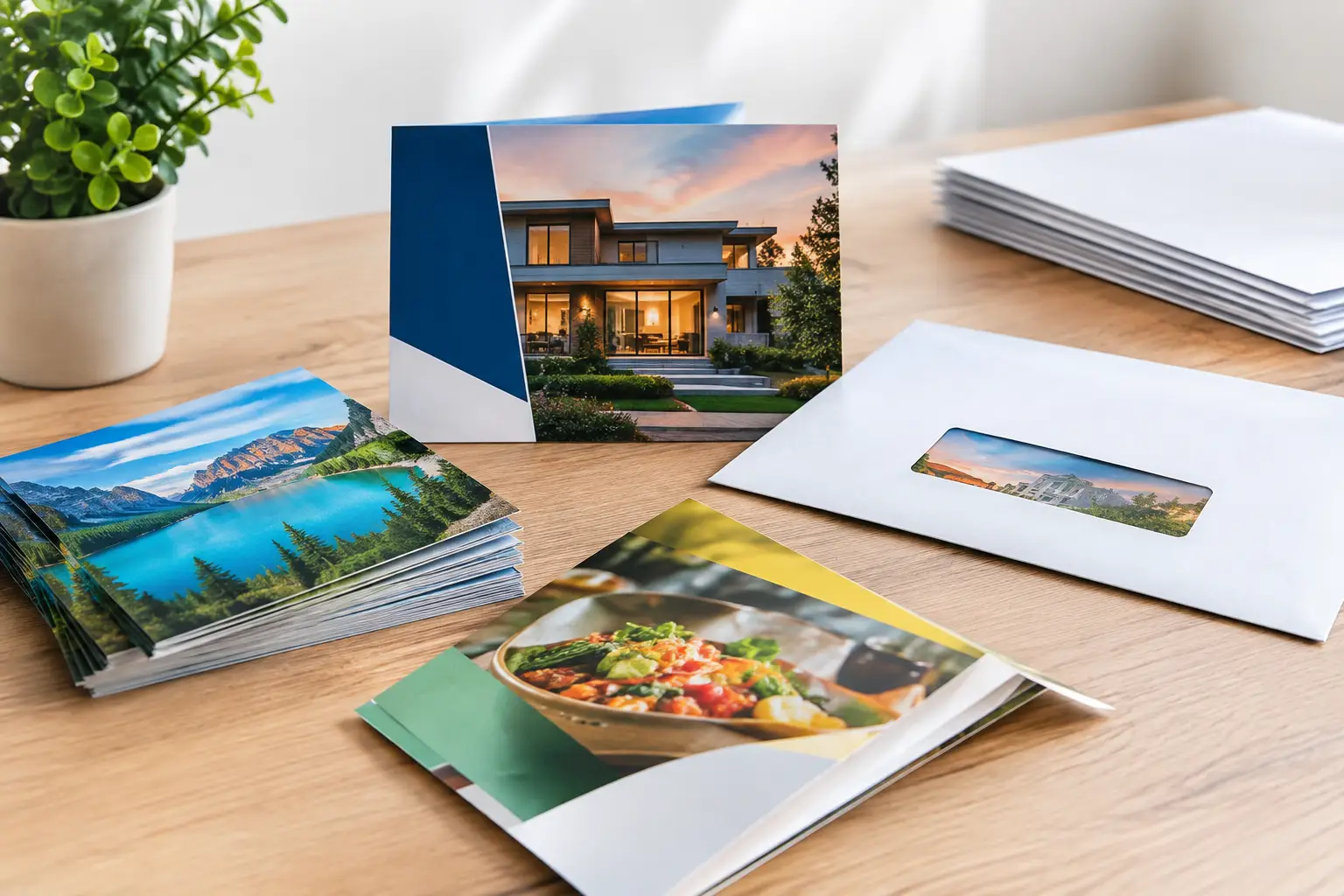
A restaurant opening two blocks from the Strip needs diners this weekend. A contractor needs estimates from homeowners before the next slow season. An exhibitor needs to turn a badge scan into a follow-up that gets opened. The right direct mail formats make those messages easier to notice, understand, and act on before the opportunity passes.
Format is more than a production choice. It affects mailing cost, available space, how quickly a recipient understands the offer, and whether the piece feels like a quick promotion or a serious business communication. Start with the campaign goal, then choose a format that supports it.
How to Choose Direct Mail Formats for the Job
The best format depends on what the recipient needs to know and what you need them to do. A simple offer with one clear action often performs best on a postcard. A higher-value service, detailed promotion, or personalized proposal may need the privacy and credibility of an envelope package.
Consider the mailing list before selecting size and style. A local audience that already recognizes your business may only need a bold reminder, a deadline, and a compelling offer. A cold audience may require more explanation, testimonials, service details, or a map that establishes why your business is relevant to them.
Budget and postal requirements matter too. Larger pieces create more visual impact but can cost more to print and mail. Folded pieces offer more room without requiring multiple separate inserts, while oversized formats can command attention in a crowded mailbox. The practical choice is the one that delivers enough information to move the customer forward without paying for space the campaign does not need.
The Most Useful Direct Mail Formats
Postcards for fast, focused offers
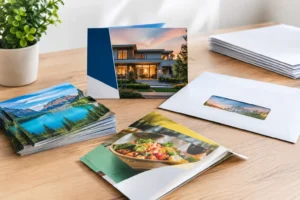
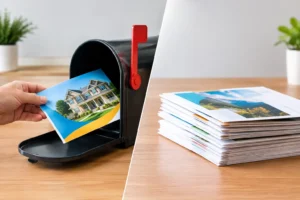
Postcards are often the fastest way to put a promotion in front of a local audience. There is no envelope to open, so the headline, image, offer, and call to action are visible immediately. They work especially well for restaurant specials, retail promotions, grand openings, real estate announcements, appointment reminders, and event invitations.
A standard postcard is efficient and cost-conscious, but size can be used strategically. A larger postcard has more room for a strong image, menu highlights, service categories, or an offer that needs to stand out. For Las Vegas businesses competing for attention, a well-designed oversized postcard can be a smart choice when the message is short and the visual presentation matters.
Keep the front focused on one main idea. The back should make it easy to respond with a phone number, website, QR code, address, or deadline. Trying to fit every service you offer onto a postcard usually weakens the response.
Folded brochures for more detail
Folded brochures give a business room to explain its value without overwhelming the recipient at first glance. A bi-fold works well for a concise service overview, while a tri-fold can organize several services, pricing levels, locations, or event details into clear panels.
This format is a strong fit for medical offices, hospitality businesses, professional services, fitness studios, home services, and organizations promoting programs or memberships. It can also serve double duty at a trade show or networking event after the mailing is complete.
The trade-off is attention. More panels do not automatically mean more persuasion. Put the strongest benefit and call to action on the cover or first visible panel, then use the inside space to answer the questions that keep a prospect from responding. Quality folding and accurate panel setup are essential, especially when a campaign is on a tight deadline.
Letters and envelope packages for high-value offers
When a message needs privacy, personalization, or a more formal tone, a letter package is often the right choice. Financial services, insurance agencies, legal professionals, healthcare providers, B2B companies, and nonprofits commonly use letters because the envelope creates a reason to open and the letter creates room to build a case.
A basic package may include a personalized letter, reply card, brochure, or offer sheet. For higher-value prospects, additional inserts can make the campaign feel more substantial. That said, every added component increases production, assembly, and postage considerations. Use inserts when they support the decision, not simply to make the envelope thicker.
Envelope copy matters. A blank envelope can feel personal or confidential, while a teaser such as “Your exclusive service offer is enclosed” can increase curiosity. The best approach depends on your audience and the relationship they already have with your business.
Self-mailers for promotions with more room
A self-mailer is a folded piece that mails without a separate envelope. It combines the immediate accessibility of a postcard with the added content space of a brochure. This makes it useful for seasonal sales, menu mailings, product catalogs, school or community announcements, and multi-service businesses.
Because the panels fold into the mailing piece, the layout must account for folds, sealing areas, address placement, and postal specifications. A good self-mailer feels organized when opened, not like a brochure that was forced into a mailing format. Plan the message sequence from the outside panel to the interior spread before finalizing the design.
Dimensional mail for targeted campaigns
Dimensional mail uses an unusual shape, box, tube, or object to create a memorable physical experience. It costs more than a postcard or self-mailer, but it can be highly effective for a small, valuable list. Think corporate gifts for top accounts, a product sample for qualified buyers, or an event invitation that needs to feel premium.
This is not usually the best format for a broad neighborhood campaign. It is better suited to account-based outreach, donor cultivation, VIP invitations, or a sales team trying to reopen conversations with a limited number of decision-makers. The key is relevance. A creative package gets attention, but the item inside still needs to connect directly to the offer.
Match the Format to the Response You Want
Before printing, define the response in one sentence. Do you want recipients to visit a location, call for an estimate, register for an event, bring in a coupon, or scan a code for more information? That answer should guide the format, design, and mailing list.
For example, a salon promoting open appointments may benefit from a postcard with a clear booking incentive. A convention exhibitor inviting selected prospects to a private demonstration may need a personalized letter or premium invitation. A property management company explaining several resident services may be better served by a self-mailer or folded brochure.
Timing should shape the production plan as well. A direct mail piece is only useful if it arrives while the offer still matters. Build in time for design approval, addressing, postal processing, and delivery, particularly around major conventions, holidays, and seasonal campaigns. If your deadline is close, simplify the format rather than rushing a complicated package that cannot be produced accurately.
Design Details That Improve Mail Response
Every format benefits from a clear hierarchy. Lead with a headline that tells recipients why they should care. Use one primary offer, not several competing discounts. Make the next step obvious, and repeat the call to action where appropriate.
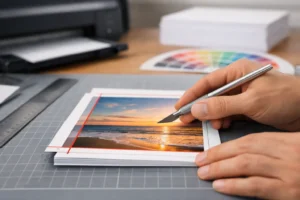
Print quality supports credibility. Color consistency, sharp images, readable type, and sturdy paper stock all affect how a business is perceived. This matters for luxury services and high-ticket sales, but it also matters for a neighborhood coupon. A poorly printed piece can make even a good offer feel less trustworthy.
Variable data can make mail more relevant when the list supports it. Personal names, location-specific offers, renewal dates, or service recommendations can turn a general promotion into a more useful message. Personalization is most effective when it adds genuine relevance, not when it is used as decoration.
For campaigns that need hands-on production support, Design One Printing can help businesses choose a practical format, prepare artwork, and produce professional mail pieces on a fast timeline. Bring the offer, audience, quantity, and in-home deadline to the planning conversation so the format can be selected with both response and production realities in mind.
The mailbox is still one of the few places where a prospect can hold your message, set it on a desk, and return to it later. Choose a format that respects their time, presents your brand professionally, and makes the next step easy to take.