A booth can look polished in the morning and worn out by the afternoon if its display material is not suited to the job. When comparing fabric versus vinyl displays, the right choice comes down to where the graphic will be used, how often it will travel, how close attendees will stand, and how quickly it needs to be produced.
For Las Vegas conventions, retail promotions, corporate events, and pop-up activations, both materials can deliver strong color and professional branding. The difference is in how they handle light, wrinkles, weather, transport, and repeat use. A smart decision prevents last-minute compromises at the venue.
Fabric Versus Vinyl Displays: The Main Difference
Fabric displays use printed textile material, typically stretched over a lightweight frame or finished as a hanging banner, backdrop, table throw, or tension display. Vinyl displays are printed on a smooth synthetic material and can be used for banners, retractable banner stands, window graphics, mounted signs, decals, and outdoor signage.
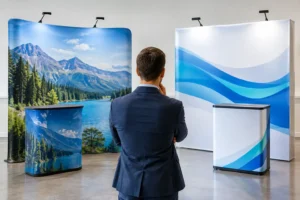
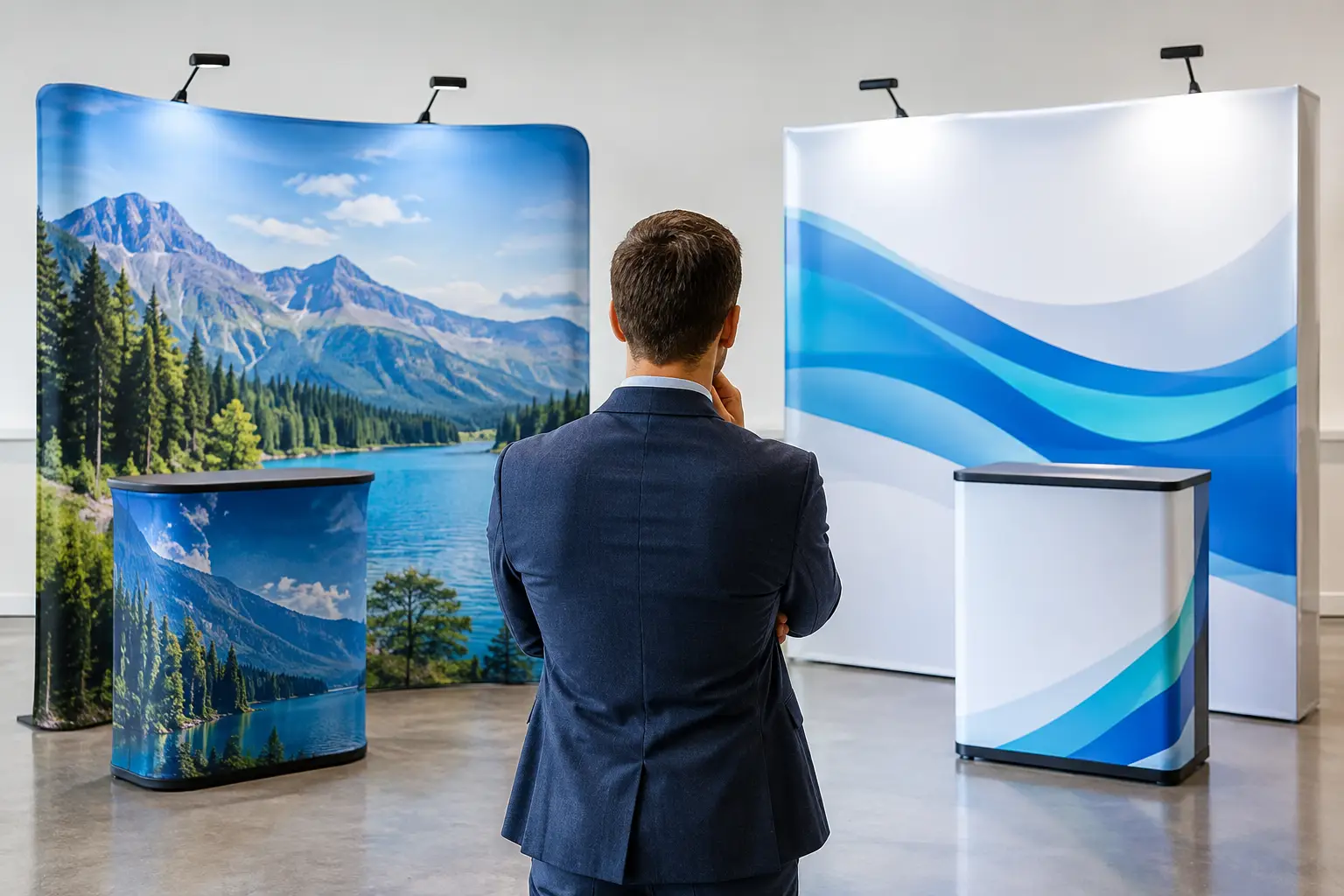
Fabric generally creates a softer, more refined presentation. It is a strong fit for trade show backwalls, step-and-repeats, branded table covers, and exhibit environments where visitors will take photos or stand close to the display. Vinyl is more versatile across short-term promotions, directional signage, outdoor applications, and graphics that need a crisp, smooth surface.
Neither material is automatically better. The display’s job should determine the material.
When Fabric Is the Better Choice
Fabric is often selected for exhibitors who want a premium booth appearance without the glare that can come from some vinyl surfaces. Under convention center lighting, fabric tends to photograph well and reduce reflections. That matters when your booth is being shared on social media, used for interviews, or serving as a backdrop for product demonstrations.
Tension fabric displays are also built for repeat travel. The printed graphic is fitted over an aluminum frame, creating a clean wall with no visible panel seams or curled edges. Once the show is over, the frame breaks down and the fabric can be folded for storage. For companies attending multiple conventions each year, this can make transport more manageable.
Fabric is especially useful for:
- Trade show backwalls and branded exhibit booths
- Step-and-repeat photo backdrops
- Table throws and fitted table covers
- Indoor event signage with a high-end finish
- Displays that will be photographed frequently
There are trade-offs. Fabric may require more lead time than a basic vinyl banner, depending on the display style and finishing requirements. It is also best suited to indoor use or protected event settings. While fabric can be durable, it is not usually the first choice for a sign exposed to wind, rain, dust, or repeated outdoor handling.
When Vinyl Is the Better Choice
Vinyl earns its place because it is adaptable, durable, and practical for a wide range of business needs. A well-produced vinyl banner can make a clear visual impact from a distance, which is exactly what you need for grand openings, hotel events, directional signage, sponsor recognition, and temporary promotions.
For outdoor use, vinyl is usually the more dependable option. It handles moisture better than fabric and can be finished with hems, grommets, pole pockets, or reinforced edges based on how it will be installed. Mesh vinyl is also available for certain windy locations because its perforated surface allows air to pass through.
Vinyl is a practical choice when you need a retractable banner stand for a meeting, a banner for an event entrance, window graphics for a retail promotion, or temporary signs for a construction site or parking area. It is also commonly used for large-format graphics when speed and straightforward installation are priorities.
The drawback is appearance in certain settings. Gloss vinyl can reflect overhead lighting, which can affect photos and readability at particular angles. Matte finishes reduce glare, but they may not have the same visual texture or elevated feel as a tension fabric display. Vinyl can also curl or crease if it is rolled, stored, or transported improperly, especially after heavy use.
Consider Viewing Distance and Print Detail
A display viewed from 20 feet away has different requirements than a backdrop viewed from two feet away. This is where many businesses make an expensive mistake: they choose a material before considering how the audience will interact with the graphic.
Fabric works well for close-range viewing because it creates a polished surface for logos, photography, and branded environments. Fine text and detailed images can look excellent when the file is properly prepared. Still, the slight texture of the material means it is not always ideal for extremely small type or highly technical artwork that requires a perfectly smooth surface.
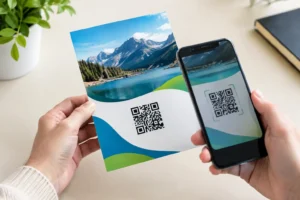
Vinyl provides a flat print surface that can be excellent for sharp text, bold graphics, QR codes, and high-contrast messaging. It is often the better fit for signs where the goal is immediate readability. For example, an event directional banner should prioritize large type, simple arrows, and contrast over subtle visual effects.
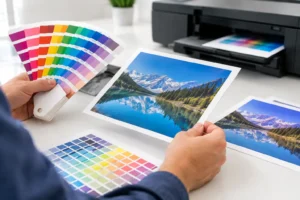
For either option, artwork preparation matters as much as the material. Low-resolution images, tiny text, and poorly matched colors will not improve after printing. Start with the final display size, use high-resolution files, and keep important copy away from hems, grommets, frame edges, or hardware.
Setup, Storage, and Reuse Matter
A display that looks great but takes too long to set up can create problems on event day. Fabric tension systems usually require some assembly, although many are designed for quick setup once the team is familiar with the frame. The result is clean and professional, but exhibitors should allow time to install the graphic correctly.
Vinyl banners are simpler. Hang them, mount them, place them in a banner stand, or install them with the appropriate hardware. That makes vinyl useful for fast-changing promotions or last-minute needs. If a schedule changes the night before a conference, a vinyl banner may be the fastest route to clear, usable signage.
Storage habits affect both materials. Fabric should be clean and fully dry before folding. Vinyl should be rolled with the printed side facing out when possible, then stored in a protective tube or bag. Avoid leaving either material in hot vehicles for long periods, particularly in Las Vegas, where high temperatures can affect adhesives, hardware, and finished graphics.
Choosing for a Tight Event Deadline
Rush production is not just about printing speed. It also involves proof approval, finishing, hardware availability, file quality, and pickup timing. A simple vinyl banner can often be a better option when the deadline is immediate and the message needs to be visible fast. A custom fabric system may be worth the added planning for a major exhibit, recurring conference schedule, or client-facing event where presentation carries more weight.
If you are replacing a damaged sign during a show, be direct about the deadline, final size, installation method, and whether you already have print-ready artwork. Those details help a production team recommend the option that can be completed correctly within your window. Design One Printing works with local exhibitors and businesses facing these time-sensitive decisions every day.
Match the Material to the Job
Choose fabric when the display needs to feel elevated, travel repeatedly, photograph well, and perform indoors as part of a finished booth environment. Choose vinyl when you need durable promotional signage, sharp messaging, outdoor resistance, simple installation, or quick production flexibility.
Before sending artwork to print, picture the display at the actual venue: the lighting, the foot traffic, the mounting location, and the distance from which people will read it. That one practical check usually makes the right material clear – and helps your display work as hard as your event team does.