A missing banner, a pixelated backdrop, or brochures that arrive after your first appointments can cost more than a print order. In a city built around conventions, trade show printing Las Vegas exhibitors rely on has to be accurate, durable, and ready when the booth opens. The best approach is to treat print production as part of your event plan, not a last-minute task after everything else is finished.
Start With the Materials Your Booth Actually Needs
Trade show booths do not need every available printed product. They need the right mix of pieces that help attendees notice your brand, understand what you offer, and take the next step. A clean booth can outperform an overfilled display when every graphic has a job to do.
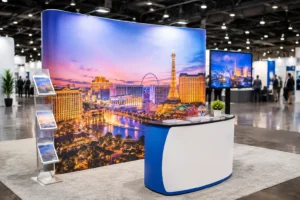
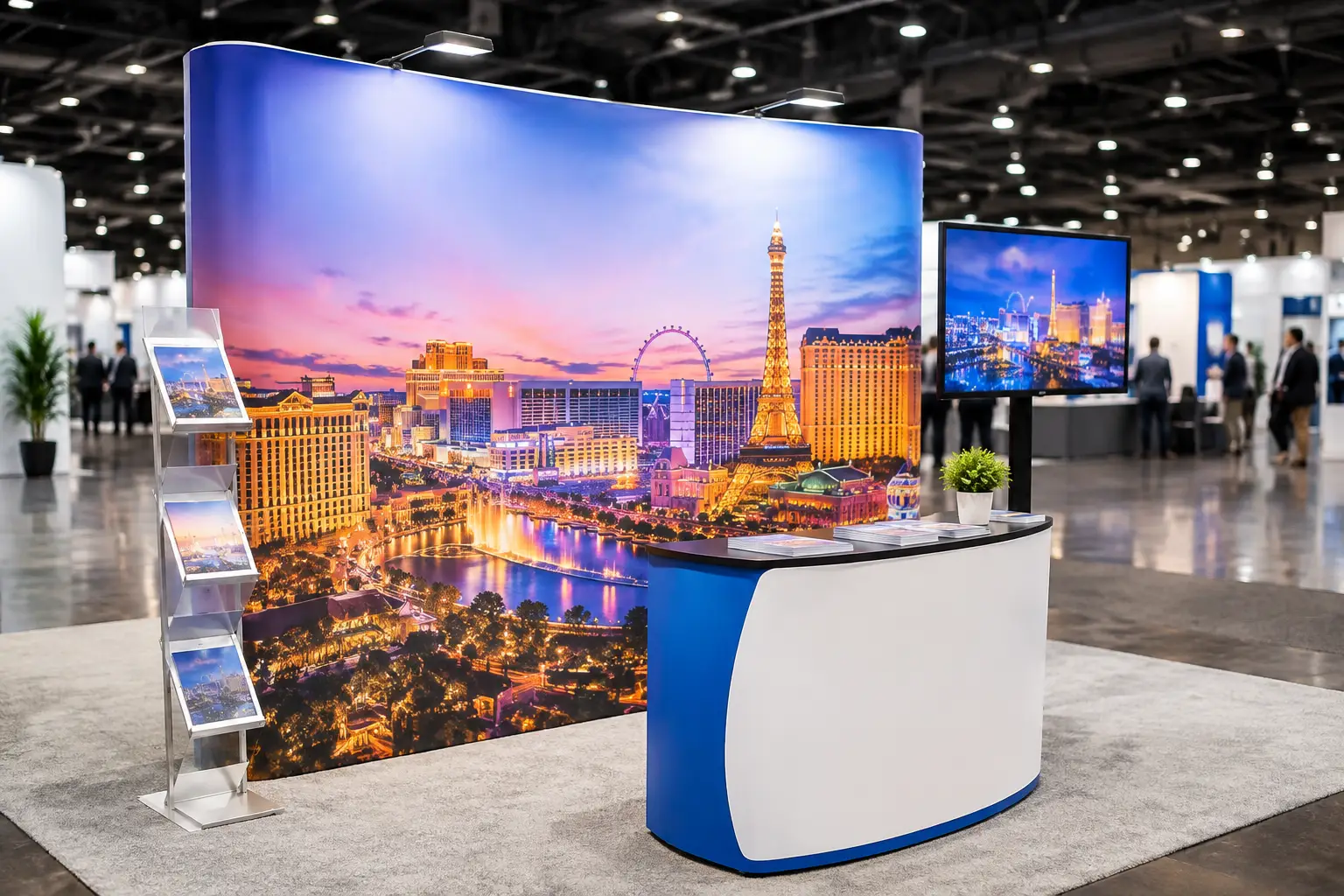
Your largest visuals should carry the message from a distance. Retractable banners, fabric displays, mounted signs, window graphics, and large-format backdrops can establish your brand before a visitor reaches the aisle. Keep the primary message short enough to read in a few seconds. Your company name, a clear benefit, and one strong visual usually work better than a full paragraph of copy.
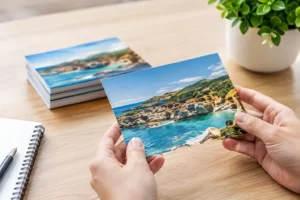
At the table or counter, printed collateral takes over. Brochures, flyers, product sheets, rack cards, catalogs, postcards, and business cards give prospects something useful to keep. If your sales process is more complex, a one-page capability sheet is often more practical than a long brochure. It gives the team a simple leave-behind without forcing a busy attendee to sort through too much information.
Match Print Pieces to the Attendee Journey
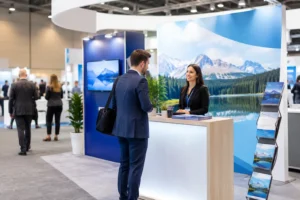
A prospect may first see your booth from across the floor, then stop for a quick conversation, then leave with materials to review later. Your print should support each of those moments.
Large booth graphics create recognition. Product signs and tabletop displays explain the offer during the conversation. Business cards, brochures, and postcards make follow-up easier once the attendee is back at the office or hotel. Adding a QR code can help connect printed materials to a product page, booking form, or presentation, but it should supplement a clear printed message, not replace it.
Plan Trade Show Printing Las Vegas Deadlines Backward
Las Vegas show schedules move quickly. Freight deadlines, installation windows, staff travel, and exhibitor move-in times can make a reasonable print project feel urgent overnight. Working backward from the time your booth must be ready is the most dependable way to avoid preventable stress.
Start with the final setup deadline, not the first day of the show. If the event opens Tuesday morning, you may need your graphics in hand by Monday afternoon or earlier for setup. Build in time to review proofs, make corrections, finish print production, and handle pickup or delivery. For displays with hardware, allow time to inspect parts and test assembly before you arrive on the floor.
Rush printing is valuable when a real problem appears, such as a changed sponsor logo, damaged banner, incorrect date, or last-minute sales sheet. It is not always the right default for an entire booth package. Standard production timing usually gives you more room for proofing, material choices, and budget control. A professional print partner can help identify which pieces truly need expedited production and which can be completed on a normal schedule.
Send Print-Ready Files When Possible
A well-prepared file helps protect both turnaround time and output quality. Use the correct finished size, include bleed where needed, and make sure images are high resolution for their intended size. Large graphics require special attention because a photo that looks fine on a laptop can look soft or pixelated when enlarged for a booth wall.
Keep important text, logos, and product details away from trim edges. Confirm that all dates, phone numbers, web addresses, pricing, and booth numbers are correct before approval. A proof review is the time to catch details. Once materials are printed, even a small error can become a costly replacement job.
If your team does not have finished artwork, bring the strongest materials you do have: your logo files, brand colors, copy, photos, previous collateral, and a clear description of where the piece will be used. Design support can turn those assets into a coordinated banner, brochure, sign, or sales sheet without making the work feel disconnected.
Choose Materials Based on Venue Conditions and Use
The least expensive material is not always the best value. Trade show graphics are handled, transported, installed, and photographed under bright exhibit hall lighting. Choosing the right stock, finish, and display format affects how professional the booth looks throughout the event.
For handouts, consider the message and expected lifespan. A lightweight flyer works well for a limited-time promotion or a high-volume giveaway. A heavier postcard or brochure stock feels more substantial for premium services, hospitality brands, real estate teams, and B2B companies with longer sales cycles. Matte finishes reduce glare and are easy to write on, while gloss can make product photography and color-heavy graphics stand out.
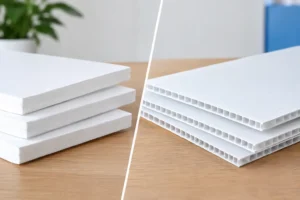
For signs and wide-format graphics, durability matters. Foam board is useful for indoor presentations and short-term directional signage. Vinyl banners can be a practical option for larger promotional messages. Retractable banner stands provide portability and quick setup, making them a strong choice for exhibitors who attend multiple events. The right choice depends on whether the graphic is a one-show item, a recurring display, or something that must travel frequently.
Do not overlook transport. A large rigid sign may look excellent but be difficult to move in a compact vehicle or ship safely. A retractable display can be easier to carry, while a fabric backdrop may offer a polished appearance for a larger booth. The best format balances visual impact with how your team will store, carry, and install it.
Build a Consistent Booth, Not a Collection of Prints
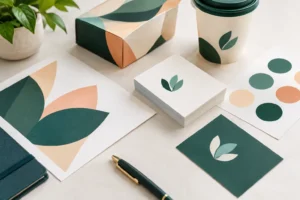
A booth can look disorganized when each piece was designed separately or ordered at different times without a common plan. Consistent colors, fonts, logo placement, photography style, and message hierarchy make a smaller booth look more established and help visitors remember who they spoke with.
Use one core event message across your main graphics and supporting collateral. That message might focus on a product launch, a service area, a show-only consultation, or a direct solution to a customer problem. Then adjust the detail level by format. Your banner should be brief. Your brochure can provide proof points, features, and contact information. Your business card should make it easy to reach the right person after the event.
Design One Printing can help exhibitors coordinate large-format graphics and collateral when speed and consistency both matter. Keeping booth materials with one local production partner can simplify proofing, color matching, and last-minute changes across the full package.
Prepare for the Problems That Happen on Show Week
Even organized exhibitors run into surprises. A box can be damaged, a staff member may leave materials at the hotel, an event organizer can request updated signage, or a new lead opportunity may require a custom presentation piece. Las Vegas is a practical place to solve those problems quickly when you have a local print resource available.
Before traveling to the venue, keep approved artwork in an accessible folder and bring a short list of every item in your booth. Include quantities, finished sizes, and any critical specifications. Pack extra business cards and handouts if your budget allows. A successful show can create a shortage faster than expected, and replenishing familiar materials is easier when the files are ready.
For critical signage, inspect every item before setup. Check color, spelling, dimensions, hardware, and mounting accessories. Test retractable banners and displays instead of opening them for the first time on the show floor. Those few minutes of preparation can prevent a stressful repair during exhibitor move-in.
The goal is not to print more. It is to arrive with materials that make your booth easy to notice, easy to understand, and easy to remember. When a deadline changes or a key graphic needs attention, acting early gives your team more choices and gives every visitor a better reason to stop.