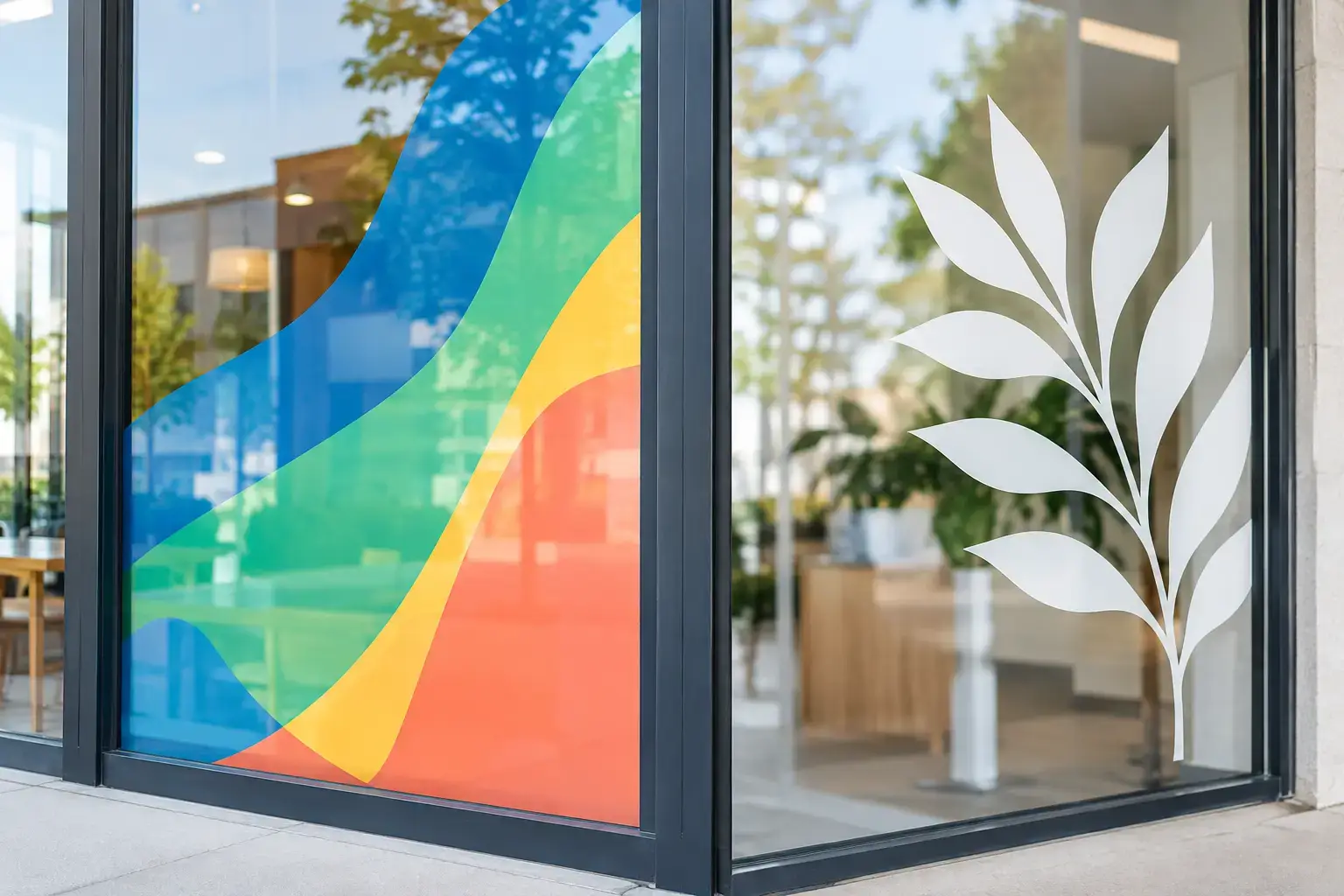
A storefront window can do far more than let in light. It can announce a grand opening, direct convention traffic, promote a limited-time offer, add privacy to an office, or make a blank booth feel branded before the show floor opens. When comparing window graphics versus decals, the right choice comes down to what the piece needs to accomplish, how long it will stay in place, and how close people need to get to it.
The terms are often used interchangeably, and there is some overlap. A decal can be a type of window graphic. In practical print production, though, decals usually refer to smaller, cut vinyl elements, while window graphics often describe larger printed films that cover more glass or create a complete visual display. Knowing the difference helps businesses avoid ordering a product that looks too small, wears out too quickly, or cannot be installed in time.
What Are Window Graphics?
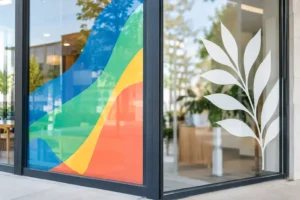
Window graphics are printed or cut materials designed specifically for glass surfaces. They may cover one small pane, a full storefront window, glass doors, office partitions, or an entire bank of windows. Depending on the material, they can be installed on the outside of the glass for maximum visibility or on the inside to protect the print from weather and handling.
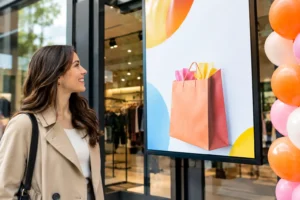
For businesses near the Las Vegas Strip, window graphics are especially useful when visibility matters from a distance. Retailers can feature sale messaging across a storefront. Restaurants can promote a special menu or event. Exhibitors can turn a hotel meeting room or temporary event space into a branded environment. A larger format gives designers room for bold photography, full-color graphics, oversized type, and directional messaging that people can read while walking past.
Common window graphic materials include opaque adhesive vinyl, perforated window film, frosted vinyl, clear film, and static-cling material. Each serves a different purpose. Perforated film allows people inside to see out while presenting a graphic to pedestrians outside. Frosted film adds privacy without blocking all natural light. Clear film can place logos or artwork on glass while keeping the window open and airy.
What Are Window Decals?
Window decals are generally smaller graphics applied directly to glass. They are often die-cut into a logo, lettered message, hours of operation, QR code, event mark, or promotional shape. Rather than covering most of the window, a decal uses the glass itself as part of the design.
This makes decals a practical fit for permanent or semi-permanent business information. A front-door decal can display store hours, accepted payment methods, a suite number, or a simple call to action. A logo decal on an office door can create a polished first impression without turning the entrance into a full advertising surface.
Decals are also effective for short campaigns when the message is simple. A coffee shop may add a small seasonal decal near the entrance. A convention exhibitor may use branded decals on display cases, mirrors, glass panels, or hospitality suite doors. Because they use less material and are typically faster to apply than full-window coverage, they can be a smart choice for focused messaging and leaner budgets.
Window Graphics Versus Decals: The Key Differences
The clearest difference is scale. Window graphics are built for larger visual impact, while decals are made for concise information, logos, and smaller branded accents. That distinction affects nearly every decision that follows, from artwork setup to installation planning.
A full-color window graphic can carry a campaign. It can include a product photo, a headline, sale details, brand colors, and a location-specific message. A decal works best when viewers only need one or two pieces of information. Think of a decal as a signpost and a window graphic as a display.
Material selection is another difference. Many decals are produced as cut vinyl or printed adhesive vinyl with a contour cut. Window graphics offer more material options because the application may need to address visibility, light transmission, privacy, or broad glass coverage. For example, a salon might choose frosted film for treatment-room privacy, while a retail store may choose perforated film to promote a sale without darkening the space for staff and customers.
Durability depends less on the label and more on the material, ink, laminate, placement, and local conditions. Exterior-facing graphics deal with sun, heat, dust, moisture, and frequent cleaning. In Las Vegas, intense sunlight can be a major planning factor. For a campaign expected to run for months, ask for a material intended for the exposure level and consider a protective laminate when appropriate. A temporary event decal may not need the same construction as a long-term storefront installation.
Choose Based on the Job, Not Just the Product Name
Start with viewing distance. If the message needs to stop people from across a sidewalk, parking lot, lobby, or trade show aisle, a larger window graphic will usually do more work. If someone will read it while standing at the door, a decal may be all that is needed.
Then consider the amount of information. A window full of tiny copy is difficult to read and can feel cluttered. For graphics, prioritize a clear headline, a strong visual, and one primary action. For decals, keep the message even tighter: logo, hours, website, promotion, or wayfinding. The glass should support the message, not compete with it.
Installation conditions matter as well. Large graphics require accurate measurements, clean glass, proper alignment, and enough time to install without rushing. A window with mullions, handles, door frames, or uneven panes adds complexity. Smaller decals are easier to place, but they still need careful positioning, especially when several locations must look consistent.
For a short event, removable materials can reduce cleanup after the event ends. For a long-term storefront identity, a more durable adhesive film is usually the better investment. Do not assume every removable product is easy to reposition or every adhesive product can be removed without planning. The glass condition, adhesive type, time installed, and heat exposure all affect removal.
When Window Graphics Make More Sense
Window graphics are the stronger choice when the glass is a major marketing surface. They work well for grand openings, seasonal retail campaigns, property leasing, hotel events, product launches, and large convention activations. They are also valuable when a business needs privacy or wants to transform a plain interior-facing window into a branded backdrop.
A large-format graphic earns its cost when it is visible to a lot of people and supports a defined business goal. For example, a restaurant on a busy corridor may use a bold window promotion to drive walk-in traffic. A trade show organizer may use glass graphics to guide attendees toward registration or a sponsored lounge. In both cases, the window becomes functional signage rather than unused space.
The trade-off is that larger pieces require more design discipline. Low-resolution images, overly detailed artwork, and weak contrast become more noticeable at scale. Production lead time can also increase if the job requires custom sizing, lamination, multiple panels, or professional installation.
When Decals Are the Better Fit
Decals make sense when the message is simple, precise, and close-range. They are ideal for door logos, hours of operation, compliance notices, directional arrows, QR codes, event identifiers, and small promotional accents. They can also reinforce a larger campaign without duplicating it. A storefront might use a full window graphic for the main promotion and a separate door decal for hours and contact information.
They are often the more economical option when there is no need to cover large glass areas. They also provide flexibility for businesses that update small details more frequently. Changing store hours or adding a temporary service notice is much easier with a targeted decal than with a full-window redesign.
The limitation is visibility. A small decal cannot carry the same visual weight as a broad graphic, particularly in a crowded retail area or busy convention environment. If the goal is to attract attention from a distance, a decal alone may disappear into the glass.
Prepare Your Artwork Before Production
The strongest window applications begin with accurate measurements and a clear installation plan. Measure the visible glass area, not just the overall frame. Note door handles, locks, frames, seams, and any areas that must remain unobstructed. For perforated graphics, consider where interior lighting and exterior viewing conditions may affect readability.
Artwork should use high-resolution images and fonts large enough for the intended viewing distance. White ink, transparency effects, and reverse printing on clear material may require additional production planning. If the graphic will be viewed from inside the building as well as outside, clarify which side is the priority before printing.
For rush projects, the fastest path is a complete brief: final dimensions, quantity, material preference if known, placement photos, print-ready artwork, and the required deadline. When artwork is still in progress, getting production input early can prevent last-minute resizing, material changes, or installation surprises.
A window is valuable real estate, especially when customers and event attendees are already walking past it. Choose a decal when clarity and precision are the job. Choose a window graphic when the glass needs to become part of the campaign. If the deadline is tight, Design One Printing can help evaluate the surface, message, and production approach before your window becomes the last item on the list.