A standard card gives you one fast chance to be remembered. A folded card gives you room to make that chance more useful. So, are folded business cards worth it? For businesses that need to explain an offer, show services, share event details, or make a stronger first impression, they often are. For a contact-only card handed out by the hundreds at a busy show, a standard format may still be the smarter choice.
The decision comes down to what the card needs to accomplish after someone puts it in a pocket, tote bag, or badge-holder. In Las Vegas, where convention conversations move quickly and competitors are often a few booths away, a business card that carries more than a name and phone number can create a real advantage.
What Makes Folded Business Cards Different?
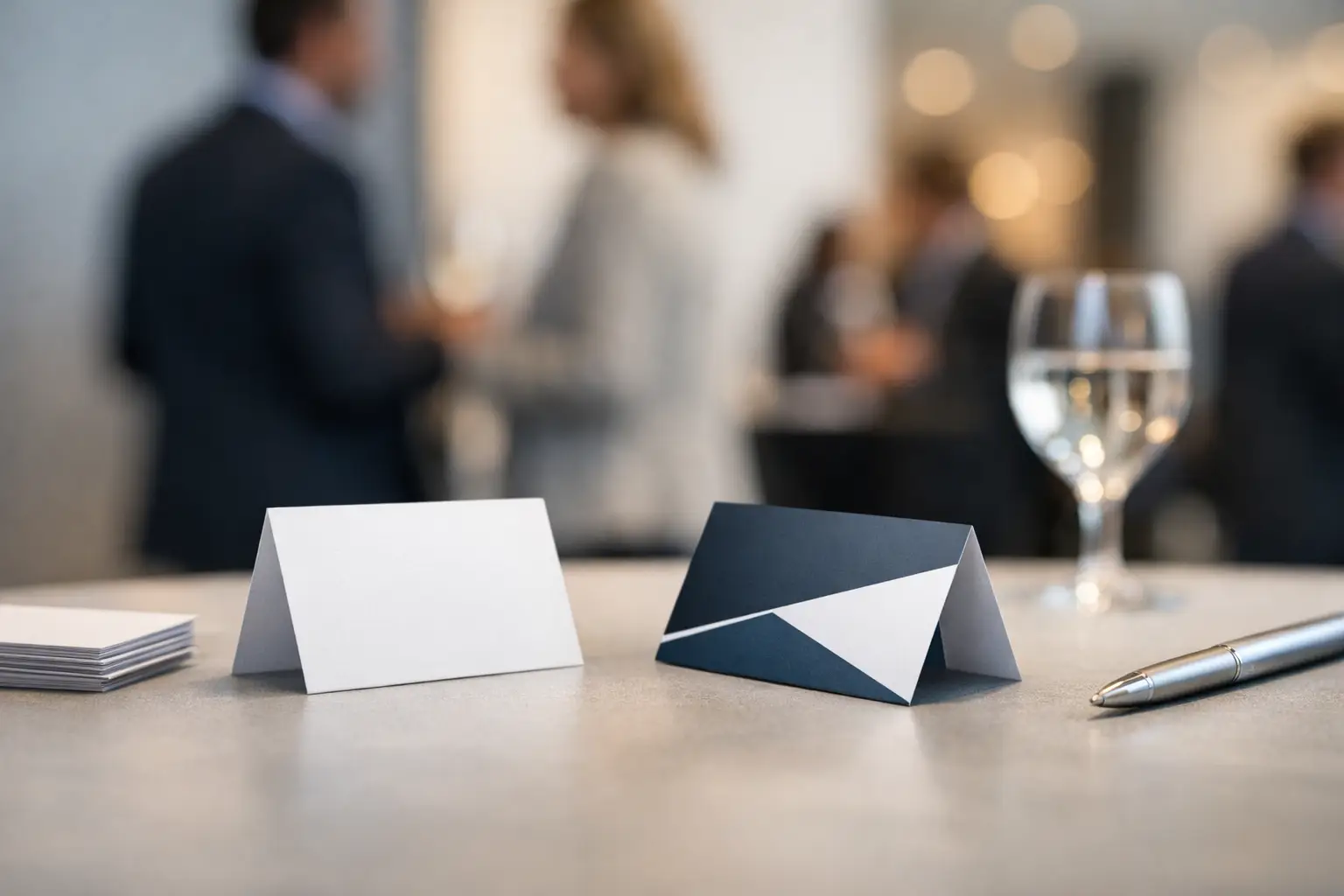
Folded business cards are typically printed on a larger sheet and scored down the center, creating four panels instead of two. When folded, many use a familiar business-card footprint, but they open like a compact brochure. That extra space can hold a short service list, appointment information, a menu of packages, a promotional offer, a map, product details, or a clear next step.
The value is not simply having more space. It is having enough space to organize a message. A front cover can carry your logo and a concise promise. Inside panels can answer the question a prospect is likely to ask next: what do you do, who is it for, and why should they contact you? The back can hold contact details, hours, a QR code, or an offer with an expiration date.
For companies with a clear and simple story, that format can feel polished rather than crowded. It also gives recipients a reason to open the card, which creates an extra moment of attention that a flat card does not always get.
When Are Folded Business Cards Worth It?
Folded cards earn their higher production cost when additional information improves the odds of a sale, appointment, visit, or follow-up. They are especially effective when your service is not immediately obvious from your company name alone.
Service businesses with more than one offering
A contractor, salon, medical practice, real estate team, financial professional, consultant, or hospitality vendor may have several services worth highlighting. A folded card lets you present those services cleanly without reducing the type size until it becomes difficult to read.
For example, a property manager could use the cover for branding, dedicate the inside panels to leasing and management services, and reserve the back for contact details and emergency maintenance information. The card becomes useful after the first conversation instead of functioning only as a reminder of who handed it over.
Trade shows, conventions, and networking events
Exhibitors often need a leave-behind that does more than identify the company. A folded card can introduce a product line, show a limited-time show offer, list booth services, or direct attendees to a product demonstration. It is smaller and easier to carry than a full brochure, yet more informative than a conventional card.
This is particularly helpful for exhibitors who do not want to hand every visitor a large catalog. A compact folded card can qualify interest and provide enough information for a prospect to reconnect later. It also works well as a small insert in a presentation folder, sample kit, or event welcome bag.
Appointment-based and offer-driven marketing
Restaurants, spas, fitness studios, repair shops, and local retailers can turn a folded card into a practical promotional piece. One panel may include a bounce-back offer, another can list hours or locations, and the remaining panels can explain the service or product categories available.
The key is making the offer worthwhile and easy to understand. If a recipient has to hunt for conditions, dates, or redemption instructions, the additional panels will not help. Keep the call to action prominent and give the card a reason to stay in a wallet.
Brands that benefit from a premium presentation
Some businesses sell confidence, care, or expertise before they sell a product. Attorneys, luxury service providers, wedding professionals, interior designers, photographers, and corporate consultants may benefit from the more intentional feel of a folded format.
A well-designed folded card signals that details matter to your business. That only works when the paper, printing, folding, and design are all handled carefully. A weak layout or an overcrowded interior can have the opposite effect.
When a Standard Business Card Is Better
More room is not automatically more effective. If you simply need to exchange contact information quickly, a traditional business card is faster to scan, less expensive to produce, and easier to distribute in volume.
This matters at high-traffic networking events, busy restaurant counters, valet stations, or conferences where a team may hand out hundreds of cards in a day. A clean, memorable standard card can be the better tool when the goal is recognition rather than explanation.
Folded cards can also be less convenient for card holders and small wallet slots. Some recipients will keep them in a bag or folder instead, while others may set them aside if the format feels too bulky. That is not a reason to avoid them, but it is a reason to design for usefulness rather than novelty.
If your message is limited to a logo, name, title, phone number, and website, do not force a folded format. Use the budget to improve paper stock, finish, typography, or a more strategic handout plan.
The Design Decisions That Determine Results
A folded card should read like a miniature sales piece, not a standard card with filler added to the inside. Before designing, decide what a recipient should understand in five seconds and what they should do next.
The cover needs one strong message. It might be your brand name paired with a service category, a clear benefit, or a show-specific statement. Avoid covering the front with every logo element, credential, and phone number. Let it create interest first.
Inside, use short sections and strong hierarchy. One panel can explain your primary service, while the other supports it with a few key benefits, product categories, or a concise process. Do not treat every panel as equal. Prospects need a clear visual path, especially when they are reviewing materials after a long event day.
The final panel should make follow-up easy. Include the contact method you want people to use most, whether that is a phone number, email address, physical location, or QR code. QR codes work best when they lead to a focused destination, such as an event offer, appointment form, menu, portfolio, or product page. A vague destination weakens the reason to scan.
Paper stock and finishing matter
Because folded cards are opened and closed, paper selection matters more than it does with a flat card. A flimsy stock can feel temporary. An overly heavy stock may crack at the fold if it is not properly scored and finished. Professional scoring helps create a clean fold and protects the printed surface.
Matte stock is often a practical choice for service businesses because it reads clearly and allows space for handwritten notes or appointments. Gloss can make product images and color photography stand out. Uncoated stock can add a more tactile, approachable feel for certain brands. The right choice depends on the message, the artwork, and how the cards will be used.
Cost, Quantity, and Turnaround Considerations
Folded cards generally cost more than standard cards because they require a larger printed piece, more finishing, and an additional folding step. The difference may be worthwhile if one good lead, booking, or client relationship can cover the added investment.
Think about distribution before choosing a quantity. A folded card is usually best for targeted conversations, sales meetings, VIP guests, event attendees with genuine interest, and follow-up packages. It may not be the ideal piece for indiscriminate mass distribution.
Turnaround should also be planned early, particularly before a Las Vegas convention or launch event. A folded format requires production time for printing, scoring, folding, and quality checks. For rush orders, finalizing copy and artwork before production starts is critical. Last-minute changes can affect both the schedule and the finished result.
A Practical Way to Decide
Ask one question: will the extra panels help a prospect take the next step? If they will communicate useful information, support a specific offer, or make your company easier to remember, folded cards can be a strong investment. If they only add decorative space, put that budget toward a sharper standard card or a separate brochure.
For event teams and local businesses working on a deadline, it also helps to review the card alongside the rest of the print package. A folded business card can reinforce the same message as your booth graphics, flyers, postcards, or presentation materials. Design One Printing can help match the format, stock, and production schedule to the way your team plans to use the piece.
Choose the format that gives your best prospects a clear reason to keep it. A business card should not try to say everything. It should say enough, with enough confidence, to start the next conversation.