A banner that snaps, pulls loose, or blocks its own message is a costly problem on event day. Mesh banners for windy events are designed to let air pass through the material while keeping your branding visible, making them a smart choice for outdoor promotions, construction fencing, festivals, parking lots, and convention-area activations in Las Vegas.
The key is not simply ordering a banner labeled “mesh.” Material, size, finishing, artwork, and installation all affect how the banner performs when the wind picks up. A properly specified mesh banner can look polished and stay readable. The wrong setup can still stretch, tear, or become difficult to secure.
Why Mesh Performs Better in Wind
Standard vinyl banners have a solid face. That solid surface catches wind like a sail, placing pressure on the banner, grommets, fasteners, and whatever structure holds it in place. On a calm day, that may not be an issue. During an outdoor event, especially in open areas or along busy streets, the force can build quickly.
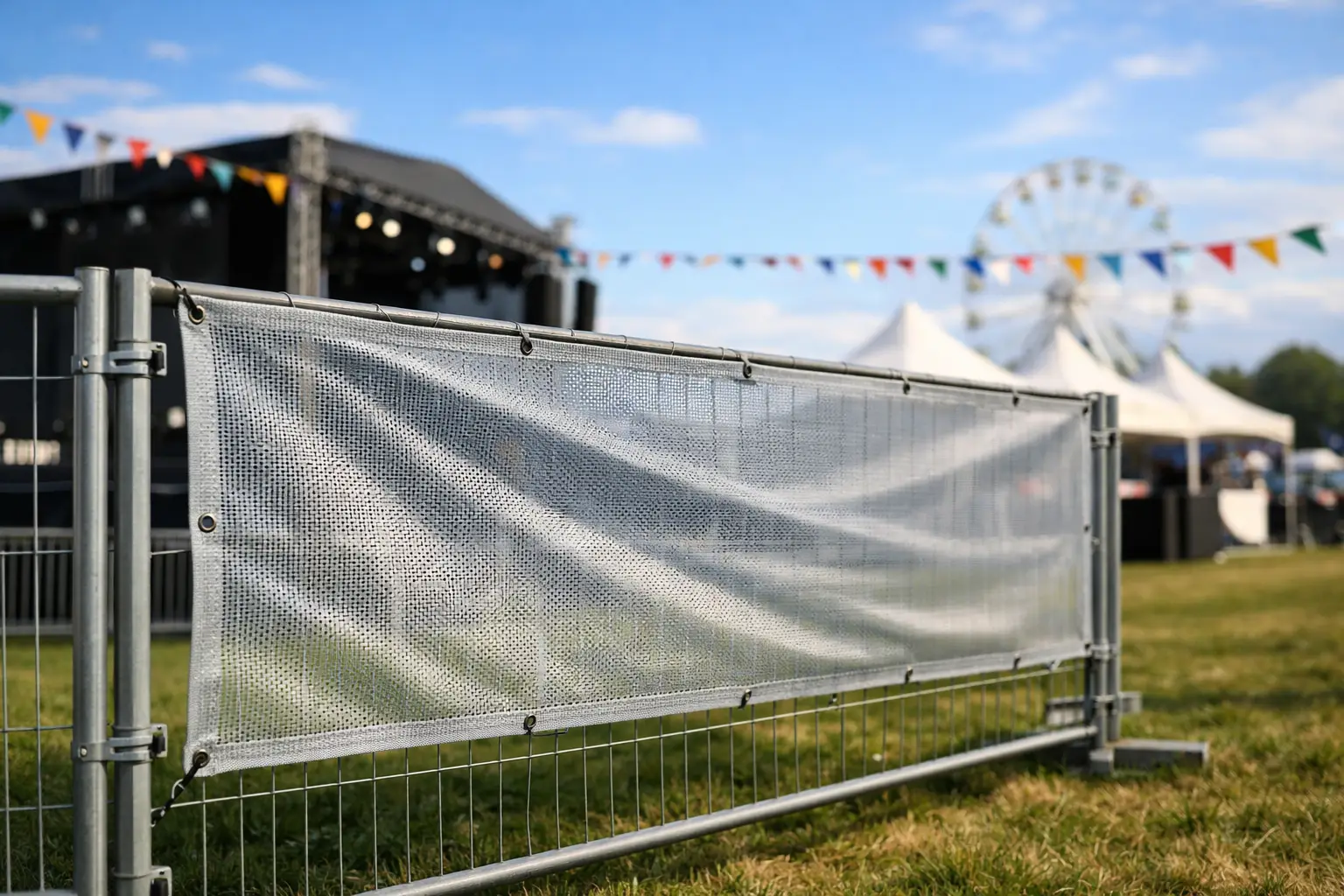
Mesh banner material is perforated with small holes that allow a portion of the air to pass through. This reduces wind load without sacrificing the large-format visibility needed for event branding. From a normal viewing distance, the printed design still reads as a complete image, logo, promotion, or directional message.
Mesh is not a guarantee that a banner can handle any conditions. Strong gusts can affect every display material, and a poorly installed mesh banner can fail just as easily as a solid one. Its advantage is that it gives the wind less surface to push against, which reduces stress across the installation.
When a Mesh Banner Is the Right Choice
Mesh banners work especially well where a banner will be exposed for several hours or days. They are a practical fit for outdoor festivals, sporting events, grand openings, job sites, fence wraps, street-facing promotions, and temporary signage around tents or vendor areas.
For Las Vegas event teams, mesh can be particularly useful for outdoor activations near the Strip, hotel properties, parking areas, and convention venues. These locations often have open sightlines and wind patterns that are hard to predict. A banner that looks fine during setup may face much different conditions later in the day.
A standard vinyl banner may still be the better option for an indoor trade show booth, a lobby display, a protected patio, or any installation where maximum color density and image sharpness matter more than airflow. Because mesh has perforations, it can appear slightly less saturated up close than solid vinyl. That trade-off is usually worthwhile outdoors, but it should be considered before production.
Think About Viewing Distance
Mesh is built for distance. Large logos, bold headlines, high-contrast colors, and simple directional messaging typically perform best. If guests will stand inches from the banner to read fine print, scan a QR code, or examine product photography, consider whether a solid sign panel, poster, or protected vinyl banner would serve the purpose better.
For a fence line or exterior promotion, people often see the message while walking, driving, or approaching an entrance. In those situations, a strong headline and clear visual hierarchy matter more than tiny details.
Size and Placement Matter as Much as Material
A larger banner creates more total wind exposure, even when it is mesh. Before selecting dimensions, consider where it will hang and what will support it. A 3-foot by 6-foot banner on a secure frame is a very different installation from a 10-foot fence banner secured only at a few points.
Avoid treating the banner as an afterthought. Measure the available space, identify the attachment points, and look for gaps that can cause flapping. A banner installed loosely can move repeatedly in the wind, which puts extra strain on the edges and grommets. It can also look unprofessional in photos and reduce the impact of your event presentation.
Placement affects readability, too. Do not position a mesh banner where it will be blocked by parked vehicles, landscaping, tent legs, or an open door. If it will be installed on chain-link fencing, plan the artwork around fence posts and gates so the main message is not interrupted.
Finishing Options That Help Banners Hold Up
The finishing details determine how the banner connects to its surroundings. For most temporary outdoor installations, reinforced hems and grommets provide a dependable starting point. Hems add strength around the perimeter, while grommets create reinforced points for ties, bungee cords, or other approved fasteners.
Grommet spacing should match the size of the banner and the expected conditions. A wide banner supported only at the corners is more likely to sag and strain than one secured at regular intervals along the edges. For fence applications, attachment points around the full perimeter help distribute pressure and keep the banner flat.
Bungee cords are often preferable to pulling zip ties excessively tight. They provide a small amount of give during gusts rather than forcing all tension directly into the material. Zip ties can work well for shorter-term applications, but they should be placed through every available grommet and checked for sharp edges or over-tightening.
For more demanding installations, ask about reinforced finishing or a mounting approach suited to the structure. The right recommendation depends on whether the banner is going on a fence, truss, barricade, exterior wall, temporary frame, or another surface. A print partner should ask where the banner will be used, not just what size you need.
Design for Visibility, Not Just Approval on a Screen
Artwork that looks good on a laptop does not always work at banner scale. Windy outdoor environments add another layer of complexity because viewers may see the banner at an angle or while it is moving slightly. Keep the most important information large and immediate.
Use a clear brand mark, a short message, and one primary call to action. If your event needs dates, booth numbers, sponsor recognition, or directional information, prioritize it by what attendees must notice first. A crowded layout may technically include every detail, but it will not do its job from 20 feet away.
High contrast is especially helpful. Dark type on a light background, or light type on a dark background, generally reads faster than low-contrast color combinations. Avoid placing critical text over busy photos, thin patterns, or areas with multiple colors. If a logo must remain small, give it enough open space to be recognized.
Also account for the mesh pattern during design. Fine lines, tiny reversed type, and delicate details can lose clarity through the perforations. A production-ready file with vector logos, high-resolution images, proper bleed, and a clear safe area will produce a better result and reduce last-minute delays.
Installation Checks Before Guests Arrive
Once the banner is up, inspect it before the event opens. Walk the full length of the installation and check that the message is level, readable, and secured at every planned point. Look for loose corners, sharp metal edges, ties that are cutting into the material, and sections that flap more than the rest.
If the event runs multiple days, make banner inspection part of the daily opening routine. Weather and foot traffic can change an installation overnight. Keep spare ties or bungees available, and assign someone to address issues before attendees begin arriving.
Do not install a banner in a way that creates a safety hazard or violates venue, property, or event regulations. Hotels, convention facilities, public venues, and managed outdoor properties may have specific rules for attachment methods, placement, fire safety, and signage approval. Confirm those requirements early, particularly when a rush production deadline is involved.
Plan Early, Even When the Deadline Is Tight
Outdoor events often move fast. Sponsorships change, booth locations are revised, and a last-minute promotional need can appear the day before setup. That is why it helps to have the banner specifications decided before the final artwork is ready: approximate size, installation location, material, finishing, and deadline.
Design One Printing can help event organizers and exhibitors evaluate those production details quickly, especially when a Las Vegas event schedule leaves little room for reprints. Bringing measurements, venue requirements, and a photo of the installation area makes the process faster and helps prevent ordering a banner that is technically printed but not suited to the job.
The best outdoor banner is the one that remains visible, professional, and securely installed when conditions change. Choose mesh when airflow is part of the equation, give the design room to read, and treat installation as part of the print project rather than a task for five minutes before doors open.