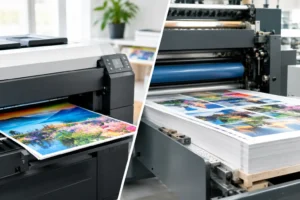
A brochure needed for tomorrow’s client meeting has different production requirements than 25,000 postcards for a regional mail campaign. That is where the choice between digital versus offset printing becomes practical, not theoretical. The right method affects turnaround time, unit cost, color expectations, paper options, and how easily you can make changes before production.
For Las Vegas businesses, exhibitors, and event teams, timing often makes the decision. A last-minute product sheet, replacement trade show graphic, or short-run set of premium business cards may call for digital production. A high-volume campaign planned weeks ahead may benefit from offset. Understanding the difference helps you order with confidence and avoid paying for capabilities your project does not need.
Digital Versus Offset Printing: The Core Difference
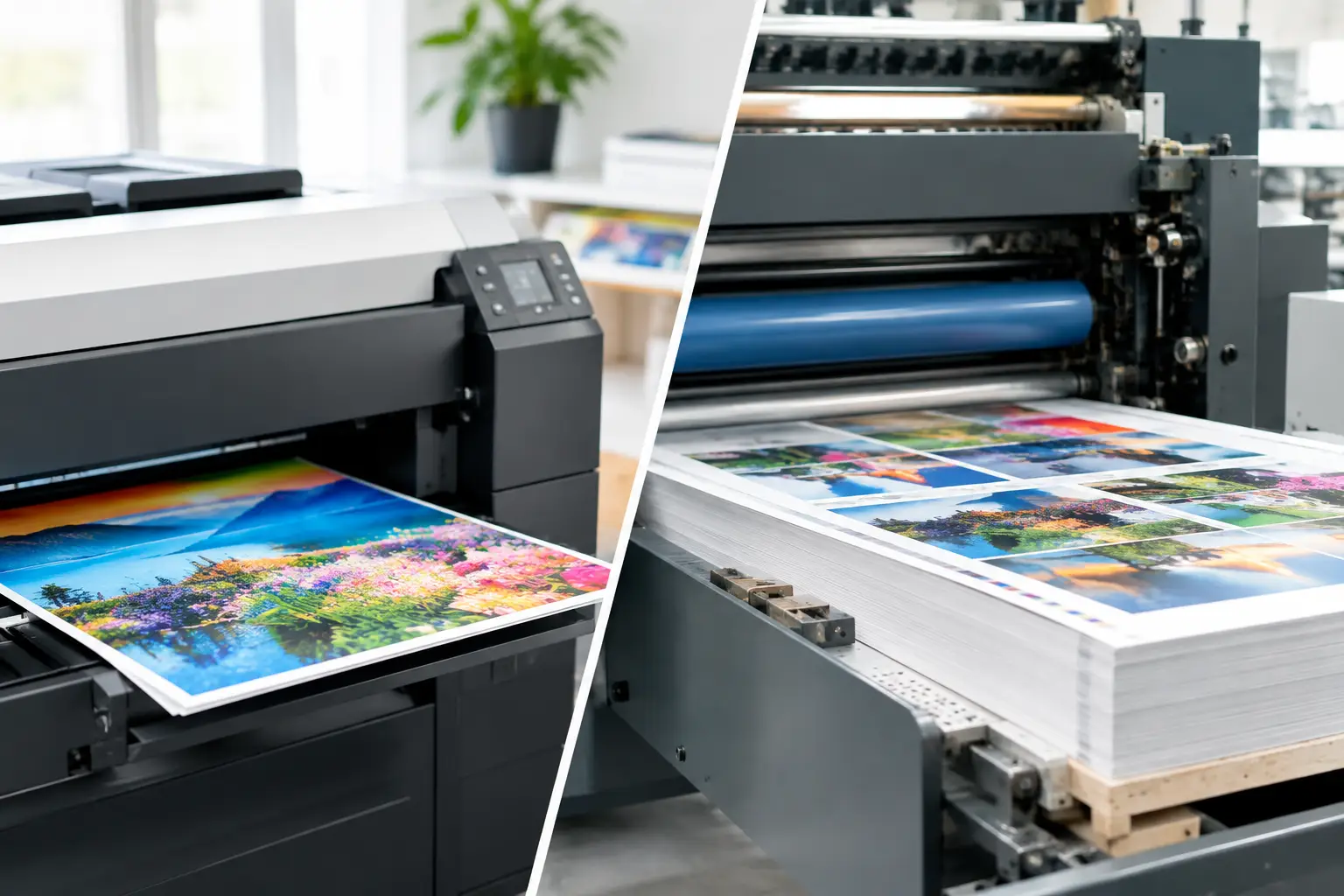
Digital printing sends the artwork directly from a digital file to the press. There are no printing plates to create, which removes setup time and makes short runs efficient. It is built for speed, flexibility, and production that can begin soon after your file is approved.
Offset printing uses metal plates to transfer ink onto a rubber blanket and then onto paper. The setup is more involved, but once the press is running, it produces highly consistent results at larger quantities. Offset is a proven choice for projects where volume, precise color matching, or specialized paper stocks are the priority.
Neither method is automatically better. A 100-piece run and a 100,000-piece run should not be priced, scheduled, or produced the same way. The best choice depends on the job in front of you.
When Digital Printing Is the Better Business Decision
Digital printing is usually the practical answer when you need materials quickly or only need a limited quantity. It works especially well for business cards, flyers, brochures, postcards, menus, presentation materials, event handouts, and short-run promotional pieces.
Fast turnaround without plate setup
Because digital presses do not require plates, production can move quickly from approved artwork to print. That matters when a convention shipment arrives with missing sell sheets, a sales team needs updated collateral, or an event organizer needs promotional materials for the next day.
For rush orders, eliminating plate setup can save valuable hours. It also makes digital a strong fit when your design is still evolving. If pricing, dates, speaker details, or a call to action may change shortly before printing, digital lets you update the file without restarting an offset setup process.
Short runs and controlled inventory
Digital printing is cost-effective for lower quantities because there are fewer upfront production costs. Instead of ordering thousands of pieces to lower the per-piece rate, you can print what your team can reasonably use now.
This approach is useful for businesses that update services frequently, seasonal promotions, limited-time offers, or several location-specific versions of the same piece. It reduces the risk of storing outdated brochures or throwing away postcards with expired information.
Variable data and personalization
Digital printing can personalize each printed piece within the same run. Names, mailing addresses, QR codes, offer codes, event details, and images can change from one postcard or mailer to the next.
That creates opportunities for more relevant direct mail campaigns. A hospitality business can tailor offers by audience segment. A real estate team can customize neighborhood messaging. An exhibitor can invite qualified prospects with a personalized message before a show. Offset can handle large mail campaigns effectively, but digital is generally the more flexible option when every piece needs unique information.
What to expect from digital color
Modern digital presses deliver professional, vibrant color for many commercial applications. For standard full-color marketing materials, the results can be excellent. Digital is also a reliable choice when consistency within a smaller run and fast output are more important than exact brand-color matching.
However, some projects need more control. If your brand relies on a specific Pantone color, metallic ink, fluorescent ink, or an especially exact shade across several print pieces, offset may provide a better path. Paper choice, artwork, coating, and the press itself all influence the final color, so a proof or sample is worth discussing for color-critical work.
When Offset Printing Makes More Sense
Offset printing earns its place when a project has enough volume to spread setup costs across many pieces. It is commonly used for large quantities of brochures, catalogs, postcards, presentation folders, booklets, and direct mail campaigns.
Lower unit costs at higher quantities
Offset setup takes more time and carries higher upfront costs, but the price per piece typically drops as quantity rises. For a large campaign, that can make a meaningful difference in the overall budget.
For example, a local organization planning a citywide mailing or a company ordering materials for multiple locations may find that offset delivers a stronger value at scale. The exact break-even point changes based on size, stock, colors, finishing, and schedule, so the most useful comparison is a quote based on your actual specifications.
Precise color and premium ink options
Offset printing is known for reliable color control, especially when matching Pantone spot colors. It can also support specialty inks and production choices that are not always available on digital equipment. That matters for established brands with strict identity standards, premium retail packaging, corporate collateral, or campaigns where a signature color must reproduce consistently.
Offset can produce exceptionally clean, detailed images and rich solid color areas. A dark background, large blocks of brand color, or a design with subtle color transitions may benefit from this level of press control. Good files still matter. High-resolution images, correct bleeds, and properly prepared colors give either printing method the best chance to perform well.
More flexibility for specialty stocks and finishes
Digital presses support many popular paper stocks, but offset often provides broader options for unusual weights, textures, and specialty materials. If your piece needs a particular uncoated feel, a distinctive texture, a premium cover stock, or a complex finishing process, offset may be the better production route.
Finishing choices should be considered early, not added as an afterthought. Folding, scoring, die cutting, embossing, foil, coating, and binding can influence the recommended print method, schedule, and budget. A brochure that folds cleanly on a heavy stock, for instance, may need scoring before folding to prevent cracking.
How Deadlines Change the Digital Versus Offset Printing Choice
A planned campaign and an urgent replacement order are fundamentally different jobs. Offset requires time for prepress setup, plates, press scheduling, drying considerations for some inks and stocks, and finishing. It is highly effective when production is planned, but it is rarely the first choice for a true same-day need.
Digital printing is designed for agility. If you are preparing for a Las Vegas convention, a product launch, a networking event, or a restaurant promotion, a digital press can often keep your project moving while the deadline is still realistic. That does not mean every rush order should be digital. Large format graphics, specialty finishing, and very high quantities still require a production plan.
The most effective approach is to share the real deadline at the start. A print partner can recommend an achievable combination of quantity, stock, finishing, and production method instead of promising a result that puts quality at risk.
A Practical Way to Choose Your Print Method
Start with quantity and delivery date. If you need a few dozen to a few hundred pieces quickly, digital is often the leading option. If you need thousands of identical pieces and have time to schedule production, offset deserves a close look.
Then consider whether your content changes from piece to piece. Personalized mailers, numbered tickets, individualized QR codes, and several short versions favor digital. Stable artwork produced at high volume tends to favor offset.
Finally, look at the visual requirements. Standard full-color marketing pieces can perform well digitally. For exact Pantone matching, specialty inks, unusual stock requirements, or premium brand applications, offset may be worth the added setup and lead time.
For many businesses, the answer is not one method forever. A company may use offset for its annual catalog, digital for monthly sales sheets, and a mix of both for direct mail. Choosing by project keeps spending aligned with the result you need.
Prepare Your File for Better Results
Print quality begins before the press starts. Supply artwork at the correct finished size with bleed where needed, use high-resolution images, and keep important text away from trim edges. If a logo has approved brand colors, provide that information early, particularly for offset work or any job where color consistency is essential.
It also helps to confirm the purpose of the piece. A handout used at a trade show needs to be easy to scan and durable enough for travel. A postcard intended for mail needs room for addressing and postal requirements. A sales brochure may need a stock that feels substantial without becoming difficult to fold. These choices affect production as much as the design itself.
When time is tight, clear communication prevents rework. Share the quantity, size, deadline, intended use, finishing needs, and whether the file is final. Design One Printing can help identify the production path that supports your schedule while keeping your materials polished and ready to represent your business.
The best print choice is the one that gets the right message into the right hands at the right time – with color, finish, quantity, and budget working together rather than competing.