If your sign has to do a job in three seconds or less, size alone will not save it. Large format sign printing works when the message is clear, the material fits the environment, and the production quality holds up under real use – whether that means a trade show floor, a retail window, a hotel lobby, or an outdoor event in Las Vegas.
For businesses working against a launch date, grand opening, conference move-in, or last-minute replacement need, the stakes are practical. A sign that arrives late, curls at the edges, prints too dark, or uses the wrong substrate is not a minor issue. It affects foot traffic, booth visibility, brand perception, and in many cases, sales. That is why large format is not just about printing bigger. It is about choosing the right format for the job and getting it produced correctly the first time.
What large format sign printing actually covers
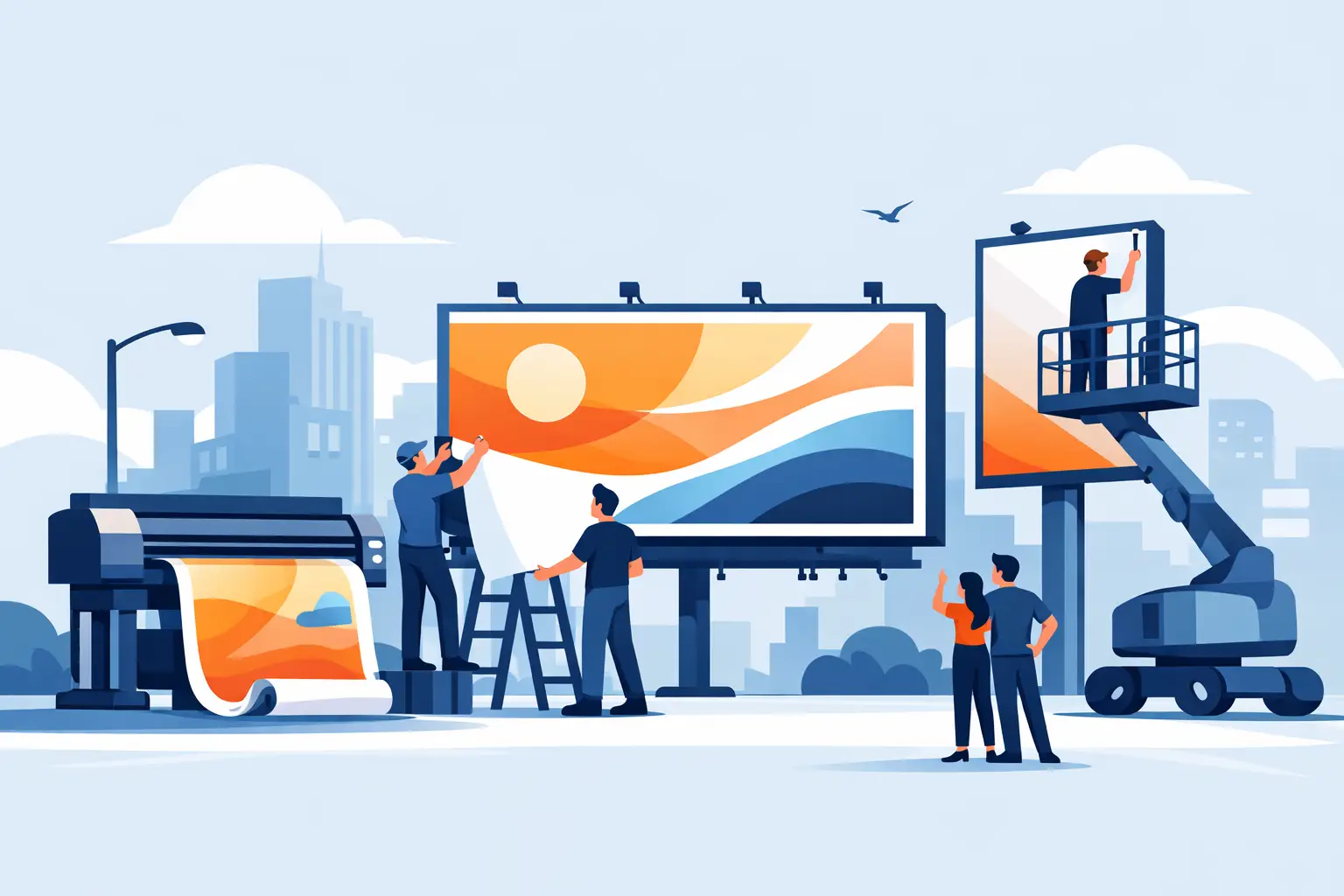
Large format sign printing includes a wide range of visual materials used to promote, direct, inform, and brand a space. Banners, posters, foam board signs, mounted presentations, window graphics, point-of-purchase displays, trade show panels, adhesive decals, and oversized promotional graphics all fall into this category.
What connects these products is scale and viewing distance. Most are designed to be seen from several feet away, sometimes across a room or from a passing sidewalk. That changes how artwork should be built, how colors reproduce, and what materials make sense. A design that looks great on a letter-size proof can fail badly when enlarged if the resolution is too low, typography is too thin, or the layout tries to say too much.
For business owners and event teams, this matters because sign printing decisions are often made quickly. You may know you need something big and branded by Friday, but the details determine whether the finished piece looks polished or rushed.
Choosing the right large format sign printing for the space
The best sign format depends on where it will be used, how long it needs to last, and what you need it to accomplish. An indoor poster for a one-day event has very different production needs than a banner hung outside for two weeks. A trade show graphic needs to photograph well under venue lighting. A retail sign may need rigid mounting so it stays flat and presentable all day.
Indoor signs for events, lobbies, and retail
For indoor use, common options include posters, foam board signs, mounted graphics, and retractable display visuals. These are often used for check-in areas, presentations, directional signage, product promotions, and branded backdrops.
Indoor applications usually allow for more material flexibility because weather is not the issue. The focus shifts to appearance, portability, and setup. Foam board is lightweight and clean-looking, but it is better for short-term use than repeated transport. Mounted prints offer a more finished presentation, though they can be bulkier. Posters are cost-effective and fast, especially when you need multiple versions or replacements.
Outdoor signs and weather exposure
Outdoor graphics need more durability. Wind, sun, heat, and installation conditions all affect what material should be used. Vinyl banners are a common choice because they are versatile, visible, and practical for temporary promotions, construction signage, and event branding.
That said, not every outdoor job should default to banner vinyl. Some signs need reinforced finishing, stronger mounting methods, or specific substrates that resist warping. In Las Vegas, heat and sunlight can be a real factor, especially for signage expected to stay up through an event cycle or seasonal campaign.
Convention and trade show graphics
Convention work has its own pressure. The deadlines are tighter, the branding standards are higher, and the margin for error is smaller. Booth graphics, presentation boards, promotional signs, and last-minute replacement pieces often need to be produced on short notice and still look fully brand-aligned.
In this setting, print quality is not just visual. It is operational. If the panel does not fit the frame, the banner arrives with the wrong finish, or the colors are inconsistent across pieces, the display can look disjointed. Fast turnaround matters, but it has to be paired with attention to detail.
Design choices that improve sign performance
A good sign is easy to read, easy to understand, and built for the distance at which people will see it. That sounds simple, but many signs fail because they try to carry too much information.
The strongest large format graphics usually focus on one message. A headline, a supporting phrase, and a clear visual hierarchy will outperform a crowded layout almost every time. If someone is walking past your booth or driving by your location, they are not stopping to study paragraphs of text.
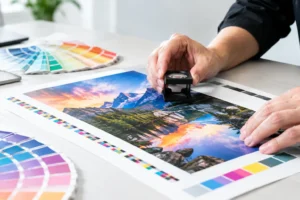
Typography should be bold enough to read at a glance. Contrast should be strong enough to hold under bright lighting or mixed indoor conditions. Images need to be high resolution, not pulled from web assets that break down when enlarged. Logos should be supplied in vector format whenever possible to keep edges sharp.
There is also a trade-off between visual impact and brand consistency. A sign can be loud without being effective. Bright colors and oversized elements help draw attention, but if the layout feels chaotic or off-brand, it can reduce credibility. The goal is visibility with control.
Speed matters, but prep matters too
Rush jobs are common in large format sign printing, especially in a city built around events, hospitality, and conventions. Same-day or next-day turnaround can be the difference between showing up ready and showing up with a problem. But fast production works best when files are prepared correctly and decisions are made early.
If you are ordering under a deadline, a few details make the process move faster. Final dimensions should be confirmed upfront. Artwork should match print size and include the right bleed if needed. Any installation requirements should be discussed before production starts, not after pickup. Even simple questions like whether a banner needs grommets or whether a board will sit on an easel can affect finishing.
This is also where working with an experienced local printer helps. When your provider understands business events, venue deadlines, and common use cases, you spend less time explaining the job and more time getting it done. For companies near the Strip or convention centers, that responsiveness can be just as important as the print itself.
Common mistakes that cost time and money
Most sign problems are preventable. The issue is usually not the press. It is the mismatch between the intended use and the production choices.
One common mistake is choosing materials based only on price. A lower-cost option may be fine for a one-day indoor event, but not for a sign that will be transported, reused, or exposed to the elements. Another is approving artwork that looked acceptable on screen but was never reviewed at scale. Small text, thin lines, and low-resolution graphics become obvious fast on large pieces.
Last-minute orders can also go sideways when key specs are missing. If the sign needs to fit a frame, hang in a window, or align with existing branded materials, those details should be communicated early. Reprints cost more than getting the setup right.
When custom support makes the difference
Not every sign order is straightforward. Some projects involve multiple sizes, mixed materials, staggered deadlines, or coordination with other marketing pieces. A campaign might need window graphics, posters, directional signs, and table displays all at once. An exhibitor may need booth panels, handouts, and branded boards delivered on a compressed timeline.
That is where a production partner adds value. Instead of treating each item as a separate transaction, the job gets managed as a package with consistent color, messaging, and timing. For businesses handling promotions, launches, or event appearances, that reduces stress and helps avoid mismatched output.
Design One Printing works with many of these deadline-driven needs in Las Vegas, where timing is rarely flexible and presentation matters immediately. In that environment, clear communication and dependable turnaround are part of the product.
Making your next sign order easier
Before placing an order, start with the basic function of the sign. Ask where it will be seen, how long it needs to last, how it will be installed, and what single message matters most. Those answers usually narrow the format quickly.
Then focus on execution. Use high-quality files, keep the message concise, and choose materials based on real conditions, not assumptions. If the timeline is tight, involve your printer early and confirm finishing details before production begins.
Large format sign printing works best when it solves a business problem clearly and on time. If your signage needs to attract attention, support an event, or represent your brand under pressure, the smartest move is to treat it like an operational tool, not just a graphic. The right sign does more than fill space – it helps people find you, remember you, and take the next step.