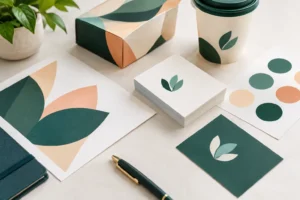
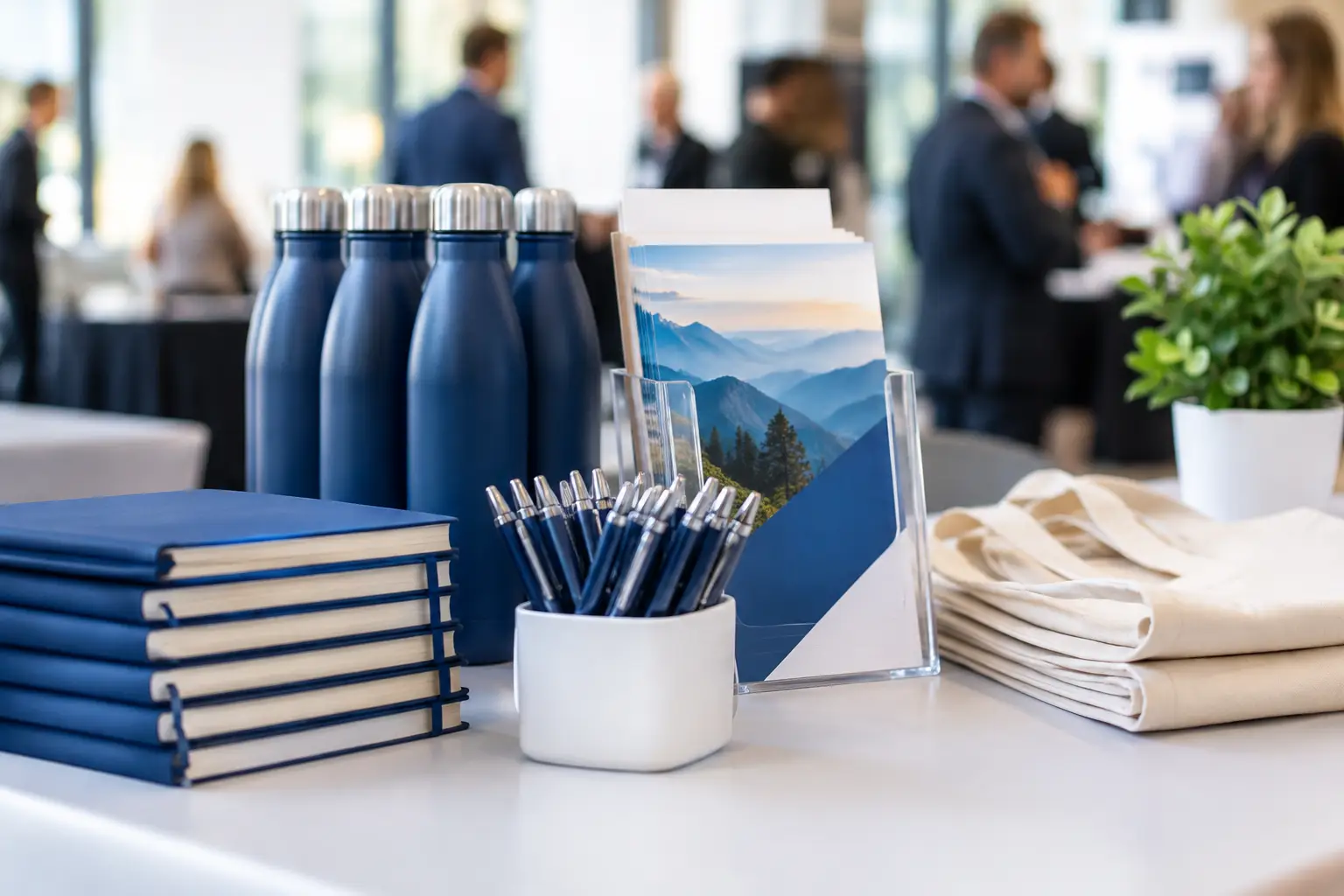
By the end of a busy conference day, attendees are carrying crowded tote bags, scanning their phones, and deciding what is worth taking back to the office. The best top conference handout ideas do not add more clutter. They give people a clear reason to stop at your booth, remember your company, and start a conversation after the show.
For exhibitors, the goal is not to hand something to everyone who walks by. It is to put the right printed piece in the hands of qualified prospects. That requires a handout with a job to do: explain an offer, support a sales conversation, drive a demo, or make follow-up easier.
Start With the Outcome, Not the Giveaway
A branded item may get picked up, but usefulness is what gets it kept. Before choosing paper stock, size, or giveaway items, decide what action you need an attendee to take. A new product launch may need a concise sell sheet. A service business may need an appointment card with a show-only offer. A company selling a complex solution may need a short case study that gives sales representatives something credible to discuss.
Your audience also matters. A hotel procurement manager, a restaurant operator, and a technology buyer have different pressures and different reasons to engage. A playful giveaway can work at a consumer-facing event, while a polished folder and product sheet may carry more weight at an industry convention.
Make the handout easy to understand in a few seconds. Use a clear headline, one primary benefit, strong brand visuals, and a specific next step. If attendees need to hunt for your phone number, booth number, offer deadline, or website, the piece is doing too much work in the wrong places.
Top Conference Handout Ideas for Serious Follow-Up
1. A show-only offer card
An offer card is one of the most practical options because it gives attendees a reason to act while the event is still fresh. Keep it compact enough to fit into a badge holder, wallet, or notebook. Include the offer, expiration date, redemption instructions, and a unique code that helps your team measure response.
The offer does not have to be a deep discount. A complimentary consultation, priority onboarding, sample kit, site assessment, or event-only upgrade can be more valuable and protect your margins. For Las Vegas events, a deadline tied to the end of the convention or the following week creates useful urgency without making the offer feel rushed.
2. A two-sided product or service sell sheet
A well-designed sell sheet gives booth staff a reliable leave-behind after a strong conversation. One side should quickly establish the problem you solve and the benefit you provide. The other can show key features, industries served, a brief testimonial, specifications, or a simple process overview.
This format works particularly well for B2B companies with a focused service or flagship product. Use quality paper and a finish that matches the brand. A thin, generic flyer may be economical, but a heavier stock can signal that the company behind it is established and prepared. The right choice depends on volume, budget, and whether the piece needs to survive travel home in a packed convention bag.
3. A folded brochure for higher-consideration sales
When your offer needs more context than a single sheet can provide, a tri-fold or custom folded brochure gives you room to build the story. This is useful for companies with multiple service lines, detailed product categories, or a longer sales cycle.
Do not turn the brochure into a catalog unless attendees genuinely need one. Focus on the information that helps a prospect decide whether a follow-up conversation is worthwhile. Strong photography, clear section headers, and concise copy matter more than filling every panel with text.
4. A mini case study card
Claims are easy to print. Results are harder to ignore. A compact case study card can feature a recognizable customer type, the challenge they faced, what your company provided, and a measurable outcome. Even one credible statistic can make the piece more memorable than a general capabilities flyer.
This handout works well when your booth team is speaking with decision-makers who need proof before involving additional stakeholders. Keep client permissions in mind, and avoid sharing confidential details just to make a story sound impressive.
5. A branded notepad with a useful prompt
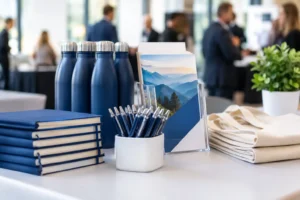
Notepads remain practical at conferences because attendees are taking notes in sessions, meetings, and impromptu conversations. Rather than printing only a logo at the top, add a useful prompt such as meeting notes, post-event action items, campaign planning, or event contacts.
A notepad gives your brand repeated visibility, but it is not a substitute for a sales handout. Pair it with a card or brochure that tells the recipient what to do next. The notepad gets kept; the printed call to action creates the opportunity.
6. A quick-reference checklist
A checklist is valuable when it helps your audience do their job better. An IT provider might create a cybersecurity readiness checklist. A hospitality supplier could offer a pre-opening purchasing checklist. A marketing agency might provide a campaign launch checklist.
The key is specificity. Generic advice feels like filler, while a checklist built around a real business task can earn desk space long after the event. Print it as a sturdy card, a one-page worksheet, or a small booklet if the subject warrants more detail.
7. A conference map or local resource card
At large conventions, useful local information can be a strong icebreaker. A pocket-sized card with nearby dining, transportation, meeting, or event information may get carried throughout the show. For exhibitors in Las Vegas, this can be especially relevant when visitors are navigating a large convention center and a busy Strip schedule.
This idea needs careful execution. The local resource should be genuinely helpful and professionally designed, not a thinly branded ad disguised as a map. Put your branding where it is visible but not intrusive, and make sure all details are current before production.
8. A sample pack or material swatch card
If texture, finish, color, or physical quality influences the buying decision, let attendees see it for themselves. Packaging companies, interior suppliers, printers, manufacturers, and promotional product vendors can use sample packs to turn an abstract pitch into a tactile experience.
A swatch card requires more production planning than a flyer, but it can separate your booth from competitors. Label samples clearly and include contact information directly on the piece so the value does not get separated from your brand.
9. A branded sticker sheet
Sticker sheets can work well for creative, retail, lifestyle, hospitality, and community-focused brands. They are easy to distribute, visually engaging, and more likely to be used than a single logo sticker. Include designs people would actually place on a laptop, water bottle, notebook, or phone case.
For a more business-focused conference, stickers are best used as a secondary handout or part of a larger giveaway. They can add personality, but they rarely explain a complex offering on their own.
10. A short event guide or session planner
If your company sponsors, hosts, or has a strong presence at an event, a compact session planner can earn attention. Include a schedule, note space, key locations, and a short list of can’t-miss sessions. This is especially effective when your team can update attendees on presentations, demonstrations, or after-hours events.
Because schedules change, confirm all event details before printing. For large runs, build in enough lead time for proofing. For last-minute updates, a local print partner can help you produce an accurate smaller run quickly instead of distributing outdated information.
11. A direct-mail style postcard for post-show contact
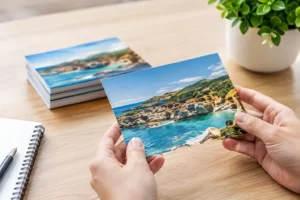
A postcard can be handed out at the booth, placed in a meeting packet, or mailed after the show to qualified prospects. Its simple format forces a clear message: one offer, one image, and one response path. It is also easy for sales teams to personalize with a brief note after a conversation.
Use the front to create interest and the back to provide the next step. A postcard is not the place for every feature, service, and company credential. Its job is to restart the conversation.
12. A branded folder with curated inserts
For scheduled meetings, media appointments, or high-value prospects, a presentation folder makes a strong impression. Inside, include only the materials relevant to that person: a sell sheet, pricing overview, case study, sample, and business card. This feels more intentional than handing over a stack of general brochures.
Folders cost more and require more assembly, so reserve them for targeted opportunities rather than walk-up traffic. When used selectively, they help your team present organized, professional materials that are easy for prospects to share internally.
Make Your Conference Handouts Easier to Use
The most effective handouts are designed for real conference conditions. Attendees may be standing in a crowded aisle, holding a drink, speaking with a colleague, or rushing to the next session. Use large enough type, high contrast, and a hierarchy that lets the main message land immediately.
Before sending anything to print, check these five details:
- Your booth number, event dates, contact information, and offer deadline are correct.
- The call to action tells people exactly what to do next.
- Any QR code is tested from multiple phones and points to a mobile-friendly destination.
- Images are high resolution, and brand colors are prepared correctly for print.
- The quantity fits expected booth traffic plus a reasonable buffer for meetings and staff use.
A QR code can be helpful, but it should support the handout rather than carry the entire message. Some attendees will scan it immediately; others will want enough printed information to decide whether to scan at all.
Plan Production Around the Event Deadline
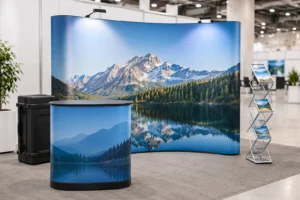
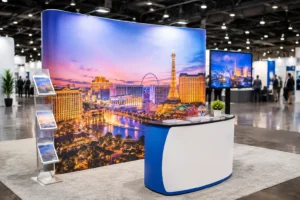
Conference materials involve more than selecting a product. You may need design revisions, copy approval, folding, trimming, mounting, packaging, and delivery coordination. Large-format booth graphics, brochures, business cards, postcards, stickers, and display materials should also look consistent as a set.
When the deadline is close, simplify rather than sacrifice quality. A well-produced sell sheet and business card can outperform a complicated package that arrives late or contains errors. For exhibitors with urgent Las Vegas convention needs, Design One Printing can help coordinate print materials that support the booth presentation without slowing down the final event push.
Give every handout a clear purpose, a polished finish, and a reason to stay out of the recycling bin. When the show floor closes, that small decision can be the difference between a forgotten booth visit and the next qualified conversation.