A flyer that curls in someone’s hand, shows through from the back, or gets bent before it reaches the elevator is a missed marketing opportunity. If you are asking what paper weight for flyers makes sense, the right answer depends on where the piece will be used, how long it needs to last, and the impression your business needs to make.
For most business promotions, flyer paper should feel intentional without becoming unnecessarily expensive or difficult to distribute. A restaurant special, nightclub event, real estate open house, trade show handout, or direct-mail offer may all use the same size flyer, but they do not need the same stock. Choosing the paper before production helps you control cost, durability, color impact, and turnaround.
What Paper Weight for Flyers Should You Choose?
For a standard promotional flyer, 100 lb text or 80 lb cover is often a strong starting point. It has enough substance to feel professional, prints color well, and works for counter displays, handouts, and many mail campaigns.
If your flyer is a short-term announcement, 80 lb text can be an efficient choice. If it needs to stand out at a convention, survive repeated handling, or represent a premium service, move to a heavier cover stock. The best choice is not always the thickest paper. It is the stock that supports the job without adding cost or creating handling problems.
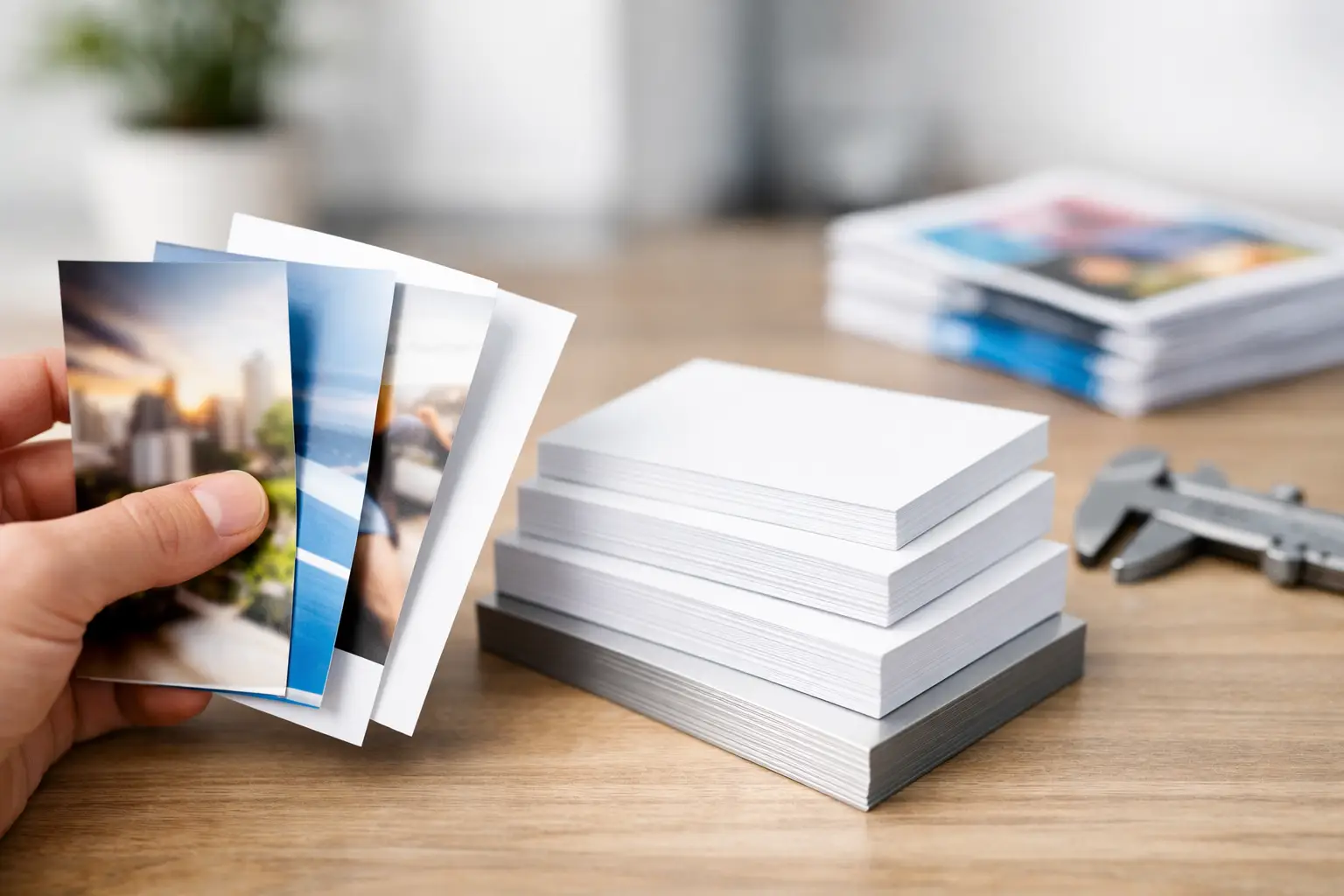
One detail causes frequent confusion: paper weight labels do not always describe thickness in a simple, apples-to-apples way. An 80 lb text sheet is not the same as an 80 lb cover sheet. Cover stock is much thicker and stiffer than text stock at the same listed weight because the two paper categories are measured differently. When comparing options, ask whether the weight refers to text or cover paper, and request a sample if the feel matters to your campaign.
The Most Common Flyer Paper Options
80 lb text: practical for high-volume distribution
80 lb text is a popular choice for flyers that need to be economical, easy to stack, and easy to hand out in volume. It is noticeably more substantial than standard office copy paper, but it remains flexible enough for folding, inserting into packets, and mailing efficiently.
This stock works well for takeout menus, event announcements, campus promotions, in-store offers, rack cards that will be replenished frequently, and direct-mail pieces where postage and quantity affect the budget. A glossy finish can make food photography, product images, and bold event graphics look more vibrant. A matte or uncoated finish is often better when recipients need to write on the piece.
The trade-off is durability. An 80 lb text flyer can look sharp, but it will not have the firm, card-like feel of cover stock. For a one-day promotion or large street-team distribution, that may be exactly what you need.
100 lb text: a noticeable step up
100 lb text offers more weight and a more polished feel while preserving the flexibility of a flyer. It is a smart middle ground for businesses that want their handout to feel substantial but still need practical quantities and cost control.
Consider 100 lb text for grand opening promotions, service menus, hotel and hospitality collateral, retail campaigns, nonprofit events, and marketing pieces included in presentation folders. It is also a reliable choice for full-color designs with large image areas because the sheet has enough body to feel deliberate in a prospect’s hand.
For many standard 8.5 x 11 inch flyers, 100 lb text is the option that balances professional presentation and efficient production. It is especially useful when you want stronger quality than a basic handbill without turning the piece into a postcard.
80 lb cover: strong, premium, and versatile
80 lb cover stock has the stiffness many people expect when they picture a high-quality flyer. It is closer to light card stock than a traditional sheet of paper, making it a good fit for pieces that need to stay flat on a counter, resist creasing, and leave a strong first impression.
Use 80 lb cover for sales sheets, premium service promotions, event invitations, real estate marketing, product launches, and trade show handouts. It is also a practical choice for flyers displayed in stands or placed in hotel lobbies, where people may pick them up, set them down, and handle them multiple times.
Because it is heavier, cover stock can add to printing and mailing costs. It may also be less suitable for high-volume door-to-door distribution if the flyer is likely to be folded or inserted into a complex package. Those are not reasons to avoid it – they are reasons to match the stock to the delivery method.
100 lb cover or 14 pt card stock: built to last
When the flyer needs to function like a keepsake, mini poster, or durable leave-behind, heavier stock is worth considering. A 100 lb cover sheet or approximately 14 pt card stock gives the piece a firm, premium feel. It is well suited to upscale events, luxury hospitality promotions, high-value service offers, branded price lists, and convention materials that must compete with dozens of other handouts.
This weight is also useful when the design relies on a clean, minimal layout. Heavy paper adds perceived value even before the recipient reads a word. However, it is not automatically the right choice for every job. Heavier stocks cost more, take up more space in shipping or storage, and may require additional planning for mail pieces. If you are distributing 10,000 flyers for a limited-time offer, a lighter stock may produce a better return.
Match Paper Weight to How the Flyer Will Be Used
Start with the job, not the paper sample. A flyer handed out outside a Las Vegas convention center needs more durability than one placed inside a presentation folder. A piece mailed to a neighborhood needs to fit your postal strategy. A flyer that includes a coupon may need a writable matte surface, while one promoting a nightlife event may benefit from glossy paper and saturated color.
For short-term, high-volume promotions, 80 lb text is usually efficient and professional. For general business handouts, 100 lb text or 80 lb cover gives a stronger presentation. For event materials, sales collateral, and premium leave-behinds, 80 lb cover through 14 pt stock makes the most sense.
If the flyer will be posted, consider the mounting method as well. Lightweight sheets are easy to tape or pin to a bulletin board, while heavy card stock stays flatter and looks better on an easel or countertop. For outdoor use, paper weight alone is not enough. Weather exposure, moisture, and handling may call for lamination, synthetic stock, or a sign material instead of a standard flyer.
Finish Matters as Much as Weight
Paper finish changes how a flyer feels and performs. Gloss coating reflects light and makes photographs and bright colors appear more vivid. It is a natural fit for restaurants, entertainment, beauty, retail, and product promotions. Under bright venue lighting, though, heavy gloss can create glare.
Matte stock has a smoother, non-reflective look that works well for professional services, healthcare, real estate, education, and designs with substantial text. It is easier to write on and often feels more understated. Uncoated paper is the best option when recipients need to fill out information, use a coupon, or make notes directly on the flyer.
A heavier gloss sheet can look impressive, but a matte 100 lb text flyer may be the better business tool if it is meant to be annotated or read under conference lighting. Paper selection should support the action you want the recipient to take.
Consider Size, Ink Coverage, and Turnaround
A small 4 x 6 inch flyer can handle a heavier stock without becoming awkward. A larger 11 x 17 inch sheet may need enough weight to avoid flopping or curling, particularly when it has rich, full-bleed color. Heavy ink coverage can affect how a sheet dries and lays flat, so it is worth discussing the design and deadline together.
This matters when an event is approaching quickly. A simple 80 lb text flyer may be the most practical solution for a same-day campaign, while a specialty finish, extra-heavy card stock, folding, scoring, or custom cutting can require more production time. Fast turnaround should not mean choosing the first available paper. It should mean choosing a stock that can be produced reliably within your deadline.
At Design One Printing, the most useful conversation often begins with three questions: Where will the flyer be distributed, how many do you need, and when do you need them? Those answers narrow the paper options quickly and help prevent paying for features that do not serve the campaign.
A Simple Decision Before You Print
Choose 80 lb text when quantity, flexibility, and budget lead the project. Choose 100 lb text when you want a more substantial everyday flyer. Choose 80 lb cover when the handout needs to feel durable and high-end. Choose 100 lb cover or 14 pt stock when the flyer is a premium leave-behind that must hold up after the event ends.
Before approving the job, hold a sample if possible and view it under the lighting where it will be used. The right flyer stock should make your offer easy to notice, easy to keep, and worthy of the brand name printed on it.