
When your booth is set up between dozens of competitors and attendees are moving fast, average graphics disappear. The best trade show booth graphics do one job immediately – they make people stop, understand what you offer, and remember your brand after they walk away.
That sounds simple, but most booth graphics miss for predictable reasons. The message is too small, the design tries to say everything at once, or the production quality falls apart under event lighting. If you are investing in exhibit space, shipping, staffing, and travel, your graphics need to carry their share of the workload.
What the best trade show booth graphics actually do
Strong booth graphics are not just attractive. They support a sales goal. In most cases, that means helping attendees identify your company in seconds, understand your value quickly, and feel confident enough to start a conversation.
The best-performing displays usually have one clear message hierarchy. First, attendees notice the brand name or headline. Next, they catch the core offer or differentiator. Then, if they are interested, they move closer for supporting details. That order matters because no one reads a trade show booth from top to bottom like a brochure.
This is where many exhibitors overcomplicate the design. They treat the backdrop like a website homepage and cram in every product line, every logo, every feature, and every paragraph of copy. In a busy convention hall, that approach works against you. Clarity beats completeness almost every time.
Start with viewing distance, not just design taste
A booth graphic that looks great on a laptop screen can still fail on the show floor. The issue is usually scale. Attendees may first see your display from 20 feet away, then 10 feet, then right at the counter. Each distance calls for a different type of information.
Your largest text should be readable from across the aisle. That is where your company name, category, or primary message belongs. Mid-range messaging can explain what you do in a short phrase. Detailed product points, QR codes, or calls to action should live closer to where conversations happen.
This is one of the biggest differences between good-looking event art and the best trade show booth graphics. Good-looking art can still be hard to process at speed. Effective graphics are built for real traffic patterns, poor angles, overhead lighting, and distracted attendees.
Keep the headline short and specific
If someone has to work to figure out what you do, you have already lost time. A short headline with a concrete promise usually outperforms a clever one.
For example, a statement like “Custom Packaging for Fast-Growing Retail Brands” gives people far more to work with than a vague tagline. It tells the right audience they are in the right place. It also helps the wrong audience move on quickly, which is not a bad outcome. Better booth traffic is more useful than just more booth traffic.
Specificity also helps your staff. When the graphics frame your offer clearly, your team spends less time correcting confusion and more time having productive conversations.
Use fewer visuals, but make them stronger
Trade show design often improves when you remove elements, not add them. One strong product image, one branded backdrop, and one clear message can do more than a crowded collage of photos and text blocks.
Visuals should support recognition and credibility. If you sell physical products, show them in a way that is easy to understand from a distance. If you offer services, use imagery that reinforces the result, not generic stock scenes that could belong to any company in the hall.
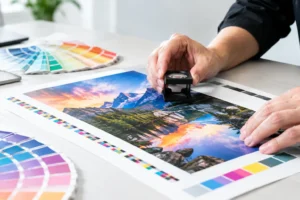
There is also a print consideration here. Large-format graphics magnify weak image quality. Low-resolution files, poor color balance, and inconsistent branding become obvious fast when printed at scale. What looks acceptable on screen may look soft, dull, or amateur once installed.
Color matters, but contrast matters more
Brand colors are important, but legibility should come first. A booth can stay on-brand and still fail if the text disappears into the background or if the overall palette gets washed out under venue lighting.
High contrast between text and background is what makes messaging readable. Clean whites, deep darks, and controlled use of accent colors usually perform better than muddy gradients or color-on-color combinations. If your brand palette is subtle, that does not mean the entire display has to be low contrast. You can preserve the brand identity while adjusting the layout for visibility.
This is one of those it-depends decisions. A luxury brand may lean minimalist. A tech startup may want a bolder look. A food brand may benefit from vivid imagery. But in every case, attendees still need to read the message quickly.
Match the material to the event environment
The best trade show booth graphics are not just about design. Material choice affects appearance, durability, transport, setup, and replacement timing. Fabric displays, vinyl banners, mounted boards, adhesive graphics, and retractable banner stands all solve different problems.
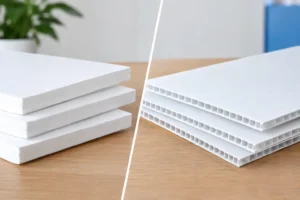
Fabric can give you a cleaner, more polished presentation and pack down efficiently for travel. Vinyl may be a practical choice for certain banners or short-term needs. Rigid boards can add structure and premium presence at counters or product stations. Retractable displays are convenient for fast setup and smaller footprints.
There is no single best material for every exhibitor. The right choice depends on booth size, shipping method, reuse plans, and budget. If you exhibit often, durability and portability matter more. If you are preparing for a one-time launch event, speed and visual impact may be the priority.
Design the full booth, not just the back wall
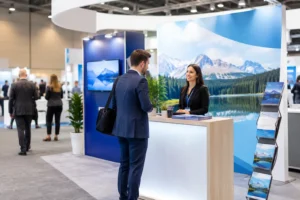
A common mistake is treating the booth backdrop as the whole project. In reality, attendees experience the space as a system. Table throws, counters, side panels, hanging signs, floor graphics, product cards, brochures, posters, and banner stands all influence how the booth feels.
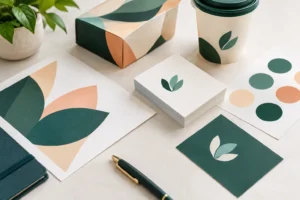
When those elements share the same visual logic, your setup looks organized and credible. When they do not, the booth can feel pieced together, even if each item looks fine on its own. Consistency in fonts, colors, image style, and messaging makes the display feel intentional.
That does not mean every surface needs to be printed. Empty space can help the key graphics breathe. But the branded elements you do use should work together and support the same message.
Fast turnaround is part of graphic quality
For exhibitors in Las Vegas, timing is not a side issue. It is part of the job. Files arrive late, booth plans change, shipments get delayed, and sometimes a display shows up damaged the day before setup. In those situations, the best trade show booth graphics are the ones you can actually get produced correctly and on time.
That is why responsive local production matters. A reliable print partner can flag file issues before they become expensive problems, recommend the right substrate for the application, and move quickly when a replacement is needed. Design One Printing works with exactly this kind of deadline pressure, especially for convention exhibitors who need professional output without losing a day to back-and-forth.
Speed, though, should not mean rushing blindly. The best results come from fast, accurate proofing, practical design adjustments, and production methods that fit the event deadline without sacrificing finish quality.
Common mistakes that weaken booth graphics
Most underperforming booths suffer from the same few issues. The first is too much copy. The second is poor text size. The third is using images that are not suited for large-format print. Another common problem is trying to appeal to everyone, which usually leads to vague messaging that lands with no one.
Brand inconsistency is another issue. If the booth backdrop says one thing, the brochure says another, and the sales team introduces the company in a third way, trust drops. People notice when a brand looks unfinished.
The final mistake is waiting too long. Last-minute production is possible, but last-minute decision-making creates avoidable problems. If you are ordering under pressure, simplify the message and focus on the essentials. A clean, readable booth delivered on time is better than an overbuilt concept that creates stress and misses setup.
How to judge whether your booth graphics are ready
A useful test is to step back and ask three questions. Can someone tell what you do in three seconds? Can they read the main message from the aisle? Can your team point to the graphics and use them naturally in conversation?
If the answer to any of those is no, the design probably needs refining. The strongest booths do not force attendees to decode the message. They support the interaction before a salesperson says a word.
When your event date is close, the smartest move is often the most practical one. Prioritize one strong message, professional large-format production, and consistent supporting pieces that make the booth feel complete. That is what gives your display a better chance to pull traffic, start conversations, and hold up under the pressure of a live show floor.
If you are preparing for an event, think of your booth graphics as working sales tools, not decoration. The right graphics do not just fill space – they help your brand show up with clarity when timing matters most.