
A neighborhood mail campaign can put your offer in front of thousands of nearby households before a competitor has even introduced itself. But neighborhood mailing results are not determined by quantity alone. A beautifully printed postcard sent to the wrong homes, with an unclear offer or no follow-up plan, can disappear with the rest of the mail.
For Las Vegas businesses, local organizations, and service providers, direct mail works best when it is treated as a focused sales effort. The goal is not simply to send postcards. The goal is to create a local response that can be measured, repeated, and improved.
What Drives Neighborhood Mailing Results
The strongest neighborhood campaigns begin with a clear reason to reach a specific area. A restaurant may want to attract nearby residents for a grand opening. A home service company may need leads in neighborhoods within its service radius. A retail store may promote a seasonal offer to households close enough to visit regularly.
That purpose should determine the mailing area, format, offer, and call to action. When those pieces are disconnected, results become difficult to evaluate. If a homeowner receives a postcard for a service they do not need, or an offer with no deadline, even excellent print quality will not do the work alone.
Direct mail is especially useful when your business needs local visibility fast. Unlike a social post that may never reach the right audience, a printed piece arrives in the hands of households within the exact area you selected. The trade-off is that you need to make every element count, from the address list to the offer and the response process.
Start With the Right Neighborhood, Not the Largest One
More addresses do not always mean better results. A large mailing can create broad awareness, but a smaller, better-matched neighborhood may produce more calls, scans, visits, or bookings per dollar spent.
Begin by defining the customer most likely to respond. Consider household income, home ownership, age range, family composition, proximity to your location, and whether the area matches the service you provide. A luxury home remodeling offer belongs in a different area than a value-focused family dining promotion.
For a new campaign, test a manageable geographic area first. This gives you a baseline before expanding. If one neighborhood responds well, repeat the campaign there with a refreshed message, then add adjacent areas. That is usually more productive than sending one large, untested mailing and guessing what worked.
Make the Mail Piece Easy to Understand
People sort mail quickly. Your postcard, flyer, or folded mailer has only a few seconds to explain why it matters. The front should communicate the central benefit immediately, while the back should make the next step obvious.
Lead with the offer or customer outcome, not a long description of your company. “$25 Off Your First Service,” “Free Consultation This Week,” or “Bring This Card for a Grand Opening Special” gives the recipient a reason to keep reading. Pair that message with a clear image, readable type, and enough open space to avoid a crowded appearance.
A professional piece also needs the practical details: your business name, phone number, website address, location if relevant, offer terms, expiration date, and a direct call to action. Do not make customers search for the information needed to respond.
Choose a Format That Fits the Offer
Postcards are effective for timely offers, announcements, seasonal promotions, and local event invitations. They are visible immediately and keep the message simple. Oversized postcards can help a campaign stand out, but standard sizes can be more cost-effective when mailing volume is high.
Brochures and folded mailers give you more room when the decision requires explanation. They work well for medical practices, financial services, real estate teams, home improvement companies, and organizations with several services to present. The added space is valuable only if the content is organized. A dense panel full of small text can reduce response instead of building confidence.
For a high-value offer, a personalized letter package may be the better fit. It can feel more individual and provide enough detail to address questions. It also costs more to produce and mail, so it makes the most sense when a single new customer has meaningful value to the business.
Give Recipients a Reason to Act Now
A strong offer has a clear benefit and a believable deadline. “Contact us today” is not an offer. It puts all the effort on the recipient. A more effective message gives them a specific reason to respond now, whether that is a limited-time discount, complimentary upgrade, free estimate, early registration, or event-only incentive.
The offer should be easy to redeem. If customers must complete multiple steps, enter a complicated code, or call during a narrow time window, response rates can fall. A simple phone number, QR code, dedicated landing page, or in-store redemption instruction makes the path clear.
Be realistic about margins. Deep discounts may generate activity but can attract one-time bargain shoppers who never return. In some cases, a bonus service, free add-on, or new-customer package produces better-quality leads than a large price reduction. The right offer depends on your sales cycle and the value of a repeat customer.
Timing Matters More Than Many Businesses Expect
Neighborhood mail should arrive when customers are most likely to need what you offer. Landscaping promotions perform differently in spring than in the middle of winter. Restaurant promotions may work well ahead of a holiday weekend. Event mailers need enough lead time for planning, but not so much that the date is forgotten.
Delivery timing also matters for promotions with short windows. If an offer expires on Friday, the piece needs to arrive early enough for recipients to act. Build in production and postal delivery time before announcing a date. For Las Vegas businesses working around conventions, major events, and seasonal visitor traffic, planning ahead helps avoid a campaign arriving after the opportunity has passed.
Consistency is often more valuable than a single drop. A household may need to see your name several times before it responds. Sending to the same area on a regular schedule builds familiarity, particularly for local service businesses that rely on trust.
Track Every Response Source
Without tracking, neighborhood mail can feel unpredictable. With tracking, it becomes a practical marketing channel that can be adjusted based on evidence.
Use a unique offer code, dedicated phone extension, QR code, or campaign-specific web address for each mailing area or version. Train staff to ask callers how they heard about the business and record the answer consistently. If the campaign drives store visits, require the card or code at redemption.
Track more than the number of responses. Look at calls, appointments, quotes, purchases, average order value, and repeat business. A campaign that produces fewer responses but more qualified customers may outperform a high-response discount campaign.
Keep a simple record of each drop: neighborhood, number mailed, date, format, offer, production cost, postage cost, and results. After two or three campaigns, patterns become easier to spot. You may find that one design works better, a certain area produces stronger leads, or a different offer improves conversion.
Print Quality Protects the Message
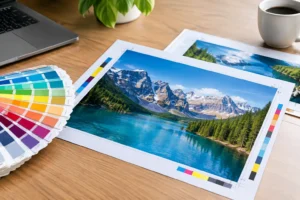
Direct mail represents your business before a customer speaks with you. Thin stock, weak color, poor image resolution, or inconsistent trimming can make a legitimate business look less established. That does not mean every campaign requires the most expensive finish. It means the material, size, and finish should support your brand and the value of the offer.
A local print partner can also help prevent practical mistakes before production, including incorrect sizing, unreadable type, low-resolution artwork, or a layout that does not leave room for addressing and postal requirements. When timing is tight, that production support matters as much as the final look.
Design One Printing helps Las Vegas businesses produce postcards, flyers, brochures, and custom direct mail pieces on demanding schedules, with hands-on guidance when a campaign needs to move quickly.
Improve the Next Drop Instead of Starting Over
Do not change every part of a campaign at once. If you alter the neighborhood, design, offer, and timing together, you will not know which decision affected the outcome. Test one major variable at a time when possible.
For example, keep the same neighborhood and offer while testing two postcard headlines. Or mail the same design to two comparable areas to see which audience responds more strongly. Small, disciplined tests create useful answers without requiring a large budget.
A well-planned neighborhood mailing is not a one-time print order. It is a local marketing system: choose the right households, give them a clear reason to act, make response easy, and use what you learn to make the next drop more profitable. Start with a focused area and a measurable offer, then let the response guide your next move.