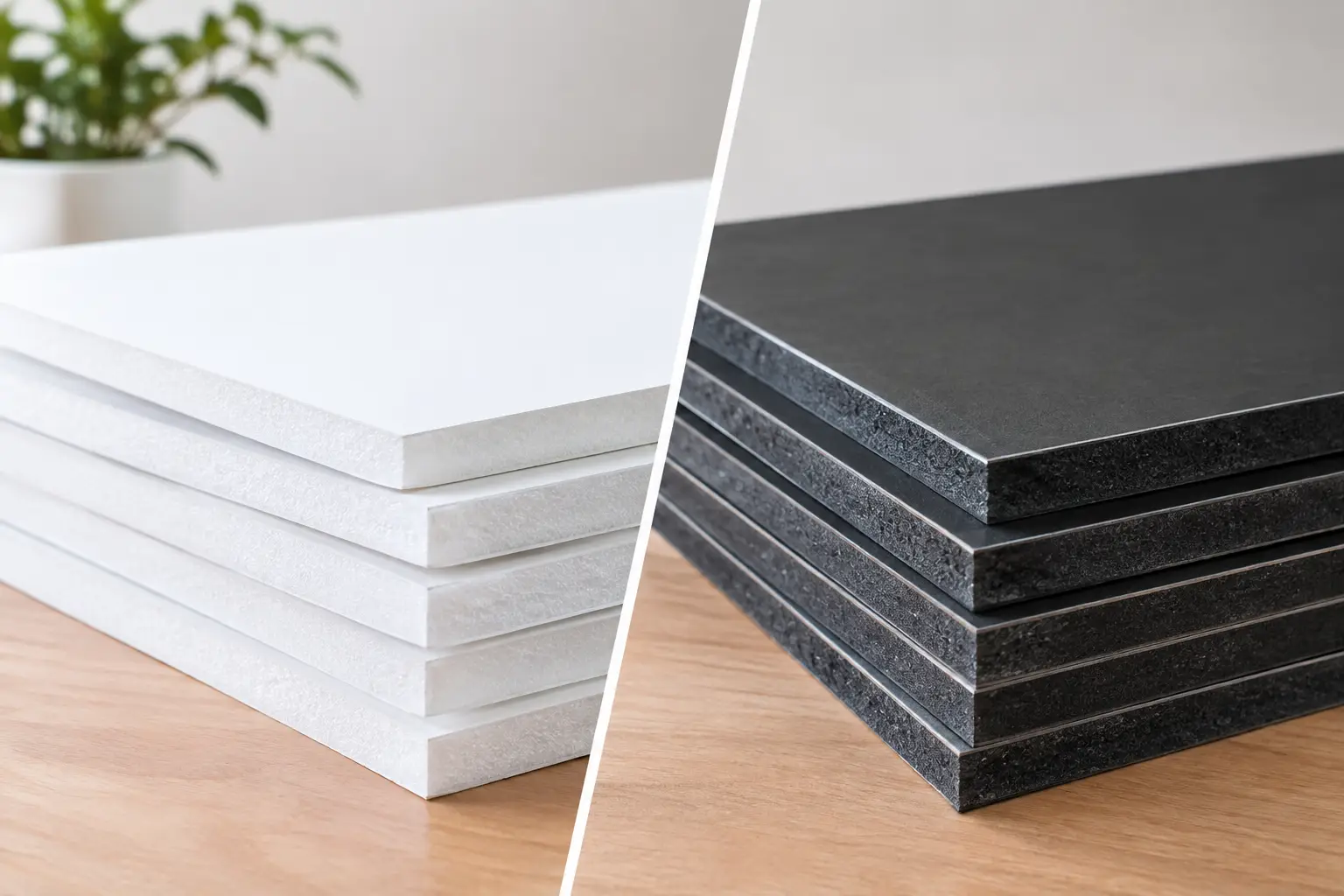
A sign can look perfect when it leaves the print shop and still fail before the event doors open. A bent presentation board, crushed corner, or warped directional sign creates a last-minute problem nobody needs on a booth setup day. When choosing foam board versus gatorboard, the right answer comes down to where the graphic will be used, how it will travel, and how polished it needs to remain under pressure.
For Las Vegas businesses, exhibitors, and event teams, this is usually a practical production decision, not a design preference. Foam board is economical and lightweight for short-term indoor graphics. Gatorboard costs more, but its rigid core stands up far better to handling, transport, and repeated use.
Foam Board Versus Gatorboard: The Core Difference
Both materials are rigid sign substrates commonly used for printed presentations, retail graphics, mounted photos, event signage, and trade show displays. Each can produce a clean, professional printed surface. The difference is in the core and outer facing.
Foam board, often called foam core, has a lightweight polystyrene foam center faced with paper or plastic-coated paper. It is easy to cut, easy to mount, and cost-effective for temporary applications. It is also easier to dent, crease, bow, or damage at the edges.
Gatorboard has a dense polystyrene foam core with hard, wood-fiber faces. Those tough outer surfaces make a significant difference in day-to-day use. Gatorboard resists dents and punctures better than foam board, stays flatter under normal indoor conditions, and feels more substantial when someone picks it up.
The printed image is not automatically better on one board than the other. Print quality depends on the file, printing method, finishing, and viewing distance. What changes is how well the board protects that finished graphic once it is produced.
When Foam Board Is the Smart Choice
Foam board is a strong choice when the display is temporary, stays indoors, and will not be handled repeatedly. It gives businesses an affordable way to create large visual impact for a one-day meeting, a sales presentation, a restaurant promotion, or a short retail campaign.
For example, foam board works well for a welcome sign at a company lunch, a mounted poster for a real estate open house, a check-in sign for a workshop, or a presentation board carried from an office to a conference room. It is light enough to hang, place on an easel, or transport in a large vehicle without adding much weight.
Budget is another reason to choose it. If you need several directional signs for a single event or a collection of product images for a short campaign, foam board can help control costs while still giving the graphics a professional mounted appearance.
Its limitation is handling. A foam board sign can be damaged by a sharp corner, a crowded loading area, or a stack of materials placed on top of it. It is not the best option for graphics that need to survive shipping, repeated setup, or an active convention floor.
When Gatorboard Is Worth the Upgrade
Gatorboard is built for applications where the board itself needs to hold up as well as the printed message. Its firm faces give it a more durable, premium feel, especially on larger panels that people will move, carry, or install more than once.
Trade show exhibitors often choose gatorboard for booth graphics, mounted product messaging, menu panels, sponsor signage, and presentation displays that must arrive in good condition. A small investment in a tougher substrate can prevent a costly reprint when a board is scuffed during transport from a hotel loading dock to the convention center.
It is also a better fit for lobby displays, retail environments, showroom graphics, and office signage intended to remain in place for weeks or months. While no foam-based board is indestructible, gatorboard is far more forgiving when staff members need to reposition a display or store it between events.
Gatorboard becomes especially valuable with oversized graphics. The larger the board, the more likely lightweight foam board is to flex or take damage during handling. A sturdier substrate helps a large-format display stay crisp and presentable from installation through teardown.
Compare Cost, Weight, and Durability
The choice is rarely about one material being universally better. It is about matching the board to the job.
Foam board costs less and weighs less. That makes it attractive for high-quantity, short-term signs and for projects where a limited budget matters more than long-term durability. It is also easier to cut into simple custom shapes, although every cut edge remains vulnerable.
Gatorboard costs more and is heavier, but the added rigidity is often worthwhile for customer-facing displays. It resists surface damage better, handles more confidently, and is less likely to show wear before the audience sees it. For a trade show panel representing your brand to buyers, partners, or investors, that added protection has real value.
Think about total project cost, not just the price per board. If a foam board graphic needs replacement after one rough trip, it may not have been the lower-cost option. On the other hand, paying for gatorboard on temporary signs that will be used once and discarded may not be necessary.
Indoor Use, Outdoor Use, and Humidity
Both foam board and gatorboard are primarily indoor display materials. They should not be treated as permanent outdoor signage. Wind, rain, direct sun, and extreme temperature changes can damage the printed surface, affect adhesives, or compromise the board over time.
For an outdoor event, ask about materials designed specifically for exterior conditions, such as corrugated plastic, aluminum composite panels, PVC, or weather-resistant banner materials. The correct choice depends on how long the sign will be outside, how it will be installed, and whether wind is a factor.
Indoor conditions matter, too. Foam board can warp or bend more easily in humid environments or where one side is exposed to different conditions than the other. Gatorboard generally performs better, but it should still be stored flat in a dry, climate-controlled space whenever possible.
Choosing the Right Thickness
Thickness affects the appearance and performance of either board. A thinner board can work for small signs or pieces mounted in a frame. Larger graphics usually benefit from a thicker board because it feels more substantial and is less likely to flex.
For tabletop signs, price cards, and small easel displays, a standard thickness may be sufficient. For full-size presentation boards, retail panels, or trade show graphics, a thicker option creates a cleaner, more professional result. The intended mounting method also matters. A board used in a sign holder, on an easel, or mounted to a wall may have different thickness requirements.
Before production begins, confirm the finished size, whether the sign will be single- or double-sided, where it will sit, and how it will get to the venue. These details help prevent the common mistake of ordering a visually strong graphic on a substrate that is too fragile for the job.
A Practical Decision for Event and Trade Show Teams
If the graphic is for a short indoor event, will be used once, and needs to stay within a tight budget, foam board is usually the efficient choice. Handle it carefully, transport it flat when possible, and keep a backup plan for high-traffic areas.
If the board will travel, be reused, or serve as a central part of a booth or customer-facing display, gatorboard is usually the safer investment. It is particularly useful when a reprint would be difficult because the event schedule is tight or the artwork contains time-sensitive details.
For teams preparing for a Las Vegas convention, build substrate selection into the production schedule early. Consider the route from the print shop to the hotel, loading dock, exhibit hall, and final booth location. A sign that survives those steps is the sign that does its job.
Design One Printing can help match the board material, size, and finishing approach to your timeline and display environment. Bring the usage details to the quoting stage, especially for rush jobs, and the production plan can be built around what your graphics actually need to withstand.
The best display material is the one that arrives clean, stays flat, and lets your message look intentional when the audience is standing in front of it.