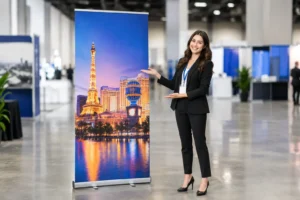
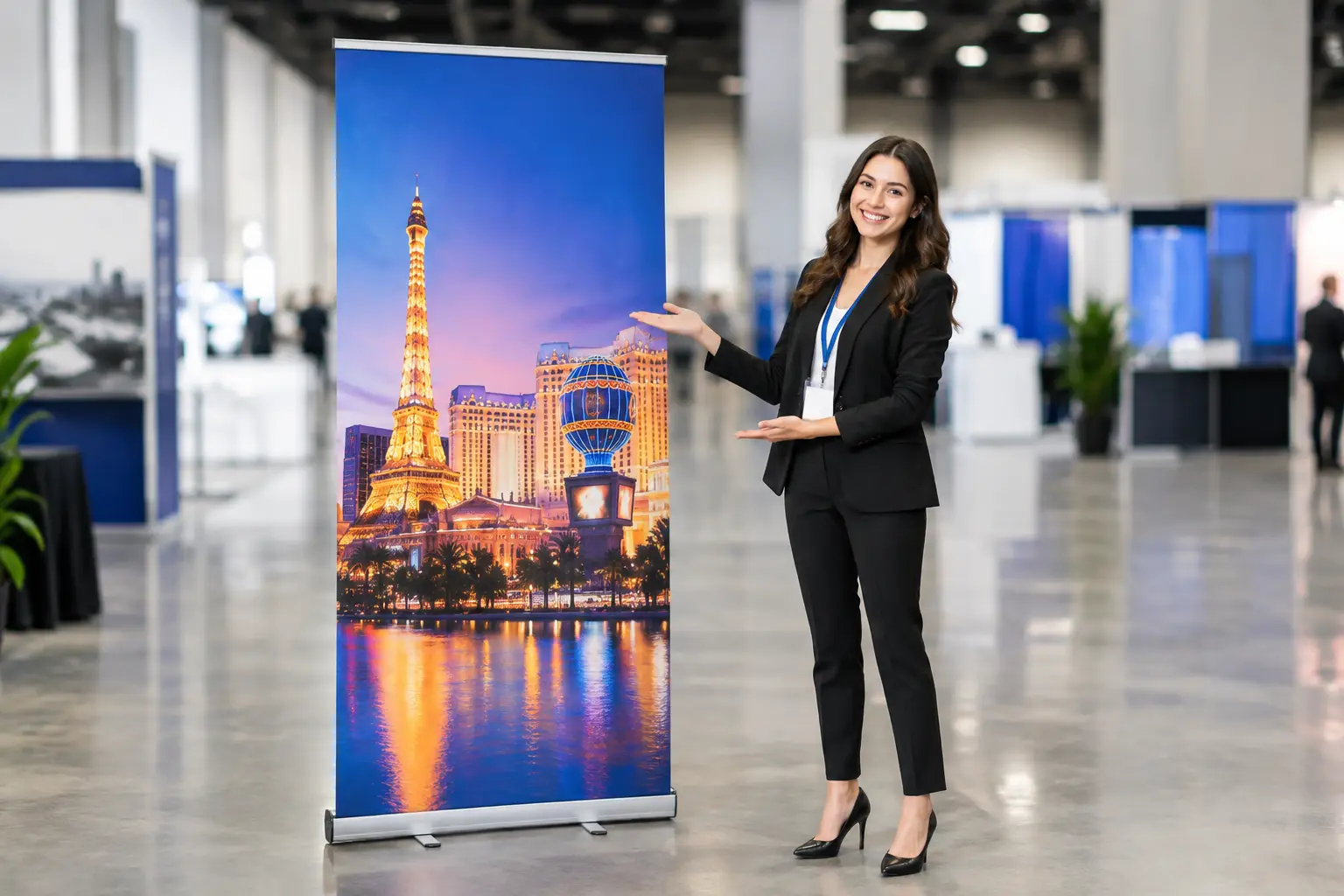
A retractable banner can look like a simple purchase until you are standing in a busy Las Vegas convention hall with minutes before doors open. The difference between a banner that supports your booth and one that becomes a distraction usually comes down to hardware, graphic quality, sizing, and how the display is meant to travel. This retractable banner review focuses on the details that matter when your team needs a polished display that sets up quickly and holds its place on a crowded show floor.
What a Retractable Banner Should Deliver
A retractable banner, often called a roll-up banner or pull-up banner, stores its printed graphic inside an aluminum base. To use it, pull the graphic upward and secure it to a support pole. The entire display packs into a carrying case, making it one of the most practical options for pop-up events, sales presentations, hotel conferences, retail promotions, and trade show booths.
Its appeal is not just portability. A good retractable banner gives a business a full-color, vertical brand message without requiring tools, a complicated frame, or significant floor space. For exhibitors who are flying into Las Vegas or moving materials between the Convention Center, Mandalay Bay, Caesars Forum, and hotel meeting rooms, that convenience has real value.
Still, not all banner stands perform the same way. A low-cost stand may be sufficient for a one-time announcement or short indoor event. For repeated conventions, client meetings, and multi-day activations, the stand and print material need to withstand more handling, more travel, and more attention.
Retractable Banner Review: The Features That Matter
The base is the first place to look. It is easy to focus on the printed panel, but the base determines whether the display feels stable and professional. Lightweight economy bases are convenient for occasional use, yet they can shift more easily when attendees brush past them. A wider or heavier base generally provides better stability, especially in active exhibit environments.
The trade-off is portability. Heavier hardware adds confidence on the floor but takes up more weight in a shipping case or vehicle. For a local business displaying a banner in the lobby once a month, a standard base may be the right fit. For a company attending several national shows each year, upgrading hardware can prevent frustrating replacements later.
The support pole also deserves attention. Adjustable poles offer flexibility when a display needs to fit different spaces, while fixed poles are typically faster to assemble and have fewer moving parts. Either can work well when built properly. What matters most is that the pole keeps the graphic straight, fully extended, and free of visible sagging.
Print Material Changes the Finished Look
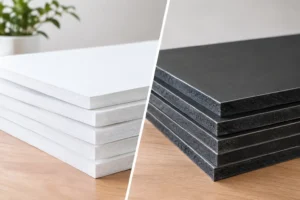
The graphic material affects color, readability, durability, and how the banner hangs. Smooth, opaque banner material helps prevent the support structure or background light from showing through. It also provides a cleaner surface for logos, product images, and large blocks of color.
For indoor trade shows and corporate events, a smooth matte or low-glare finish is often a smart choice. Convention-center lighting can be intense, and glossy material may create reflections that make a headline harder to read in photos or from an angle. If the banner will be used near windows, under spotlights, or in a hotel ballroom, ask about finish options before production begins.
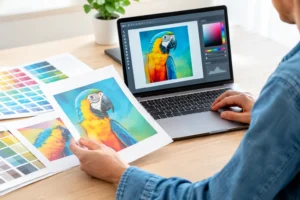
Print quality should be evaluated at normal viewing distance, not only from a few inches away. A retractable banner is usually read from several feet away, so the logo must be crisp, colors should be consistent, and the main message needs enough contrast to stand out. Fine type, low-contrast color combinations, and crowded layouts can reduce impact even when the printing itself is technically sharp.
Size Should Match the Space and Message
A standard retractable banner width works well for many booth and event applications because it gives enough room for a strong headline, image, and call to action without overwhelming a small footprint. Wider banner stands create greater visual presence, but they require more open floor space and a design that can support the larger format.
Height matters, too. Tall displays are easier to spot across an aisle, but their top section may not be readable from close range. Place the most important information in the middle portion of the graphic, where visitors naturally look. Your business name, primary value statement, and next step should not be buried at the bottom near the base.
For a 10-by-10 booth, one or two retractable banners can frame a table, product display, or backdrop effectively. In a larger booth, they work well as directional signs, product-category markers, meeting-area identifiers, or supporting graphics alongside a fabric wall or modular display. The banner should have a job. If it is trying to tell your full company story, list every service, and display multiple offers at once, it will likely feel crowded.
Setup Speed Is a Real Business Benefit
Most retractable banners can be assembled in less than a minute: place the base on the floor, connect the pole, pull up the graphic, and secure it. That speed is especially useful when booth access is limited or when a team is setting up several event components at once.
Fast setup does not mean setup should be rushed. Before the event, test each stand, check that the pole sections lock correctly, and inspect the graphic edge for wear. A banner that has been stored in a hot vehicle or packed carelessly may develop curls, dents, or tension problems. Catching those issues before arriving at the venue is much easier than trying to solve them during exhibitor move-in.
Carrying cases provide basic protection, but they are not all designed for the same conditions. A soft case works well for hand-carrying to local meetings. For frequent shipping or air travel, a reinforced case or shipping solution offers more protection for the base and graphic. It depends on how often the display will be transported and who will handle it along the way.
Design Choices That Help People Stop and Read
A retractable banner is not a brochure. It has only a few seconds to communicate why someone should stop. The strongest layouts use one clear message, a recognizable logo, and a visual hierarchy that guides the eye from headline to supporting information to call to action.
Use large type for the headline and avoid placing essential wording near the trim, bottom edge, or top edge. Product photos should be high resolution and relevant to the offer. A generic stock image may fill space, but a strong product image, hospitality visual, event photo, or local service example usually gives the banner more credibility.
QR codes can be useful for lead capture, menus, landing pages, or appointment requests, but they should not replace a clear verbal message. Make the code large enough to scan from a practical distance and leave clean space around it. At a busy Las Vegas event, attendees may take a quick photo of the banner rather than scan it immediately, so the printed call to action should still make sense on its own.
If you already have brochures, postcards, table throws, or booth graphics, carry the same colors, fonts, and core message into the banner design. Consistency makes a small exhibit feel more established. Design One Printing can also help prepare or adjust artwork when an existing file was not built for large-format production.
When a Retractable Banner Is the Right Choice
Retractable banners are a strong fit for businesses that need flexible, reusable signage. They work particularly well for trade show exhibitors, real estate teams, medical offices, recruiting events, retail promotions, hospitality businesses, nonprofit fundraisers, and sales teams making presentations off-site.
They are less effective when the goal is to create a full booth environment or cover a large wall. In those cases, a step-and-repeat backdrop, fabric display, rigid signs, or custom booth graphics may provide more visual impact. A retractable banner can still be part of the setup, but it should not be asked to do the work of an entire exhibit.
For exterior use, be cautious. Standard retractable stands are generally intended for indoor environments. Wind, uneven pavement, and weather can make outdoor displays unstable. If your promotion will take place outside, use signage and hardware designed specifically for that setting.
Getting More Life From Your Banner Stand
Store the banner in its case when it is not in use, keep it dry, and avoid forcing the graphic back into the base. Clean the surface gently with a soft, dry cloth if needed. Before every event, test the retraction mechanism and check whether the graphic remains straight when extended.
Many businesses can also reuse the hardware with a replacement graphic when their campaign, service list, or branding changes. That can be more cost-effective than buying a completely new display, provided the existing stand is in good condition and compatible with a replacement panel.
The best retractable banner is not necessarily the lightest or the least expensive. It is the one that fits your event schedule, display environment, brand standards, and transport plan. If your next show is approaching quickly, choose a display that makes setup easier and gives visitors a clear reason to remember your business after they leave the aisle.