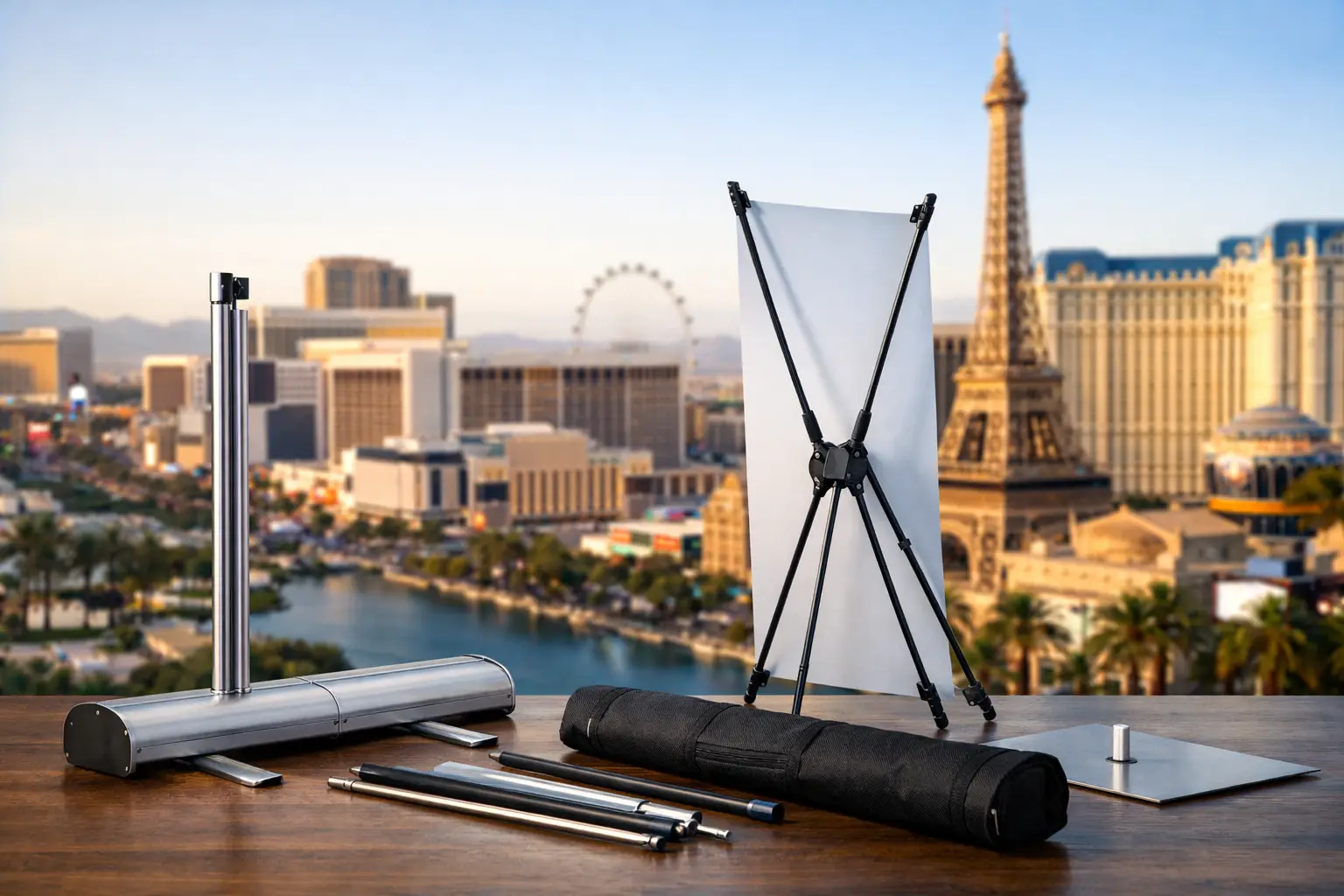
A banner can have sharp graphics, accurate brand colors, and a strong message, then still look unprepared if the stand leans, curls at the edges, or fails during setup. This banner stand hardware review focuses on what business owners and exhibitors actually need to evaluate: stability, portability, setup time, graphic protection, and whether the stand fits the demands of a Las Vegas convention, meeting, retail promotion, or event.
For most display projects, the right hardware is not the most expensive option. It is the option that holds the graphic properly, travels safely, and gives your team a professional presentation without creating a setup problem on the show floor.
What Good Banner Stand Hardware Should Do
Banner stand hardware has one job: keep your message visible and presentable. In practice, that means much more than holding a printed panel upright. A quality stand should open quickly, stay level on typical event flooring, maintain tension across the graphic, and pack down without damaging the print.
The first detail to inspect is the base. A narrow or lightweight base may work for an indoor lobby display with little foot traffic, but it can be a poor choice for a crowded trade show aisle or hotel ballroom where people, carts, and air movement create constant disruption. Wider bases generally provide better stability. Heavier bases add confidence, although they also add weight to shipping and transport.
The pole and connector system matter just as much. Telescoping poles offer flexibility for adjustable-height displays, but they introduce more moving parts. Fixed poles are often faster and more consistent when the display is used repeatedly at the same size. Look for secure locking mechanisms that do not slip under tension and connectors that feel solid rather than loose or overly flexible.
Finally, consider the hardware’s finish. Aluminum hardware is common because it is lightweight, professional-looking, and resistant to corrosion. Plastic components can be practical on budget stands, especially for occasional use, but they are usually the first areas to show wear when equipment is opened, packed, and transported often.
Banner Stand Hardware Review: The Main Types
The best stand depends on how often you exhibit, how you transport materials, and how much time you have before doors open. A product that works well for a one-day networking event may not be the right choice for a multi-day convention booth.
Retractable banner stands
Retractable stands remain a practical choice for businesses that need a compact, fast display. The graphic retracts into the base when packed, protecting it from many of the scratches and creases that affect loose banners. Setup typically involves placing the base on the floor, extending the support pole, and pulling the graphic upward.
The trade-off is that the internal retraction mechanism is the working heart of the stand. Low-cost units can lose tension over time, retract unevenly, or develop issues after repeated travel. For recurring trade show use, a stronger aluminum base and dependable spring mechanism are worth the investment. For a short-term presentation or an occasional retail promotion, an entry-level retractable stand can be a sensible fit.
Pay attention to the feet. Many retractable bases include fold-out feet for additional support. They should sit flat and lock into place easily. A stand that looks stable in a showroom can behave differently on carpet, uneven hotel flooring, or a busy convention center aisle.
X-banner stands
X-banner stands use flexible support arms that pull the graphic taut from each corner. They are lightweight, economical, and easy to replace when graphics change. They work well for indoor promotions, point-of-purchase messaging, temporary events, and organizations that need several displays on a controlled budget.
Their limitation is presentation and durability. The exposed frame is more visible than a retractable base, and the graphic requires grommets at the corners. If the banner is handled roughly, the grommets can pull or the graphic can stretch. X-banner hardware is best when portability and price are the priority, not when the display needs to carry a premium, high-end booth appearance.
L-banner stands
L-banner stands use a base with an upright pole and top rail, creating a clean display with fewer visible support points than an X-banner. They are generally easy to assemble and can provide a more polished look for indoor meetings, recruiting events, sales presentations, and retail spaces.
These stands often balance affordability with appearance, but they are not all built the same. Check how the top rail grips the graphic and whether the pole connection is secure. A weak top rail can allow the graphic to sag, which is especially noticeable under convention center lighting.
Tension fabric and modular displays
For exhibitors who need more visual impact than a single vertical banner, tension fabric systems and modular display frames offer a stronger booth presence. The fabric graphic stretches over or attaches to a frame, producing a smooth, nearly seamless surface. These systems are effective for step-and-repeat backdrops, sponsor walls, product launches, and booth spaces where photographs and social sharing matter.
The hardware is usually more substantial, and setup can take longer than a retractable stand. It also requires careful packing and labeling, particularly when multiple frame sections are involved. The return is a cleaner visual result and more flexibility for larger graphics. If your booth is a key sales environment rather than a simple information point, that extra structure can be justified.
Stability Matters More Than a Low Price
A banner stand is often judged from across the room, not from a few inches away. A graphic that bows, twists, or leans signals poor preparation even when the printed image itself is excellent. For exhibitors, that can affect how visitors perceive the entire booth.
Choose a heavier-duty base when the display will be used frequently, placed near high traffic, or carried through airports and convention loading areas. For outdoor use, standard indoor banner stands are rarely enough on their own. Wind changes the requirements completely. Outdoor hardware should be designed for outdoor conditions and may require weighted bases, ground stakes, or water-filled support systems. Never assume a typical retractable stand is safe outside simply because it feels stable indoors.
Graphic size also affects stability. A wider or taller banner creates more surface area and more leverage against the base. Hardware that is appropriate for a narrow 33-inch retractable banner may not adequately support an oversized display.
Evaluate Setup Under Real Event Conditions
Setup time is not just a convenience issue in Las Vegas. It can determine whether an exhibitor is ready for a morning opening, a client meeting, or a last-minute sponsor activation. Hardware should be easy enough that a staff member can assemble it correctly without needing a detailed demonstration.
Before ordering, consider where the stand will be assembled. Will your team be working in a hotel meeting room, on a crowded exhibit floor, in a retail storefront, or backstage at an event? A compact retractable stand may be ideal where space is tight. A larger fabric frame may be the better choice when there is room to build a more complete visual environment.
Carrying cases should also be part of the decision. A basic nylon bag is sufficient for local transport in a personal vehicle. If hardware will be shipped, checked as luggage, or used repeatedly by different team members, a padded case or hard case can prevent expensive damage. The case is not an accessory afterthought. It is part of how long the stand will remain usable.
Match the Hardware to the Graphic
Hardware and print production should be planned together. Retractable systems need graphics with the correct finishing, safe area, and bottom allowance for the retraction mechanism. X-banners need accurately placed grommets. Fabric systems need precise sizing so the print stretches smoothly without distortion.
This is where working with a production partner can prevent avoidable problems. At Design One Printing, banner graphics and display hardware can be considered as one event-ready package, which helps reduce the risk of a finished print that does not fit the selected stand.
Color and material choices also affect the result. A blockout material can help reduce show-through from lighting or a busy background. Curl-resistant banner material is useful when a display must stay straight for several days. Fabric can create a softer, more upscale finish, while vinyl is often a practical choice for retractable systems and frequent handling.
When to Upgrade Your Banner Stand
Upgrade hardware when your current stands are showing visible wear, your graphics no longer stay flat, or your team spends too much time fighting with assembly. It is also time to step up when your business moves from occasional local events to recurring conventions, larger booths, or client-facing presentations where every detail is noticed.
A dependable banner stand should make event preparation easier, not add one more uncertainty to a deadline. Select the hardware based on its real working conditions, protect it with the right case, and pair it with a properly finished graphic. When the doors open, your display should already be doing its job: standing straight, looking professional, and making your message easy to see.