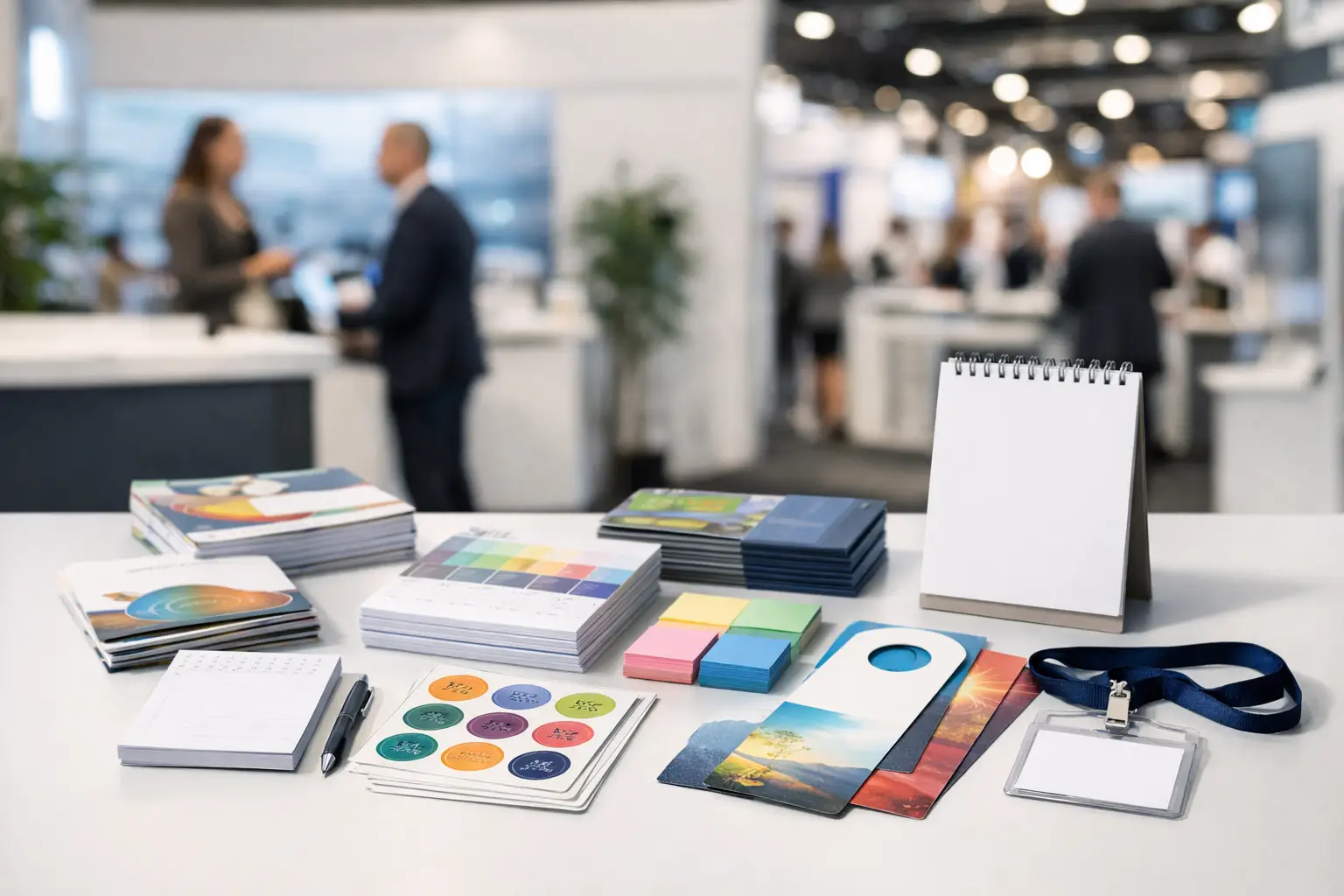
A crowded Las Vegas trade show floor gives exhibitors only a few seconds to make an impression. A useful giveaway can start the conversation, but a printed piece gives that conversation a reason to continue after attendees leave your booth. The best trade show giveaway printables are not just handouts with a logo. They give visitors a clear next step, a reason to remember your company, or an offer worth keeping.
For many exhibitors, the right choice depends on the goal. A company launching a service may need a lead-generating offer. A restaurant, retailer, or hospitality business may need an easy-to-redeem promotion. A B2B team may need a polished leave-behind that helps a prospect explain the value to colleagues back at the office. The most effective printables match the job your booth needs to do.
12 Best Trade Show Giveaway Printables That Work
1. Event-only offer cards
A small offer card is one of the most reliable giveaway formats because it is specific, portable, and easy to measure. Include a trade-show-only discount, a consultation offer, a complimentary sample, or an added-value upgrade. Use a short expiration date to create urgency without making the offer feel disposable.
A standard business card size works well when attendees are collecting materials all day. If the offer needs more explanation, move up to a postcard. Keep the code, expiration date, and redemption instructions prominent. A discount buried beneath product copy will not get used.
2. QR code lead cards
A QR code can turn a printed giveaway into a direct path to a landing page, appointment form, product demo, or downloadable resource. The card itself should explain exactly what visitors receive when they scan it. “Scan for pricing” is vague. “Scan to reserve a 15-minute post-show consultation” gives people a reason to act.
Test every QR code before production, then test it again from a printed proof. Use sufficient contrast, a clear quiet area around the code, and a size that scans easily from arm’s length. This is a small production detail with a large effect on campaign results.
3. Product comparison sheets
When prospects are evaluating several vendors, a concise comparison sheet can be more valuable than a novelty item. It should make decisions easier: outline your service tiers, key specifications, turnaround options, or the practical differences between your most popular offerings.
A one-page flyer is often enough. Avoid trying to list every feature. The best comparison sheets help a buyer identify the right fit, then point them toward a quote, demo, or follow-up conversation.
4. Appointment and consultation cards
For higher-value services, give attendees a physical reminder of the next step. An appointment card can invite them to book a site visit, strategy session, design consultation, tasting, or product walkthrough. Add blank space for a staff member to write a date, contact name, or personalized note.
This format works especially well when your sales team has a clear post-show follow-up process. Without that process, the card becomes another item in a tote bag. With it, the card reinforces an interaction that has already started.
5. Prize-entry cards
A giveaway drawing can build a lead list, but only if the entry process is fast. Printed entry cards are useful when Wi-Fi is unreliable, your team needs to keep the line moving, or attendees prefer not to complete a digital form on the show floor.
Ask only for information your team will actually use. Name, company, email, and a simple interest checkbox are usually sufficient. Make consent language clear, especially if entries will receive marketing emails after the event. A clipboard, secure entry box, and enough pens matter more than elaborate form design.
6. Scratch-off promotion cards
Scratch-off cards add a small moment of interaction to a basic offer. They are effective for retail, hospitality, food service, and consumer-focused brands that can fulfill a prize or discount quickly. Every card can reveal a different incentive, from a small percentage off to a premium gift or service upgrade.
The trade-off is logistics. You need clearly defined prize quantities, redemption rules, and staff instructions before the show opens. If those details are not in place, a straightforward coupon card is the safer choice.
7. Referral cards
Referral cards give existing customers, partners, and new booth contacts a simple way to introduce your business to someone else. They work best when both people receive something of value, such as a credit, upgrade, or exclusive offer.
Include a unique referral code or a space to write the referring contact’s name. That makes attribution easier and prevents confusion when offers are redeemed later. A compact card on thick stock feels more intentional than a loose flyer and is more likely to be saved.
8. Tip sheets and checklists
A useful checklist earns its place in an attendee’s bag. Think beyond a generic promotional flyer. A property management company might offer a move-in checklist. A software provider could share a cybersecurity readiness list. An event supplier might provide a last-minute exhibitor checklist.
The content needs to solve a real, narrow problem. Keep it practical, skimmable, and branded without turning every line into a sales pitch. Add a call to action at the bottom for readers who want help implementing the advice.
9. Mini brochures for high-consideration sales
A well-designed tri-fold or multi-panel brochure remains valuable when your offer requires explanation. It provides more room for service details, case examples, process steps, credentials, and contact information than a postcard can hold.
Use brochures selectively. They are not the best choice for a quick coupon, but they are effective when a prospect needs something polished to bring back to their decision-making team. Choose a fold, paper stock, and finish that match the level of your brand. A premium service should not be represented by a flimsy, overcrowded handout.
10. Branded sticker sheets
Stickers can extend your brand past the event when the design is genuinely usable. Laptop decals, water bottle stickers, product labels, and short motivational phrases work better than a large logo alone. A small sticker sheet gives visitors choices and increases the chance that one design gets used.
This option is strongest for brands with a visual identity, an audience that uses personal gear, or a product that benefits from labels and packaging. It is less effective for highly formal industries unless the sticker supports a practical use case.
11. Postcards with a post-show mailing plan
A postcard can serve two purposes: a handout at the booth and a follow-up mail piece for the leads you collect. Use the same design system, offer, and message across both versions so prospects see a consistent campaign rather than disconnected promotions.
Postcards are particularly useful for local businesses targeting attendees who live or work in the Las Vegas area. Keep the front visually strong, then use the back for the offer, call to action, contact details, and mailing information if needed.
12. Thank-you cards for qualified prospects
A short handwritten note on a branded thank-you card can separate a serious follow-up from a generic sales email. Have your team write them after meaningful booth conversations, referencing a specific need or next step discussed at the show.
This is not a high-volume giveaway. It is a relationship-building tool for priority leads, partners, speakers, and customers. The card should feel professional and personal, with enough blank space for a real note rather than a preprinted message that sounds automated.
How to Choose the Right Giveaway Printable
Start with the action you want visitors to take after the event. If you need a measurable response, select an offer card, QR lead card, or referral card. If you need to explain a more complex service, use a brochure or comparison sheet. If brand recall is the priority, a useful checklist or well-designed sticker can have more staying power than a discount.
Then consider booth traffic. High-volume booths need materials that can be handed out in seconds. Lower-volume, consultative booths can use more detailed pieces and personalized appointment cards. There is no advantage in producing an elaborate brochure if your team cannot introduce it properly during a busy rush.
Print Details That Protect Your Brand
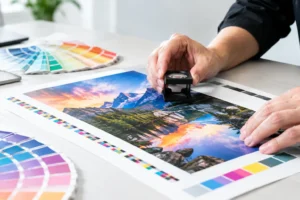
Trade show materials are handled, stacked, folded, and carried through long convention days. Paper weight and finishing make a difference. Heavy card stock is a strong choice for offer cards, appointment cards, and postcards. A matte finish makes handwritten notes easier, while gloss can add color impact to product imagery. For brochures and tip sheets, prioritize readability over decorative effects.
Build every piece around one primary call to action. Make phone numbers, email addresses, QR codes, and offer terms easy to find. Leave adequate margins so critical information is not lost during trimming, and proof all dates, booth numbers, promo codes, and URLs before the job goes to print.
If your event deadline is close, simplify rather than compromise. A clean postcard produced correctly and on time will perform better than an overbuilt concept that arrives late or contains an error. Design One Printing can help exhibitors choose the right size, stock, and production approach when a convention deadline is approaching.
The best giveaway is the one an attendee can use immediately, remember later, and connect back to your business without effort. Make that next step obvious, print it professionally, and give your booth team a reason to hand it over with confidence.