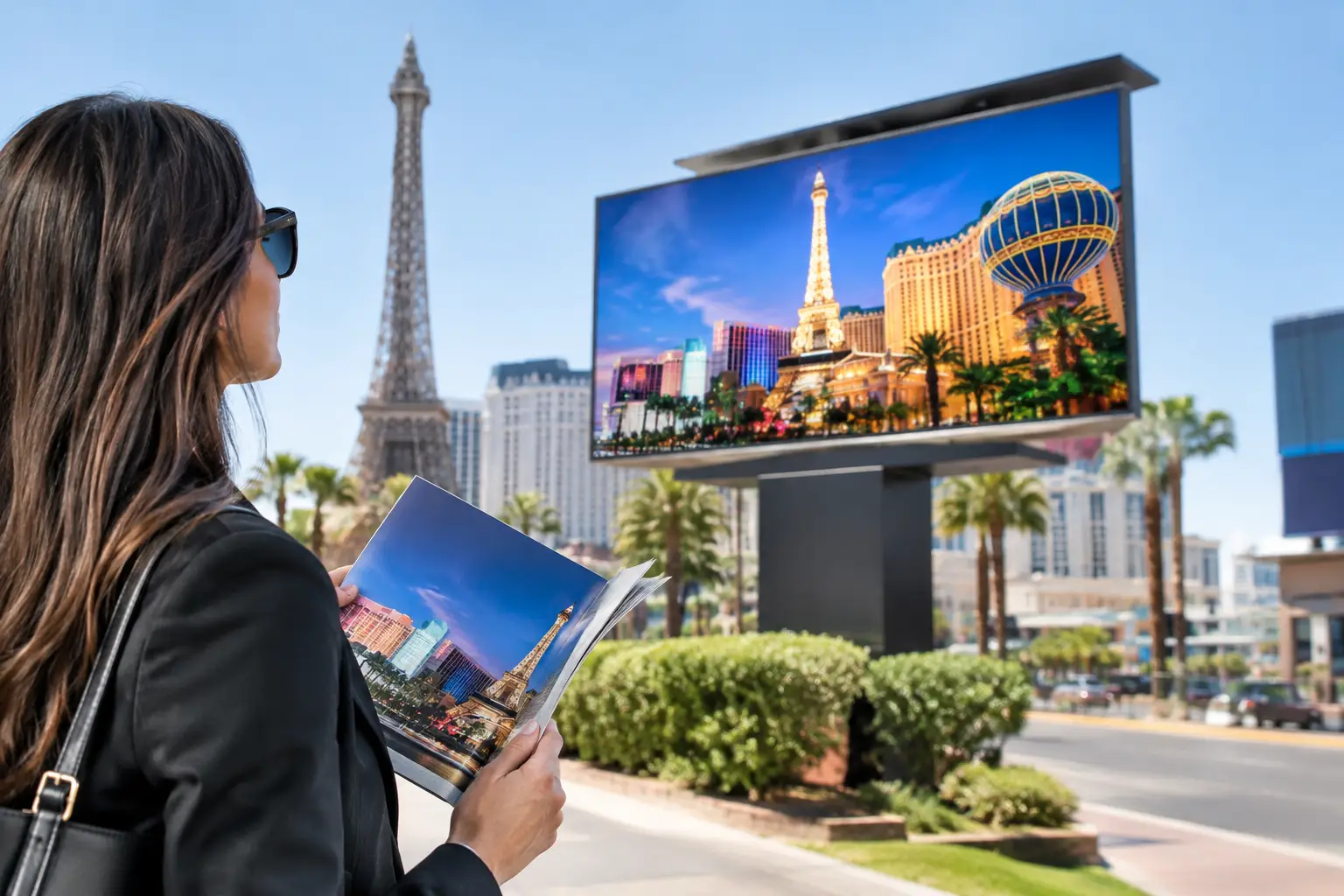
A digital ad can disappear with one swipe. A well-designed postcard, brochure, window sign, or trade show banner stays in a prospect’s hands, on a counter, or directly in their line of sight. That is why print advertising remains a practical, high-value part of marketing for Las Vegas businesses, exhibitors, restaurants, retailers, and event organizers.
The right printed piece does more than display a logo. It gives people a reason to visit, call, scan, register, or buy. For businesses working around conventions, grand openings, local promotions, and tight event schedules, print also delivers something digital campaigns cannot always provide: a physical presence at the exact moment a customer is ready to act.
Where Print Advertising Performs Best
Print works best when it has a clear job. A flyer promoting a one-night event has different requirements than a brochure used by a sales team or a direct mail postcard sent to nearby homes. The format, message, quantity, and finish should all support the action you want people to take.
For local promotions, postcards and direct mail pieces can put an offer in front of customers within a defined neighborhood or service area. A restaurant may promote a new menu, while a home service company can introduce a seasonal special. Including a deadline, a simple offer, and a phone number or QR code gives the recipient a direct next step.
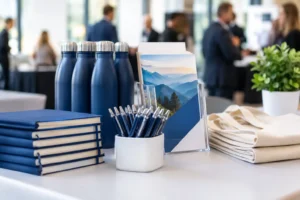
For in-person sales and networking, business cards, brochures, presentation folders, and rack cards help employees leave a professional impression after the conversation ends. At a busy convention, attendees collect a large volume of information. Materials with a clear headline, clean layout, and useful details are more likely to make it back to the office instead of being discarded at the hotel.
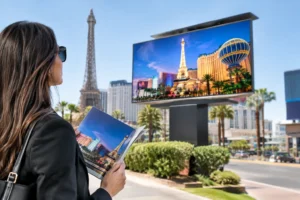
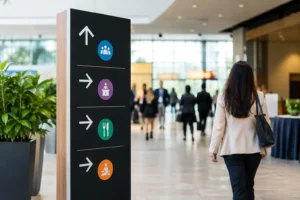
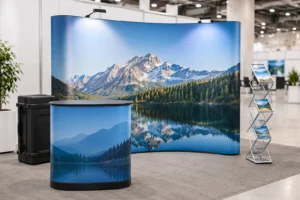
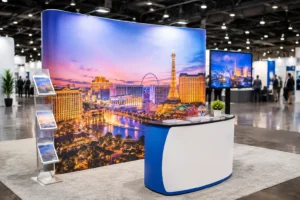
For visibility, posters, banners, window graphics, A-frame signs, and retractable displays help a business compete for attention in crowded spaces. This is especially valuable around trade shows, hospitality venues, retail areas, and event entrances, where people need to understand what you offer in seconds.
Start With One Goal, Not Every Message
The most common print advertising mistake is trying to fit every service, product, qualification, and company detail onto one piece. More information does not automatically create more response. It often creates a crowded design that makes the main offer harder to find.
Before selecting paper stock or choosing a size, identify the one outcome the piece should produce. Do you need booth visitors to schedule a demo? Do you want local customers to redeem a coupon? Are you announcing an event, directing guests to a registration table, or helping a salesperson follow up after a meeting?
Once the goal is defined, build the message around it. A strong printed ad usually includes a benefit-focused headline, a short explanation of the offer, recognizable branding, and one clear call to action. If the audience must make a decision quickly, make the important information easy to scan from a distance.
A trade show banner, for example, should not read like a full company profile. It should quickly answer what you do, who you help, and why someone should stop at your booth. Detailed service information can live in a brochure, sell sheet, or conversation with your team.
Match the Format to the Customer Moment
A format should match how and where people will use it. A glossy tri-fold brochure can be useful for explaining multiple services, but it may be unnecessary for a limited-time retail offer. A postcard is easier to mail, hand out, or place at a front counter when the goal is one promotion with a straightforward response.
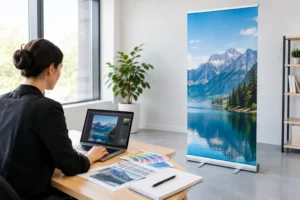
Large-format graphics need a different approach. People often view them while walking, standing in line, or passing a booth. Use fewer words, larger type, high-contrast color, and images that remain sharp at full size. A small logo placed at the bottom of a banner will not build recognition if no one can see it from several feet away.
Paper choice matters, too. A heavier cardstock can add credibility to business cards, postcards, and premium invitations. An uncoated stock may be better when recipients need to write notes or appointments on the piece. For menus, outdoor signage, and materials handled often, durability may matter more than a decorative finish.
Design for Fast Reading and Real-World Use
Print advertising is usually consumed faster than it is designed. Someone may give a flyer three seconds. A passerby may see only the top half of a sign. A convention attendee may look at your brochure while walking to the next meeting. Design needs to respect that reality.
Lead with the message customers care about, not an internal company description. “Same-Day Event Signage” is more useful to a rushed event planner than “Welcome to Our Company.” “Save 20% Through Friday” is clearer than a paragraph about your commitment to customer service.
Use readable type sizes and leave enough open space around key elements. Avoid placing essential text over a busy photo. Keep contact information consistent across materials, and check that your website, phone number, social handles, and QR code are current before production begins. A QR code should be large enough to scan easily and should lead to a mobile-friendly page that continues the same offer.
Images deserve the same level of attention. A low-resolution image might look acceptable on a screen but print soft or pixelated, particularly on posters and banners. Files prepared at the correct size and resolution will produce a cleaner result. If you are unsure whether your artwork is production-ready, reviewing it with a print and design team before finalizing the order can prevent delays and reprints.
Make Offers Easy to Measure
Print does not have to be difficult to track. The simplest approach is to create a response path that is unique to the campaign. This can be a campaign-specific phone number, a coupon code, a QR code, a dedicated landing page name, or an offer customers mention at checkout.
Tracking matters because it helps you compare channels and make better decisions on the next run. If 5,000 postcards produce 75 qualified calls and an event flyer produces steady walk-in traffic, you have useful information about where print is earning its place in your marketing budget.
Consider the full value of the piece, not only the immediate response. A well-made brochure can support sales conversations for months. A banner can be used at multiple events. Branded stickers or packaging inserts can create repeat visibility after a purchase. Short-run materials may cost more per piece than a high-volume order, but they can reduce waste when details, pricing, or dates may change soon.
Plan for Deadlines Before They Become Emergencies
Las Vegas marketing moves quickly. A convention date changes, a speaker is added, a booth needs updated graphics, or a shipment arrives with missing collateral. In those situations, turnaround time becomes part of the marketing strategy.
The best approach is to plan core pieces early while keeping flexible elements separate. Print evergreen brochures, business cards, and branded displays ahead of time. Save variable information such as event dates, room numbers, limited-time offers, and staff schedules for smaller, faster print runs. This reduces the risk of having outdated materials and makes last-minute updates easier to manage.
When requesting a quote, provide the finished size, quantity, paper preference, color requirements, deadline, and whether you need design support. If the piece will be mailed, say so at the beginning. Mailing dimensions, address areas, and postal requirements can affect the layout and production plan.
For rush jobs, clear communication makes a real difference. Confirm the final artwork, check spelling and phone numbers, and ask what time files must be approved to meet the required turnaround. A fast print schedule still needs accurate files and a clear production path.
Build a Campaign, Not a Pile of Pieces
Print is more effective when materials work together. A direct mail postcard can bring customers to an event. A window sign can reinforce the same offer at the location. A flyer can provide details, and a business card can give prospects a contact after the event. Consistent colors, headlines, images, and offers make the campaign feel organized and easier to remember.
That does not mean every item should look identical. A banner needs bold simplicity, while a brochure can carry more detail. The connection should come from consistent branding and a shared message, not from forcing the same layout onto every format.
For a convention exhibitor, this might mean pairing a large booth backdrop with table signs, product sheets, postcards, and follow-up cards. For a local business, it might mean combining neighborhood mailers, counter cards, posters, and coupon flyers. Each piece has a separate role, but all point people toward the same next step.
Put Quality Where Customers Notice It
Budget matters, but the lowest-cost option is not always the best value. Thin stock, hard-to-read type, poor color reproduction, and rushed trimming can affect how customers perceive your business. On the other hand, premium finishes are not necessary for every campaign. A high-volume event handout may need clarity and speed more than specialty paper.
The right production choices depend on the audience, the environment, and how long the material needs to last. A short-term promotion may call for efficient flyer printing. A presentation kit for a major client may justify heavier stock, finishing options, and more detailed design work.
When the deadline is close and your brand is on the line, work with a production partner that can help you choose the right format rather than simply take an order. Design One Printing helps Las Vegas businesses turn urgent marketing needs into polished materials that are ready for meetings, mailboxes, storefronts, and show floors.
The next time you need to promote an offer or prepare for an event, start with the action you want customers to take. A clear message, the right format, and dependable production can turn a printed piece into a measurable business opportunity.