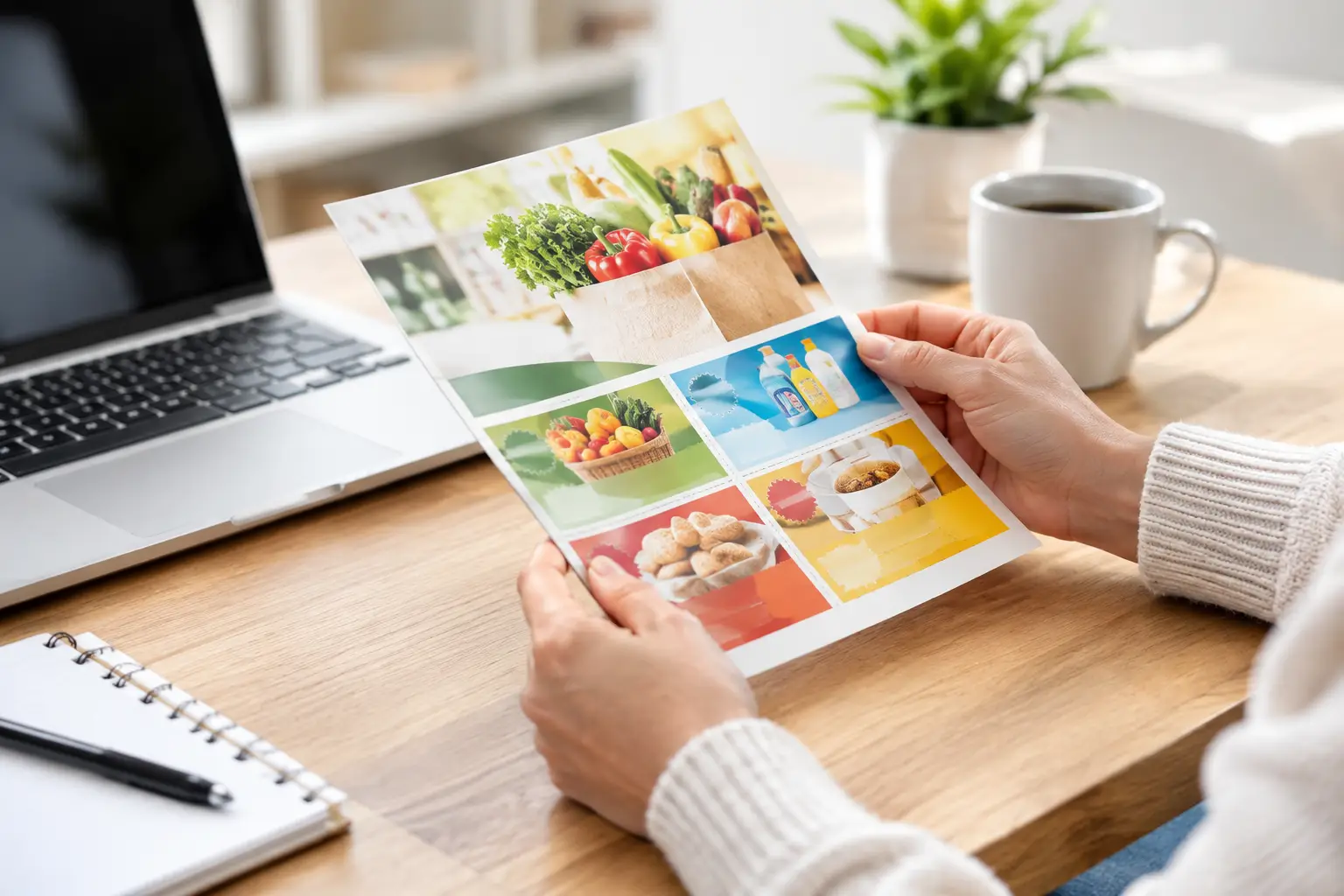
A coupon flyer has one job: give someone a compelling reason to act before they forget your business exists. For Las Vegas retailers, restaurants, salons, service providers, and event exhibitors, knowing how to create coupon flyers means pairing an offer people can understand in seconds with print that looks credible in their hands.
A weak coupon flyer usually fails before the customer reaches the offer. Too much copy, a hard-to-find expiration date, an unclear discount, or a crowded design can make even a good promotion feel risky. Build the offer and the layout around one clear action, then choose a print format that suits where and how people will receive it.
Start With an Offer Worth Keeping
The most attractive discount is not always the largest one. A successful coupon needs to feel valuable to the customer while still protecting your margins. A $10-off offer may be stronger than 10% off for a lower-priced service because the savings are immediately obvious. For a higher-ticket purchase, a percentage discount or a value-added offer may make more sense.
Choose one primary offer. “20% off any entrée,” “Free consultation with this flyer,” or “$25 off orders of $150 or more” is easy to scan and easy for employees to honor. Combining several discounts, exclusions, and reward tiers can work for a loyalty campaign, but it is rarely the right choice for a handout or neighborhood flyer.
Add terms that prevent confusion without burying the message. State the expiration date, minimum purchase if required, participating location, and whether the coupon can be combined with other offers. Put these details near the coupon itself in readable type. Fine print should clarify the deal, not hide it.
An expiration date creates urgency, but the window should match your goal. A three-day offer can help fill seats for a slow weekend or drive traffic to a limited event. A 30-day offer often works better for direct mail, hotel-area distribution, or a campaign aimed at customers who need time to decide.
How to Create Coupon Flyers With a Clear Layout
Think of the flyer as a sequence of decisions. A person should see the offer first, understand what it applies to second, and know exactly what to do next. If any of those steps requires effort, response rates can fall.
Place the strongest element in the upper half of the page. In most cases, that is the savings statement, not the company history or a decorative image. Use a short headline such as “Save 20% This Week” or “Bring This Flyer for a Free Upgrade.” Follow it with a brief explanation of the product, service, menu item, or event being promoted.
Your logo, business name, and brand colors should be visible, but they should support the offer rather than compete with it. A coupon for an upscale salon may use restrained color and a clean image. A family entertainment venue can use bolder graphics and larger type. The right design depends on the audience, but readability is nonnegotiable.
A practical coupon flyer generally includes these elements:
- A clear offer stated in large, high-contrast type
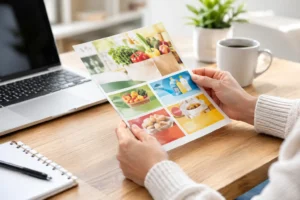
- A relevant image or product visual that supports the promotion
- Your business name, logo, address, phone number, and website
- A direct call to action, such as “Present this flyer at checkout”
- Expiration date, redemption terms, and a unique tracking code
Keep adequate space around the offer. Empty space is not wasted space – it helps the customer locate the important information quickly. Avoid using more than two typefaces and keep body text large enough to read without zooming in or holding the flyer at arm’s length.
Make the Coupon Easy to Redeem
The redemption process should be clear to both customers and staff. If the flyer must be surrendered, say so. If customers need to show it on their phone after receiving a digital version, state that as well. If the promotion applies only to first-time customers, specific services, or a particular location, write that plainly.
A simple coupon code makes performance easier to measure. Use a different code for each distribution channel, such as MAIL10 for a neighborhood mailer, EVENT10 for a convention handout, or HOTEL10 for hospitality placement. This gives you useful evidence about where to spend the next round of your marketing budget.
Choose the Right Size, Paper, and Quantity
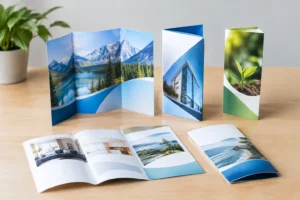
Format affects both cost and response. A 4 x 6 postcard-sized coupon is compact, easy to distribute, and familiar to customers. It works well for counter displays, door-to-door campaigns, hotel partnerships, and event handouts. A 5.5 x 8.5 flyer gives you more room for product photos, service details, or multiple tear-off coupons.
For a premium business, a heavier cardstock can reinforce the value of the offer. Restaurants, spas, real estate teams, and professional services often benefit from a sturdy piece that customers are less likely to throw away. For high-volume neighborhood distribution or short-lived promotions, a lighter flyer stock may be the more efficient choice.
Glossy paper makes color photography and bold graphics stand out. Matte stock offers a more refined finish and is easier to write on, which can be useful for appointment notes, handwritten codes, or staff initials. There is no universal best option. Match the material to the campaign, the brand, and the expected lifespan of the coupon.
Before you place an order, estimate the number of redemptions you can realistically handle. A busy restaurant with limited seating may be better served by a targeted run of 1,000 well-placed flyers than 10,000 broadly distributed pieces. A retail opening or convention promotion may need a larger quantity because visibility and volume are part of the objective.
Set Up a File That Prints Cleanly
Professional printing starts with a properly prepared file. Use high-resolution images, ideally 300 dpi at the final printed size. Screens can make a low-resolution image look acceptable, but it may print soft or pixelated. Avoid enlarging small images pulled from social media or screenshots.
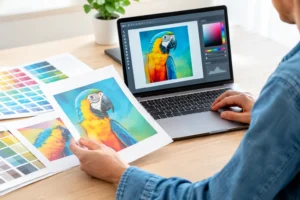
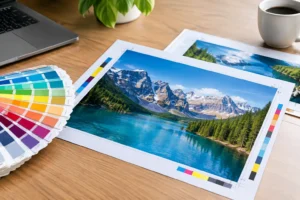
Set colors in CMYK when possible, especially when brand color accuracy matters. RGB colors are designed for screens and can shift during print production. If your brand uses a specific corporate color, provide the correct color information and request a proof or professional review when timing allows.
Include bleed for any background color, photo, or graphic that reaches the edge of the page. A standard bleed area is typically 0.125 inch beyond the final trim size. Keep text, logos, coupon borders, and important terms safely inside the trim area so they do not get cut off during finishing.
Export a print-ready PDF with fonts embedded or outlined. If you are working on a rush campaign and are not sure whether the file meets production requirements, get the design checked before printing. Catching a low-resolution logo or missing bleed early is far less expensive than reprinting a full order.
Put Flyers Where Customers Are Ready to Act
Distribution should follow customer behavior, not convenience. A lunch offer belongs near offices, hotels, nearby retail, and high-foot-traffic areas where people are making meal decisions. A home-service coupon performs better in the neighborhoods you serve. A trade show offer should be handed out near your booth, added to follow-up materials, or paired with an incentive that encourages attendees to visit before the event ends.
For Las Vegas businesses, timing is often as important as location. Convention traffic, weekend visitors, local events, and seasonal demand can all shape a promotion. If you need a flyer for an upcoming show, grand opening, or short-notice sale, build in enough time for proofing and distribution, while choosing a print partner equipped for fast turnaround when deadlines tighten.
Do not rely on a single channel unless you are testing it intentionally. Use the same core offer across counter displays, direct mail, local partnerships, and event distribution, but assign each channel its own code. After the promotion ends, compare redemptions, average transaction value, and new-customer results rather than judging the campaign only by how many flyers were handed out.
Treat the Flyer as a Sales Tool, Not Just a Handout
Train your team before the coupon goes live. Cashiers, front-desk staff, sales representatives, and booth personnel should know the offer terms and how to enter the tracking code. A great flyer loses value when a customer is told the offer is unclear or cannot be honored.
Also consider what happens after redemption. Capture an email address when appropriate, invite the customer into a loyalty program, or include a return-visit offer on the receipt. The first coupon can create a sale, but the follow-up is what turns that sale into a customer relationship.
When the deadline is close, keep the campaign focused: one offer, one audience, one clear action, and a professionally printed piece that represents your business well. Design One Printing can help Las Vegas businesses move from an approved concept to finished coupon flyers quickly, so the promotion is ready when the opportunity is still timely.