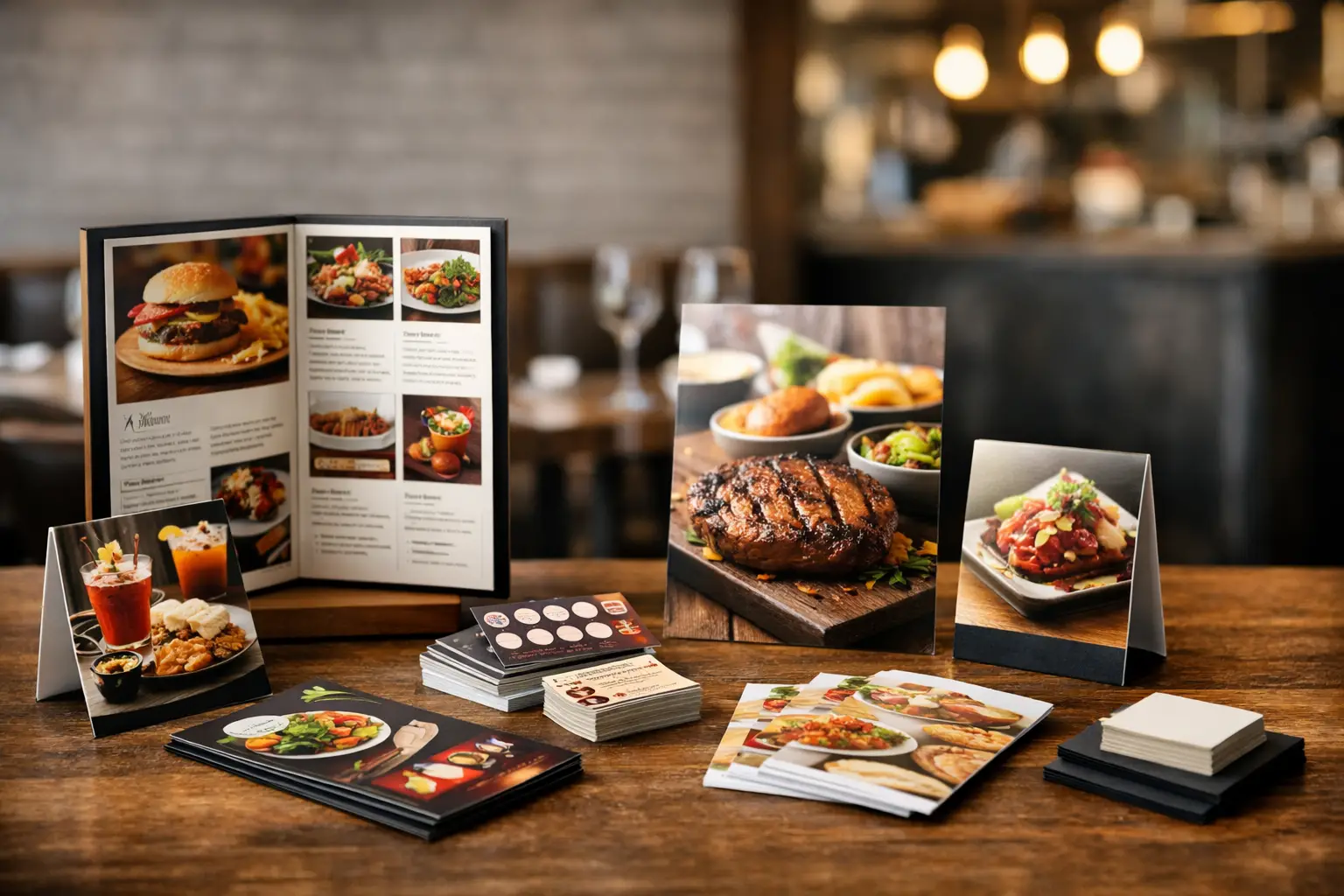
A restaurant can have great food, a strong location, and a hardworking team, then lose sales because the menu is difficult to read, the takeout bag carries no offer, or a new promotion is invisible from the street. The best print products for restaurants do more than fill a counter or decorate a wall. They help guests order with confidence, remember the brand, and return.
For Las Vegas restaurants, cafes, bars, food halls, and hospitality operators, printed materials also have to keep pace with real operating conditions. Menus change, events appear on the calendar, conventions bring new foot traffic, and an unexpected reprint cannot wait a week. The right print plan balances guest experience, durability, promotional flexibility, and turnaround time.
Start With the Guest Journey
Not every printed piece needs to be ordered at once. The smart approach is to match each product to a moment in the guest journey: attracting attention outside, helping people decide what to order, encouraging add-ons at the table, and staying visible after the meal is over.
A quick-service restaurant may put its first priority on window graphics, counter menus, and takeout inserts. A full-service dining room may need polished menus, reservation cards, table tents, and private-event materials. A restaurant preparing for a convention crowd might need a street-facing banner, flyers for hotel guests, and rush replacement signage before doors open.
The goal is not more paper. It is clearer communication at the moments where a customer is most likely to make a decision.
Best Print Products for Restaurants: The Core Set
Menus That Make Ordering Easier
Menus remain the most important restaurant print product because they influence both the guest experience and average check. A well-designed menu uses clear categories, readable type, consistent pricing, and enough white space for customers to scan quickly. Good food photography can help when used selectively, but overcrowded images and tiny descriptions can slow down ordering.
For changing specials or rotating cocktails, consider a durable main menu paired with a separate insert. This reduces waste when only a few items need to change. Laminated menus are practical for high-volume dining rooms and patios, while heavier uncoated stocks can create a more premium feel for chef-driven concepts. The best choice depends on how often menus are handled, cleaned, and updated.
QR codes can complement a printed menu, especially for multilingual versions, dietary details, or late-night updates. They should not replace a clear physical menu when fast, low-friction ordering matters. Guests should not have to search for basic information on a phone.
Table Tents and Counter Cards for Timely Offers
Table tents, countertop cards, and small display signs are among the most cost-effective ways to promote a specific action. Use them to feature a limited-time entrée, happy hour, dessert pairing, catering offer, loyalty program, or upcoming event.
Their value comes from placement. A table tent reaches guests while they are considering another drink or deciding whether to add dessert. A counter card works well near registers, host stands, pickup shelves, and bakery cases. Keep the message focused: one offer, one image if needed, and one clear next step.
Restaurants often make the mistake of trying to advertise every promotion on one small sign. A cleaner card with a single message usually performs better and looks more professional.
Takeout Inserts That Bring Customers Back
Every takeout order leaves the restaurant and enters a home, hotel room, office, or convention venue. That makes the bag a valuable marketing opportunity. Printed takeout inserts can turn a one-time order into a repeat visit with a bounce-back offer, delivery reminder, catering message, or social media prompt.
A postcard-sized insert is easy to include with every order and gives enough space for a strong offer. Stickers can seal bags while reinforcing the brand, identifying orders, or promoting a seasonal item. For restaurants with delivery and pickup volume, these small pieces can create measurable value without requiring a large campaign budget.
The offer should match the channel. A dine-in discount may be effective for local customers, while a catering promotion may be more useful for offices and event planners. For visitors, a simple return offer valid during their stay can be more realistic than a long-term loyalty message.
Window Graphics, Posters, and Outdoor Signs
Before a guest reads a menu, they need to notice the restaurant. Window graphics, posters, sidewalk signs, and banners help convert passing foot traffic into visits. They are especially useful in busy retail corridors, hotel areas, food courts, and convention-adjacent locations where customers make quick decisions.
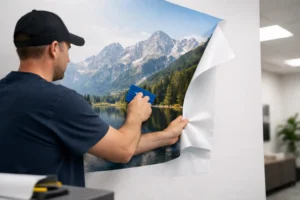
Use large-format graphics for messages that need to be seen from a distance: now open, breakfast served, happy hour, live music, private events, or game-day specials. Window decals can provide hours, ordering information, and visual branding without blocking too much natural light. Posters work well for event promotions and limited-time campaigns near entrances or inside nearby partner locations.
Outdoor materials need the right stock and finishing. A poster intended for an indoor lobby is not the same as a weather-resistant sign or banner used outside. Choosing the wrong material may save money upfront but can lead to fading, curling, or a rushed replacement later.
Flyers and Postcards for Local Reach
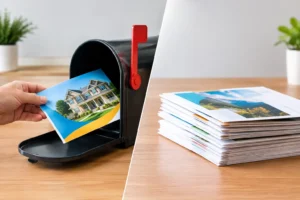
Restaurants that want to reach nearby offices, apartment communities, hotels, and neighborhood residents still benefit from printed flyers and postcards. These products work particularly well for grand openings, new lunch service, catering, delivery zones, holiday meals, and local event promotions.
A flyer is ideal when staff can hand it out, place it in approved locations, or include it with partner businesses. A postcard feels more substantial and can work well for direct mail or hotel-area distribution. The format should fit the campaign, not just the budget. If the offer requires more detail, a larger flyer may be better. If the message is simple and time-sensitive, a postcard can be more direct.
Include the essentials: location, hours, a clear offer, ordering options, and an expiration date when applicable. A beautiful piece that omits the call to action is less useful than a straightforward one that makes the next step obvious.
Catering and Private Event Materials
Many restaurants leave revenue on the table by treating catering and private events as an afterthought. Printed catering menus, banquet packets, event brochures, and sales sheets give managers and hosts professional materials to share with corporate clients, hotel concierges, meeting planners, and event organizers.
These pieces should make the buying process easy. Show package options, minimums, lead times, service styles, and contact information in a format that can be reviewed quickly. A polished packet also signals that the operation is prepared to handle larger orders.
For restaurants serving Las Vegas meetings and convention traffic, this is particularly valuable. A planner may need a dependable lunch option with very little notice. A clear, branded catering sheet can move that inquiry from interest to order faster than a verbal explanation.
Match Print Materials to Your Operating Pace
A restaurant with frequent menu changes should avoid ordering large quantities of dated materials. Shorter runs may cost more per piece, but they can reduce waste and keep promotions accurate. On the other hand, evergreen items such as business cards, branded stickers, loyalty cards, and core catering brochures are often worth ordering in larger quantities.
Speed matters most when the material supports an immediate opportunity. A same-day banner for a special event, replacement menus before dinner service, or postcards for a newly launched promotion can protect revenue that would otherwise be lost. Design One Printing helps local businesses make practical production decisions when deadlines are tight and presentation still matters.
Before sending a job to print, confirm the final menu prices, phone number, hours, logo files, and offer dates. A quick proof review is far less expensive than reprinting hundreds of pieces with an outdated price or incorrect web address.
Design for Fast Decisions, Not Just a Good Look
Restaurant print should reflect the brand, but clarity comes first. Use high-contrast colors, readable fonts, and hierarchy that guides the eye. Guests need to identify the offer, price, and action quickly, whether they are standing at a counter, walking past a window, or reading a takeout insert in a hotel room.
Keep brand consistency across menus, signs, cards, and packaging labels. When the same logo, color palette, tone, and food imagery appear in each touchpoint, the restaurant feels more established. This matters for independent operators competing with recognizable chains and for new concepts trying to build trust quickly.
If your current materials look inconsistent, a focused design refresh can often make the next print order work harder. Start with the pieces customers see most often, then build outward as needs and budget allow.
A restaurant does not need every print product on this list. It needs the few that solve its next business problem well: bring in more traffic, speed up ordering, promote a profitable item, support an event, or give a guest a reason to come back.