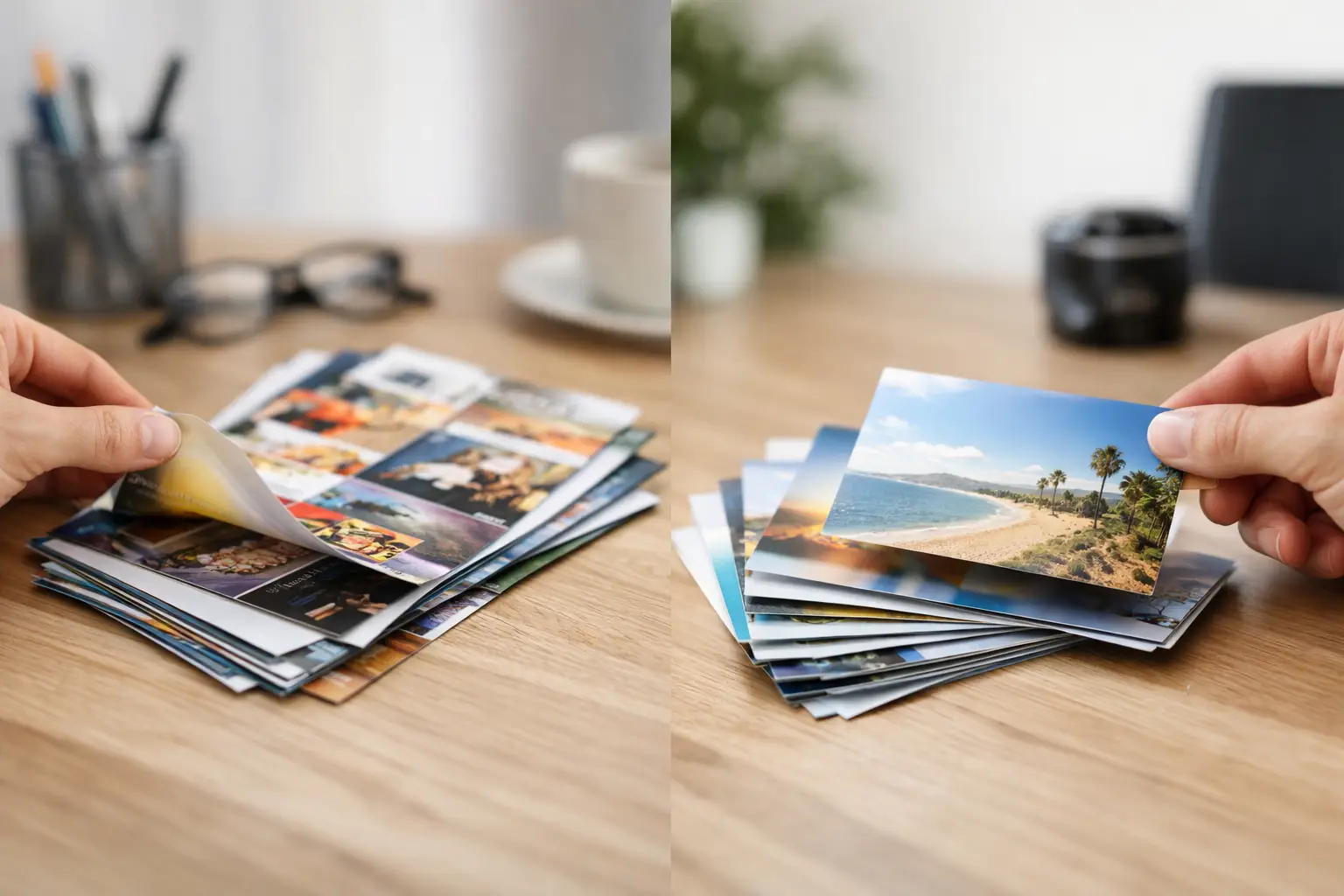
A restaurant near the Strip needs to fill tables this weekend. A real estate agent wants attention in a specific neighborhood. An exhibitor has two days before a convention opens and needs something visitors will actually take from the booth. In each case, the flyers vs postcards marketing decision affects more than the design. It affects distribution, cost, response tracking, and how quickly the message reaches the right people.
Both formats can generate leads and promote offers effectively. The better choice depends on where your audience will see the piece, what action you want them to take, and how much information the message requires. For Las Vegas businesses operating on tight timelines, choosing the right format early also helps keep production fast and focused.
Flyers vs Postcards Marketing: The Core Difference
A flyer is built for visibility in public spaces and face-to-face distribution. It is commonly handed out, displayed on counters, inserted into bags, posted on community boards, or placed at event check-in tables. Flyers are flexible in size and often give you more room for schedules, service details, menus, maps, sponsor logos, or event information.
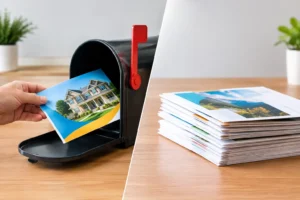
A postcard is built for direct delivery. It is typically mailed, handed out as a compact leave-behind, or used as a targeted follow-up piece. Because it is smaller and more structured, a postcard works best when the offer is clear, the audience is defined, and the next step is simple.
That distinction matters. A flyer is often designed to catch attention while people are moving through a space. A postcard is designed to arrive in a mailbox or remain in a prospect’s hand long enough to prompt a response. Neither is automatically better. The format has to match the campaign.
When Flyers Are the Better Marketing Tool
Flyers are a practical choice when your campaign needs reach, detail, or immediate local visibility. They work especially well for promotions tied to a date, location, or live event: grand openings, nightclub events, restaurant specials, job fairs, fundraisers, classes, retail sales, and convention promotions.
The larger format gives you room to make the offer visually strong without cutting essential information. A concert flyer, for example, may need performer names, venue details, ticket instructions, sponsor logos, and a schedule. Trying to force all of that onto a postcard can make the piece feel crowded and harder to scan.
Flyers also perform well when distribution is active rather than mailed. Street teams can hand them out near a venue. Retail staff can include them with purchases. Hotels, local businesses, and community partners can display them where potential customers already spend time. At a trade show, a flyer can sit beside product samples or be added to a presentation folder for qualified leads.
For high-volume campaigns, flyers can be an efficient option. Standard sizes such as 8.5 x 11 inches, 8.5 x 5.5 inches, and 4 x 6 inches give businesses choices based on budget and how much information must fit. Paper stock and finish matter here. Glossy stock can make colorful food, entertainment, and retail images stand out, while uncoated stock can be useful when recipients need to write notes or redeem an offer.
The trade-off is distribution control. A flyer placed on a counter or handed out in a busy area may reach many people, but it may not reach a precisely defined audience. Good placement, clear staff instructions, and a strong call to action are what turn broad visibility into measurable results.
When Postcards Make More Sense
Postcards are designed for focused outreach. If you know who you want to reach and have an address list, postcard marketing gives you a direct path into homes, offices, and decision-makers’ mailboxes. Local service businesses often use postcards to target neighborhoods around a new location, announce seasonal promotions, or remind past customers to return.
A postcard is also effective when the message can be communicated quickly. Think of a dental cleaning reminder, a limited-time hotel offer, a salon reopening, a property listing announcement, or a restaurant coupon. The front should stop the recipient with one clear visual or offer. The back should make the next action easy: call, scan a QR code, visit a location, or bring in the card.
Because postcards are compact, they are easy to carry at networking events, sales appointments, open houses, and trade shows. A sales representative can leave one behind after a quick conversation without giving the prospect a packet of material they may never review. For exhibitors, postcards can promote a show-only incentive and provide a concise reminder to follow up after the event.
Postcards generally require tighter editing than flyers. That is a benefit when the offer is strong. A clean layout with one headline, one main image, a deadline, and a visible call to action usually outperforms a postcard packed with every service and every product category.
The trade-off is limited space. If your campaign depends on explaining complex pricing, multiple services, detailed event logistics, or a long schedule, a postcard may not give the message enough room. In that situation, use a flyer or pair the postcard with a landing page, QR code, or follow-up email.
Choose Based on the Action You Want
The most useful way to decide is to start with the recipient’s next step. If you need people to show up at a local event, visit a store soon, or learn several details, a flyer is often the better fit. If you need people to redeem an offer, schedule an appointment, request a quote, or remember your business after a short interaction, a postcard can be more effective.
Consider the environment as well. A flyer needs to be seen in a physical location where people can take it or read it. A postcard needs a reliable mailing list, an intentional handout strategy, or a sales process that supports leave-behind materials. Printing a strong piece is only part of the campaign. The distribution plan determines whether it gets results.
For convention and trade show marketing, many businesses use both formats for different jobs. A flyer can explain the product, show a demonstration schedule, or promote a booth activity. A postcard can act as a compact invitation, appointment reminder, or post-show follow-up offer. This approach works when the two pieces share the same visual style and message rather than repeating unrelated information.
Design Details That Affect Response
Whether you choose flyers or postcards, clarity comes before decoration. The reader should understand the main offer in a few seconds. Use a headline that states the benefit, not just the business name. “20% Off Catering Orders This Week” is more useful than “Welcome to Our New Location.”
Keep the call to action specific. Ask recipients to bring in the card, call before a deadline, scan a code for a menu, or visit a booth number. Avoid vague phrases such as “Learn More” when you can tell people exactly what to do next.
Your contact information should be easy to find, especially for time-sensitive Las Vegas promotions. Include a phone number, website, address when relevant, and hours if the offer depends on a visit. For event materials, make the date, time, venue, and booth number large enough to read at a glance.
Print quality also communicates value. Low-resolution images, weak color contrast, and thin paper can make even a good offer look less credible. Professional design and production help protect your brand when the piece is competing with dozens of other promotions. Design One Printing can help businesses choose the right size, stock, finish, and layout when a rush deadline leaves little room for trial and error.
Budget, Timing, and Measurement
Budget should include more than the printing cost. For flyers, factor in staff time, placement fees, inserts, and event distribution. For postcards, account for mailing preparation, postage, and the quality of the list. A lower-cost print piece is not necessarily the better value if it reaches the wrong audience or has no clear method for tracking response.
Build measurement into the design. Use a unique promo code, a dedicated phone extension, a QR code, or a campaign-specific offer. This tells you whether the flyer or postcard generated calls, visits, scans, or purchases. Over time, these results make your next print decision easier and more profitable.
Timing can be the deciding factor, particularly before a convention, opening, or weekend promotion. Flyers can often be produced quickly for immediate local distribution. Postcards may print quickly too, but mailing adds another stage to the schedule. If the offer expires in a few days, hand-delivered postcards or flyers may be more realistic than a mail campaign.
Choose the format that gives your audience the right message at the right moment. A well-produced flyer can create local buzz fast. A focused postcard can put a strong offer directly in front of a qualified prospect. Start with the action you need, prepare the distribution plan before printing, and give the campaign a reason for people to respond now.