A rushed event setup can expose every weak point in your marketing materials. If your labels peel, your giveaway stickers look faded, or your product packaging feels generic, people notice. That is why custom sticker printing for businesses is not a small add-on. It is a practical branding tool that needs to look sharp, hold up, and arrive on time.
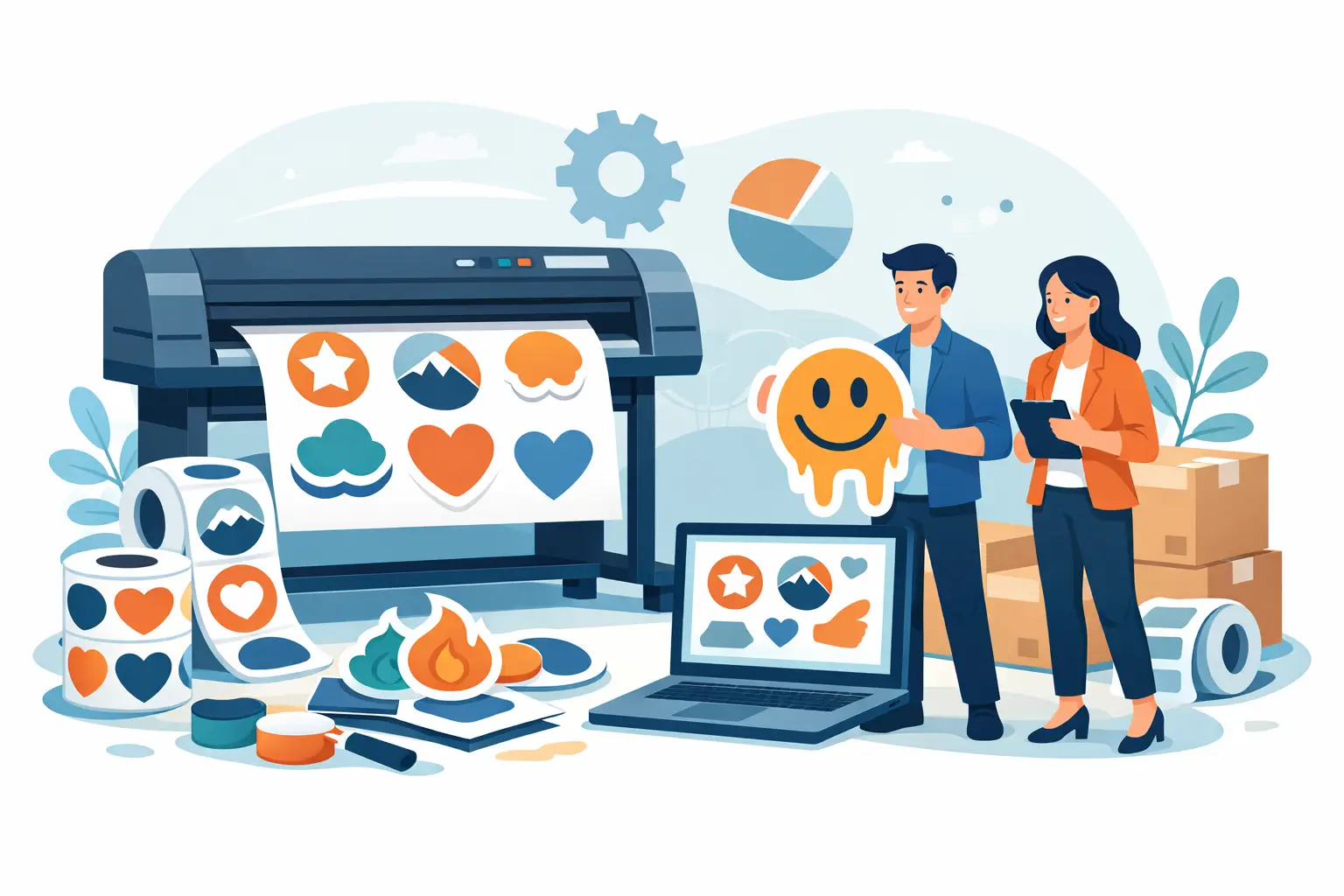
For many companies, stickers do more work than expected. They label products, seal packaging, support promotions, dress up event handouts, and turn plain surfaces into branded touchpoints. In a market like Las Vegas, where trade shows, retail traffic, hospitality, and short deadlines are part of daily business, stickers often need to do all of that fast.
Why custom sticker printing for businesses matters
A well-produced sticker pulls more weight than its size suggests. It can reinforce your brand at the point of sale, clean up your packaging presentation, and help your team stay organized behind the scenes. For restaurants, retailers, event vendors, and service businesses, stickers are often one of the most cost-effective print pieces in the mix.
The value comes from flexibility. A sticker can act as a product label, a promotional handout, a mailing seal, a window decal, or a branded insert for an event packet. Compared with larger print pieces, it is easier to produce in quantity and easier to use across departments. That makes it useful for both planned campaigns and last-minute needs.
There is also a practical side to brand consistency. If your box, bottle, bag, or event giveaway carries a sticker that matches your other printed materials, your business looks more organized and more credible. If the design is off, the cut is uneven, or the material does not fit the application, the opposite happens quickly.
Matching the sticker to the job
The most common mistake in custom sticker printing for businesses is treating every sticker as if it serves the same purpose. A logo handout for a convention booth does not need the same material as a refrigerated food label. A short-term promo decal does not need the same adhesive strength as a packaging seal used in shipping.
That is why the first question is not usually size or quantity. It is use case. Where will the sticker be applied? How long does it need to last? Will it face moisture, heat, sunlight, handling, or shipping wear? Once those answers are clear, the right production choices follow.
Paper stickers are often a good fit for indoor applications, short-term promotions, and straightforward packaging uses where cost matters most. They print well and work for many brands, but they are not ideal for rough handling or wet conditions. Vinyl tends to be the better option when durability matters, especially for items exposed to water, frequent contact, or outdoor use.
Finish also changes the result. Gloss can make colors pop and feel more promotional. Matte can look more refined and reduce glare under bright lights, which can matter at trade shows and retail counters. Clear stickers can look polished on glass or smooth packaging, but the artwork has to be prepared carefully so contrast and readability are not lost.
Common business uses that justify the investment
Stickers work best when they solve a specific business problem. For product-based companies, that often means labeling jars, bottles, boxes, pouches, and bags without committing to custom printed packaging in every run. A clean sticker can give small and mid-sized brands a professional shelf presence while keeping inventory more flexible.
For event exhibitors, stickers are often dual-purpose. They can brand giveaway items, add logos to folders or handout packs, and serve as simple takeaways that keep your company name in front of attendees after the show. When booth teams need something lightweight, affordable, and easy to distribute, stickers make sense.
Retailers and restaurants use them differently. They may need tamper-evident seals, to-go packaging labels, seasonal promo stickers, or branded closures for bakery boxes and bags. In those environments, speed matters just as much as appearance. If a promotion starts this week, waiting too long defeats the point.
Service businesses can use stickers in ways that are less obvious but still effective. Equipment labeling, service reminder decals, branded envelope seals, and leave-behind promo stickers all support visibility and organization. The format is small, but the repetition adds up.
Design choices that affect print quality
Good sticker printing starts with usable artwork. Even a fast turnaround job needs clear files, legible type, and sizing that fits the final application. A design that looks fine on a laptop screen may fail once it is reduced to a two-inch label or placed on a textured package.
Simple usually performs better. That does not mean plain. It means prioritizing readability, color contrast, and layout discipline. If a sticker needs to carry a logo, product name, instructions, and a barcode, cramming everything into a small shape will create problems in production and in use.
Shape matters too. Standard circles, squares, and rectangles are efficient and versatile. Custom die cuts can create a more memorable look, especially for promotional stickers, but they may require more planning. Intricate cuts can look great when done well, but overly complex edges may not be ideal for every quantity, budget, or timeline.
Bleed and safe area are also worth attention. If your background color or artwork runs to the edge, the file needs proper bleed to avoid unwanted white borders. Important text and logos should stay safely inside the trim line so nothing critical gets cut too close. These are small production details, but they separate polished stickers from rushed ones.
Speed matters, but so does getting it right
When businesses need print fast, there is a temptation to approve whatever is quickest. Sometimes that works. Often, it creates preventable issues. The smarter approach is to work with a print partner that can move quickly while asking the right questions up front.
That is especially true in Las Vegas, where event schedules shift, booth materials get replaced last minute, and marketing opportunities can appear with very little notice. If your stickers are part of a product launch, convention handout, or packaging run, a missed detail can create delays beyond the print job itself.
Fast turnaround only has value when the finished piece is usable. That means confirming the adhesive, material, finish, size, cut, and file setup before production starts. A responsive printer can help you avoid common mistakes without slowing the process down. For businesses near the Strip or convention centers, that kind of support matters when the deadline is measured in hours, not weeks.
How to order custom sticker printing for businesses more efficiently
The fastest sticker orders usually come from clear specifications. If you know the intended use, the quantity, the finished size, and whether the sticker needs to resist water or heavy handling, you are already in a much better position to get an accurate quote and a faster turnaround.
It also helps to think ahead about application. Will staff apply these by hand one at a time, or are they being used in volume during packing? Is the sticker going on cardboard, plastic, glass, metal, or paperboard? Does it need to remove cleanly, or stay put permanently? These details affect material recommendations and production choices.
If you are ordering for an event, build in time for proofing and pickup whenever possible. If you are ordering for packaging, test one version before committing to a larger run if the application is new. Not every sticker that looks good on paper performs well in the field.
For companies juggling multiple print needs at once, it often makes sense to coordinate stickers with related materials such as postcards, inserts, signage, or handouts. That keeps branding aligned and reduces last-minute scrambling. A full-service provider like Design One Printing can be especially useful when sticker production is only one part of a broader launch, event, or promotional push.
The real return on a well-made sticker
A sticker is rarely the headline item in a marketing plan, but it often shows up at the exact moment your customer is making an impression-based decision. They see it on the package, on the sample, on the handout, or on the product itself. If it looks crisp and intentional, your brand feels more prepared.
That is the real return. Not just decoration, and not just low-cost printing, but a small format piece that supports sales, presentation, and day-to-day operations. When the material fits the job and the production is handled properly, stickers stop being an afterthought and start doing real work for your business.
If you are planning your next packaging run, event handout, or product launch, the best sticker choice is usually the one built around the way your business actually uses it.