
A rushed brand update usually shows up first in print. The old logo is still on the brochure, the booth backdrop uses a new color palette, business cards have an outdated tagline, and someone notices the mismatch the night before an event. That is where rebranding design services matter most – not as a vague creative exercise, but as a practical way to keep your business presentation consistent when timelines are tight.
For many companies, rebranding starts with a real business need. A company expands into a new market, changes ownership, updates its product mix, or realizes its current look no longer matches the level of service it delivers. In Las Vegas, that pressure often hits before a trade show, convention, grand opening, sales push, or direct mail campaign. When the deadline is fixed, your brand cannot be halfway updated.
What rebranding design services actually include
Rebranding design services are broader than logo redesign alone. A new logo may be part of the project, but the real work is building a usable visual system and applying it across the materials your customers actually see. That often includes business cards, brochures, flyers, postcards, banners, signs, presentation folders, labels, packaging elements, and trade show graphics.
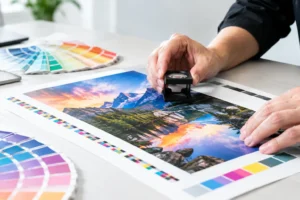
A practical rebrand also looks at how your company appears in different formats and sizes. A mark that looks sharp on a website header may not reproduce well on a retractable banner or a small printed sticker. Color choices can shift depending on the paper stock, finish, size, and production method. Typography that feels clean on screen can become hard to read in a fast-moving event setting. Good rebranding work accounts for those differences early so your materials stay consistent in the real world.
That is especially important for businesses that rely on printed marketing to drive sales. If your team hands out collateral at networking events, mails promotional pieces, installs retail signage, or staffs a booth at a convention, your rebrand has to perform across every one of those touchpoints.
When a business should consider rebranding design services
Not every company needs a full brand overhaul. Sometimes a targeted refresh is enough. The right move depends on what is actually broken.
If your company has grown beyond its original audience, your current brand may be underselling you. A business that started as a local operator may now be serving larger commercial accounts and need a more polished visual identity. If your materials feel inconsistent because they were created over time by different vendors or team members, a structured rebrand can bring them back into alignment. If your logo, colors, or messaging look dated next to competitors, that can affect perception before a sales conversation even starts.
There are also operational signs. Maybe your files are inconsistent, your print materials have to be rebuilt every time, or your booth graphics do not match the collateral on the table. Those are not just cosmetic issues. They slow production, create confusion, and increase the chance of mistakes when you are ordering under pressure.
A full rebrand makes the most sense when the business has changed direction or the existing identity no longer supports growth. A refresh may be better if your name, recognition, and core look still have value but need tightening. The trade-off is simple: a full rebrand can create stronger long-term clarity, but it takes more coordination. A refresh is faster and less disruptive, but it may not fix deeper brand problems.
Why print matters during a rebrand
A lot of businesses think about rebranding in digital terms first. That makes sense, but printed materials often become the real test. Print forces decisions. You need final files, approved colors, defined layouts, and production-ready artwork. There is less room for ambiguity when a brochure is going to press or a banner needs to be installed by morning.
That is why rebranding design services work best when design and production are closely aligned. A strong concept still has to hold up on coated and uncoated stock, large-format displays, folded brochures, direct mail pieces, and quick-turn business cards. If the design phase ignores production realities, delays and compromises usually follow.
For event exhibitors and local businesses in Las Vegas, this matters even more. Convention schedules are fixed. Store openings do not move because a file was not prepared correctly. Sales teams need materials in hand when meetings start. Rebranding is not just about looking better. It is about making sure the updated brand is ready to print, ready to install, and ready to use.
The most common rebranding mistakes
The biggest mistake is treating the logo as the entire project. A new mark without updated collateral creates a patchwork brand. Customers notice that kind of inconsistency faster than most businesses expect.
Another common issue is changing too much, too fast, without considering what current customers already recognize. If you have strong local visibility, trade show history, or established sales material, some continuity may be worth preserving. A total departure can work, but only if it reflects a real strategic change and is rolled out cleanly.
Businesses also run into trouble when they underestimate the number of materials affected. It is not just the obvious items like business cards and brochures. Menus, forms, signage, labels, presentation decks, event handouts, product sheets, table throws, wall graphics, and mailers may all need revision. Missing even a few of these can make the rollout feel incomplete.
Then there is the deadline issue. If the rebrand starts too close to an event or campaign launch, teams end up making last-minute substitutions. Old materials get reused. New artwork is approved without proper review. That can create expensive reprints or a final result that looks rushed.
How to approach a rebrand without slowing down your business
The most efficient rebrands start with the materials you use most. That usually means the items tied directly to revenue, visibility, and daily operations. For one business, that may be sales sheets, brochures, and business cards. For another, it may be retail signage, direct mail pieces, and packaging labels. For an exhibitor, booth graphics, banners, handouts, and tabletop materials often come first.
From there, build the rollout in phases. Your highest-visibility assets should be updated first, followed by supporting materials. This keeps the rebrand moving while controlling cost and avoiding unnecessary waste. If you still have usable inventory of older printed pieces, it may make sense to replace only what is customer-facing right away and phase out the rest.
A production-minded partner can help you decide what needs immediate replacement and what can wait. That matters because not every piece carries the same urgency. A lobby sign and event backdrop may need to change now. Internal forms or secondary inserts may be fine for a later round.
What to look for in a rebranding partner
Speed matters, but speed without control creates problems. The right partner should be able to handle design updates with a clear understanding of print production, file setup, material selection, and installation requirements where needed.
Look for a team that asks practical questions. Where will the new brand appear first? What deadline cannot move? Which materials are customer-facing, and which are internal? What existing files can be used, and what has to be rebuilt? Those questions lead to better execution than abstract discussions alone.
It also helps to work with a provider that can support both design and output. When the same team understands the artwork and the production schedule, there is less handoff risk. That is especially useful for rush orders, convention materials, and last-minute replacement pieces. For businesses operating near the Strip or preparing for events at local venues, having responsive local support can remove a lot of pressure.
Design One Printing supports businesses that need that kind of practical coordination, especially when a rebrand has to move from concept to printed materials on a real deadline.
Rebranding design services for events, retail, and local marketing
Different businesses need different rebrand rollouts. An exhibitor may need oversized booth graphics, promotional handouts, branded table covers, and fresh business cards before anything else. A retail business may prioritize window signage, point-of-sale displays, flyers, and packaging elements. A service company may focus on sales collateral, postcards, presentation folders, and leave-behind materials for in-person meetings.
That is why one-size-fits-all rebranding rarely works. The best approach is tied to how your business actually markets itself. If print is central to your customer experience, your rebrand should be built around the formats your audience sees most often.
A strong update does not have to be flashy. It has to be clear, consistent, and ready to perform across every material you put in front of customers. When the design is solid and the production plan is realistic, your brand stops feeling patched together and starts working like a system.
If your current materials no longer match the business you are running, waiting usually creates more inconsistency, not less. The right time to start is before the next event, campaign, or reorder forces the issue.